
Why Sewer and Drain Problems Deserve Prompt Attention
A slow sink or a toilet that needs repeated flushing may seem like a small inconvenience, but in a home, drainage issues rarely stay small for long. In Bay, Walton, and Okaloosa counties, where homes may face heavy seasonal rainfall, older plumbing, coastal humidity, and varying soil conditions, a drainage problem can turn from nuisance to emergency faster than many homeowners expect. Sewer and drain systems are meant to move wastewater away efficiently. When that process starts to fail, the warning signs often begin subtly: a gurgle in one fixture, a faint odor near a drain, or water that drains more slowly than usual. These clues matter because they can point to a developing clog, a venting issue, a damaged sewer line, or a problem outside the home that affects the entire system.
Homeowners sometimes try to wait and see whether the problem clears on its own, especially if water is still draining, just more slowly than before. The risk is that drainage systems do not usually improve without identifying the cause. A partial blockage can collect more debris over time, which increases pressure in the line and can lead to backup into sinks, tubs, or floor drains. In some cases, the first obvious sign is wastewater surfacing where it should never appear. Professional assessment is important because the visible symptom may not be the true source. A trained plumber can determine whether the issue is isolated to one fixture, shared by multiple drains, or connected to a larger sewer line concern, helping prevent guesswork and unnecessary damage.
How Northwest Florida Conditions Can Affect Drainage
Northwest Florida homes face conditions that can influence how sewer and drain systems perform. Heavy summer rain, tropical weather, high groundwater, and shifting soils can all put stress on underground piping and drainage pathways. Even if a home is structurally sound, moisture around buried pipes can contribute to movement, infiltration, or changes in how wastewater moves through the system. In coastal and near-coastal communities, these factors can become more noticeable over time, particularly when combined with root intrusion or aging materials. What looks like a simple clog may actually be part of a broader issue involving the line outside the home rather than just the fixture indoors.
Seasonal use patterns can also matter. Vacation homes, rental properties, and households that see fluctuating occupancy may experience different drainage stress than a consistently occupied home. Fixtures that sit unused for periods may show odors or slower response when service resumes, while homes with higher-than-average use can reveal weak spots in the system more quickly. Because Bay, Walton, and Okaloosa counties include a mix of neighborhoods, property ages, and plumbing layouts, there is no single cause for every backup or slow drain. That is why a professional diagnosis is valuable: it accounts for local conditions, household usage, and the plumbing system’s age and configuration rather than assuming every symptom comes from the same source.
Common Warning Signs Homeowners Notice First
Many sewer and drain problems announce themselves through everyday symptoms that are easy to overlook at first. Slow drains are among the most common. A sink that empties sluggishly, a shower that begins pooling water around the ankles, or a bathtub that holds water longer than expected can signal a partial blockage. Gurgling sounds are another clue. When air becomes trapped in the drainage system because wastewater is not moving properly, fixtures may make bubbling or sucking noises. Homeowners may also notice a toilet water level that rises unusually high before slowly settling, or a toilet that seems more difficult to flush than normal. These signs can occur alone or together, and their combination often tells a stronger story than any one symptom by itself.
Odors can be equally important. A persistent sewer smell near a drain, in a bathroom, or around a yard area close to the sewer line may indicate trapped waste, a venting issue, or a leak somewhere in the system. Backups are the most obvious and urgent warning sign, especially if wastewater appears in a tub, shower, floor drain, or lower-level fixture when another fixture is used. Homeowners should also pay attention to multiple fixtures acting up at once. If one sink is slow, the issue may be local. If several drains in different parts of the house are sluggish or noisy, the concern may involve a shared branch line or the main sewer line. Recognizing these patterns helps a plumber diagnose the problem more accurately and efficiently.
When a Single Drain Problem Is Not Just a Single Drain Problem
It is tempting to treat a slow sink as an isolated fixture issue, especially if everything else in the house seems to be working. Sometimes that is correct. Hair, soap buildup, food residue, or other debris may affect only one branch of the plumbing. However, homeowners should be aware that a single symptom can also be the first visible sign of a larger issue. For example, a clog deeper in the line may initially show up in the lowest or most frequently used fixture before spreading to others. A venting problem can also mimic a blockage by disrupting how air and water move through the system. In those cases, one drain can act as the warning light for a broader system imbalance.
The key is to watch for patterns rather than assume the first visible problem explains everything. If a kitchen sink backs up while the dishwasher runs, or a shower drains slowly at the same time a nearby toilet gurgles, the issue may extend beyond one fixture. If a home has older plumbing or an unfamiliar drain layout, a homeowner may not be able to determine whether the trouble sits in the fixture, the branch line, or the main sewer line. That is where professional diagnosis matters most. A plumber can test the system in stages, observe how different fixtures respond, and trace the symptoms to the most likely source. This reduces unnecessary disruption and helps avoid treating the wrong part of the plumbing system.
Why Sewer Odors Should Be Investigated Promptly
A sewer odor inside or outside the home should never be dismissed as just an unpleasant smell. While occasional odors may occur briefly after a drain has not been used, persistent or recurring sewer smells often indicate a problem that deserves attention. The source could be a dry trap, a ventilation issue, a partial blockage, or a leak in the drain or sewer system. In some homes, odors may be more noticeable during rainy weather or after extended periods of use because pressure changes or saturation around buried lines can influence how gases move. The odor itself is not the root problem, but it is an important clue that something is not functioning as intended.
Professional assessment is helpful because the smell alone does not reveal the exact cause. A plumber can inspect for missing water seals in traps, evaluate whether venting is working properly, and look for signs that wastewater is escaping where it should remain contained. In some situations, odors may appear near a floor drain, a bathroom vanity, an attic plumbing vent, or an exterior area around the sewer line. These different locations point to different types of concerns. Homeowners should avoid masking the smell with fragrances and instead focus on identifying where and when it occurs. Noting whether the odor appears after a shower, when the washing machine runs, or during rainy conditions can give a plumber useful information during diagnosis.
Backups, Overflows, and What They Can Mean
Backups are one of the clearest signs that a sewer or drain system needs immediate professional attention. When wastewater reverses direction and comes back into a tub, shower, toilet, or sink, the system is no longer moving waste the way it should. A backup may happen gradually, with water rising more slowly than usual and then receding only after a delay. Or it may happen suddenly, especially if a blockage has become severe. In homes with multiple bathrooms, a backup in one area may be connected to use in another room, which is often a clue that the problem is in a shared line or main sewer rather than in one fixture alone.
Overflows can cause more than inconvenience. Wastewater can damage flooring, baseboards, cabinets, and subfloor materials. It can also create sanitation concerns that require careful cleanup and repair. Because the visible damage is often only part of the issue, homeowners benefit from a professional diagnosis that determines how far the problem extends and whether the cause is a clog, pipe damage, intrusion from tree roots, or another condition. A plumber can assess the affected fixtures, inspect accessible parts of the drain system, and identify whether there is an immediate risk of repeated backup. If the issue is in the main line, prompt action can help protect the home from recurring sewage exposure and reduce the chance of more extensive repairs later.
What Professional Drain Diagnosis Involves
Professional diagnosis is more than clearing a clog and moving on. It is a methodical process used to determine why the issue happened and whether it is likely to return. A plumber typically begins by listening to the homeowner’s observations: what fixtures are affected, when the problem started, whether the issue worsens during certain activities, and whether there are odors, gurgling sounds, or backups. These details help narrow the possibilities before any tools are used. The plumber may then inspect accessible fixtures and drain points, check for signs of localized blockage, and evaluate whether the symptoms point to a branch line, venting issue, or main sewer concern.
Depending on the situation, a professional may use specialized inspection methods to look deeper into the system. The goal is to see the plumbing condition rather than guess at it. This can reveal build-up, damage, offsets, or other concerns that are not visible from the surface. Just as importantly, diagnosis helps distinguish between problems that are safe to address in a targeted way and problems that require more involved repair planning. Homeowners should think of this step as finding the reason behind the symptom, not merely addressing the symptom itself. A careful diagnosis reduces trial-and-error service, supports more appropriate repairs, and gives the homeowner a clearer picture of the home’s plumbing condition.
The Value of Drain and Sewer Camera Inspection
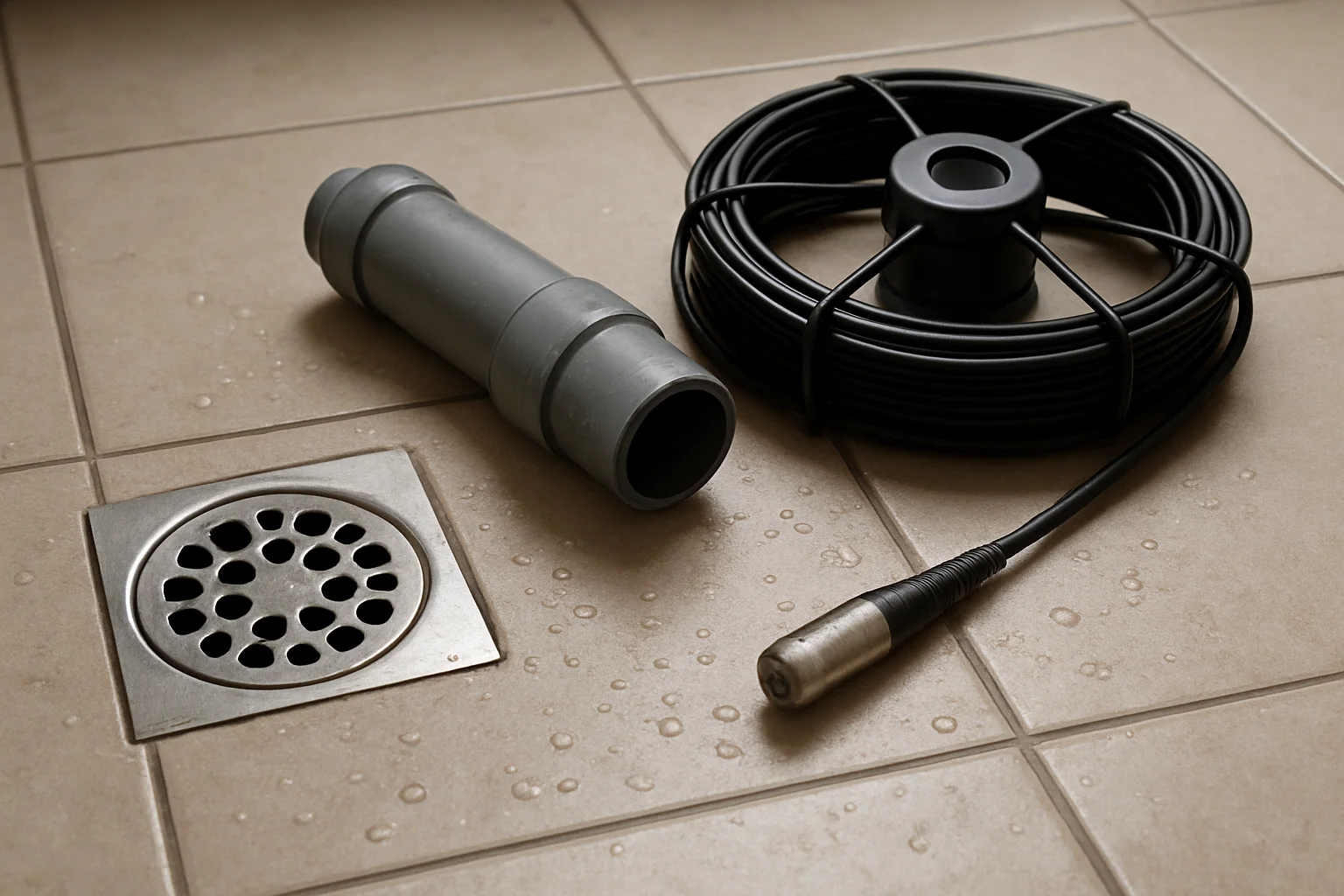
A camera inspection is often one of the most useful tools in professional drain and sewer evaluation. It allows a plumber to visually inspect the inside of pipes without unnecessary disruption to the home or yard. This can help identify the location and nature of a problem, such as heavy buildup, foreign material, root intrusion, pipe sagging, cracks, corrosion, or separated joints. For homeowners, the main advantage is clarity. Instead of relying only on symptoms, the plumber can see how the line actually looks and determine whether the issue is minor, moderate, or more significant.
A camera inspection is especially helpful when problems keep returning after cleaning or plunging. Repeated symptoms suggest that something remains unresolved. A camera can show whether the line has a structural issue that keeps collecting debris, whether a section of pipe appears compromised, or whether the obstruction is in a place that standard methods cannot fully address. It can also help prevent unnecessary digging by locating the problem more precisely. For homeowners in Bay, Walton, and Okaloosa counties, that can matter a great deal because the source of the issue may be under landscaping, a driveway, or another area where exact diagnosis helps limit disruption. Camera inspection turns a plumbing mystery into a visible condition that can be discussed and addressed with much better confidence.
Root Intrusion and Other Hidden Sewer Line Problems
Tree roots are a common concern in sewer systems because they naturally seek out moisture. If a sewer line has a weak point, joint separation, or crack, roots can enter and begin collecting debris. Over time, this can slow drainage, cause recurring clogs, or lead to backups that seem to return no matter how often the line is cleared. Homeowners may notice that the problem comes back after a few weeks or months, which is a strong clue that a deeper issue exists. Root intrusion does not always cause immediate failure, but it can gradually narrow the pipe and create a recurring maintenance cycle if not properly diagnosed.
Roots are only one example of hidden sewer line problems. Older piping may shift, settle, corrode, or develop internal defects that are not obvious from above ground. Soil movement, high moisture, and changes in ground conditions can also affect how the line performs. Because many of these issues develop out of sight, homeowners should not assume that a single cleaning solved the underlying cause if symptoms keep returning. A professional diagnosis can show whether the line needs ongoing maintenance, spot repair, or a broader solution. The important point is that repeated clogs are not simply bad luck. They often indicate a condition in the pipe itself, and identifying that condition early can help the homeowner plan appropriately before the issue becomes more disruptive.
How Weather and Storms Can Influence Drainage Symptoms
In Northwest Florida, weather can play a noticeable role in sewer and drain performance. Heavy rainfall can saturate soil around buried lines, increase pressure around older pipes, and reveal weaknesses that may not show up during dry periods. After a storm, a homeowner might notice slow drains, unusual odors, or water in places that were previously dry. These symptoms do not always mean stormwater directly entered the home’s plumbing system, but they can indicate that environmental conditions are affecting the line’s performance. Flooding, standing water, and persistent saturation can also make it harder for wastewater to move away as designed.
Seasonal conditions may also interact with an existing plumbing issue. A line that already has partial blockage may perform acceptably during dry weather and then struggle once the soil becomes waterlogged or the system is used more heavily. That is why it is useful to note whether symptoms worsen during or after storms, during periods of heavy household use, or at certain times of year. Professional assessment helps separate weather-related stress from a true plumbing defect. A plumber can evaluate whether the drainage problem is a temporary effect of conditions outside the home or a sign of a line that needs repair. For homeowners, this distinction is important because it affects both urgency and the type of solution recommended.
What Homeowners Should Observe Before Scheduling Service
Homeowners do not need to diagnose the problem themselves, but a few observations can make professional service more effective. It helps to note which fixtures are affected, whether the issue is constant or intermittent, and whether one action seems to trigger another symptom. For instance, does the kitchen sink back up when the washing machine drains? Does the toilet gurgle after a shower is used? Does the problem appear only during rainy weather? These details provide valuable clues about whether the trouble is localized or shared across the plumbing system. Even the timeline matters: a problem that appeared suddenly may have a different cause than one that has gradually worsened over weeks or months.
It is also useful to notice whether there have been recent changes in the home or yard. Landscaping work, root growth, changes in water use, or new odors near exterior drains may all be relevant. Homeowners should avoid using strong chemical cleaners repeatedly in an attempt to solve a stubborn issue, since that can delay proper diagnosis and may not address the true cause. Instead, gathering observations and requesting professional assessment is the safer approach. A plumber can use the information to focus inspection efforts, reducing unnecessary steps and getting to the likely source more efficiently. Good notes from the homeowner often make the difference between a vague service call and a targeted diagnosis that leads to a better outcome.
Why Professional Assessment Protects the Home Long Term
Sewer and drain issues are often easiest to handle when they are caught early. A professional assessment helps protect the home by identifying whether the concern is a simple obstruction, a recurring maintenance issue, or a structural problem in the line. That distinction matters because each type of issue calls for a different response. Treating a recurring main line problem like a one-time clog can waste time and allow damage to continue. On the other hand, assuming every slow drain means a major repair can lead to unnecessary stress. Professional diagnosis provides a practical middle ground based on what is actually happening in the system.
There is also value in knowing the condition of the plumbing before an emergency occurs. If a diagnosis reveals a vulnerable line, repeated buildup, or signs of deterioration, the homeowner can make informed decisions before a backup damages floors, walls, or personal belongings. In homes across Bay, Walton, and Okaloosa counties, where weather and soil conditions can influence underground utilities, that early insight can be especially helpful. A plumber’s role is not just to fix today’s symptom but to explain what the symptom means and what it may indicate about the system as a whole. That kind of professional clarity helps homeowners plan with confidence and keep their plumbing functioning more reliably over time.
When to Call 850 Plumber
If you notice slow drains in more than one fixture, repeated backups, sewer odors that do not go away, gurgling sounds across the plumbing system, or any wastewater coming back into the home, it is time to schedule professional help. Those are not signs to ignore or keep managing indefinitely. Even if the problem seems mild, a sewer or drain issue can progress quietly until it becomes much more disruptive. The earlier a homeowner gets the system evaluated, the better the chance of limiting damage and avoiding repeated interruptions to daily life. A timely call is especially important when symptoms affect bathrooms, laundry areas, or the lowest fixtures in the house.
850 Plumber, part of veteran-owned A Superior Mechanical, serves homeowners throughout Bay, Walton, and Okaloosa counties with sewer and drain services focused on professional assessment and practical solutions. If you are seeing warning signs and want a clear diagnosis rather than guesswork, call 850-258-3225. The goal is to identify the cause, explain what is happening in the system, and determine the most appropriate next step. For Northwest Florida homeowners, that kind of informed service can make the difference between a manageable repair and a much larger problem. When drains stop behaving normally, prompt evaluation is the most reliable way to protect the home and restore peace of mind.
Explore related plumbing care
- Sewer & Drain Services in Bay, Walton & Okaloosa Counties, FL
- Drain Cleaning & Maintenance in Bay, Walton and Okaloosa Counties, FL
- Sewer Camera Inspection in Bay, Walton and Okaloosa Counties, FL
- Sewer Repair & Maintenance in Bay, Walton and Okaloosa Counties, FL
- 24/7 Emergency Plumbing Services in Bay, Walton and Okaloosa Counties
- Clean Water Services in Bay, Walton and Okaloosa Counties, FL
Continue reading
- Plumbing Warning Signs Northwest Florida Homeowners Should Never Ignore
- Tankless Water Heater Warning Signs Northwest Florida Homeowners Should Not Ignore
- Commercial Plumbing Warning Signs Northwest Florida Homeowners Should Not Ignore
Talk with the 850 Plumber team for help with your home or business.