
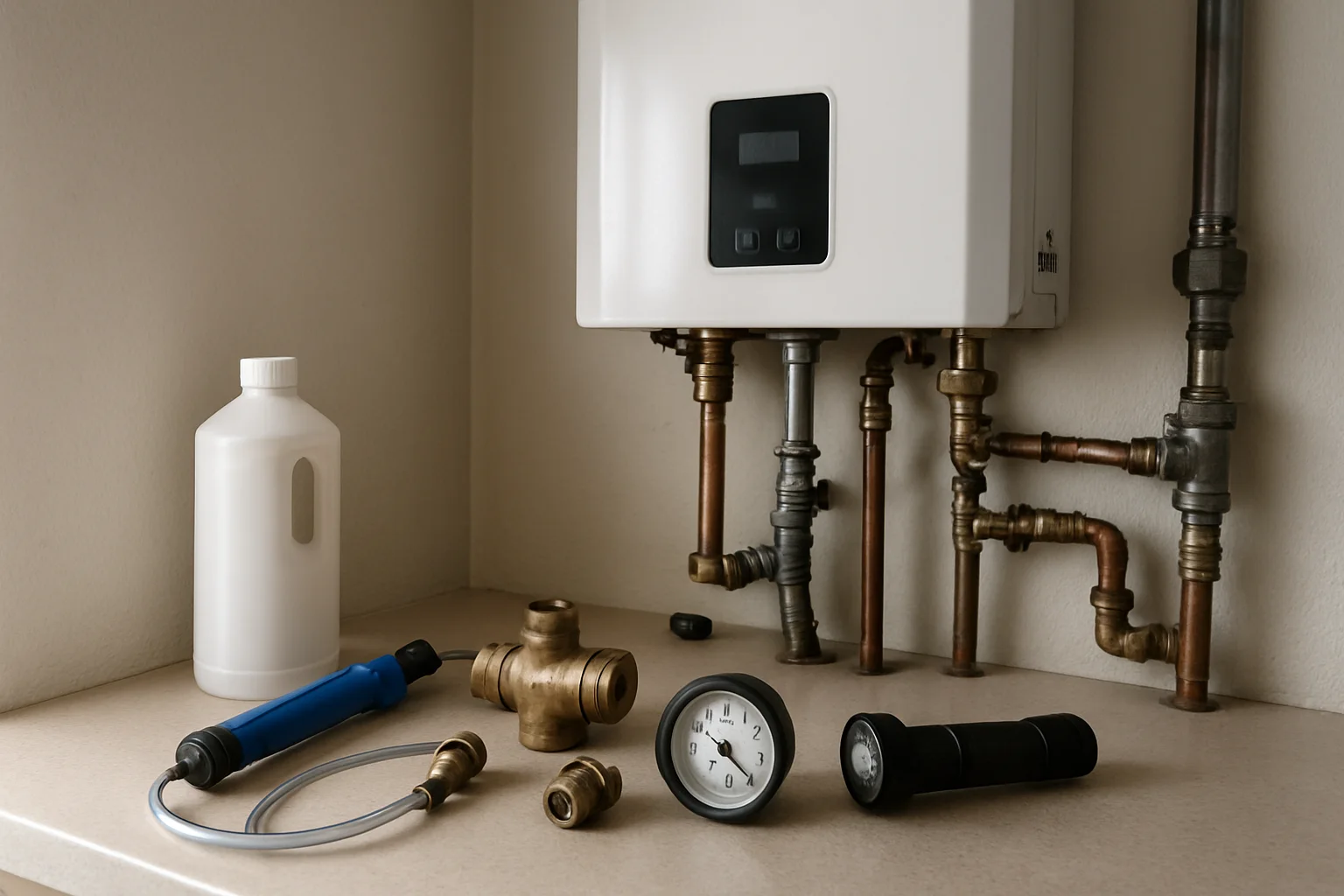
Why tankless water heaters need timely attention
Tankless water heaters are popular with Northwest Florida homeowners because they provide hot water on demand and avoid the standby losses associated with a storage tank. That convenience can make problems feel subtle at first. Many issues begin as small changes in comfort, water temperature, or system noise long before the unit fully stops producing hot water. Because these systems depend on steady water flow, proper gas or electrical supply, clean internal passages, and functioning controls, even a minor change in one part of the system can affect the whole unit.
For homeowners in Bay, Walton, and Okaloosa counties, the local environment can add stress. Mineral content in water, humidity, salt air near the coast, and seasonal shifts in usage all influence performance. A tankless water heater may still appear to be running while internal components are struggling with scale, restricted flow, sensor issues, or venting concerns. Professional assessment matters because these systems are precise. A trained plumber can determine whether the issue is simple maintenance, a part failure, an installation concern, or a broader plumbing condition affecting the heater’s operation.
How a tankless system works in everyday terms
A tankless water heater heats water only when a fixture calls for it. When you turn on a hot water tap, the unit detects the flow, activates the burner or electric heating elements, and sends hot water to the home. Unlike a tank system, there is no large reservoir of heated water waiting in storage. That means the unit has to respond accurately each time demand changes. If flow sensors, ignition parts, heating elements, or venting systems are not working correctly, the heater may delay, cycle poorly, or fail to deliver the expected temperature.
This design is efficient, but it also means diagnosis is not always obvious to the homeowner. A shower that starts cold and then warms, a sink that only gets lukewarm water, or a system that seems fine in one fixture but not another can all point to different causes. The issue may be in the heater itself, the plumbing layout, or the water supply conditions feeding the unit. Because tankless systems rely on exact conditions, professional troubleshooting is the safest way to sort out whether the problem is mechanical, mineral-related, pressure-related, or tied to home plumbing rather than the heater alone.
Temperature swings and inconsistent hot water
One of the most common warning signs is inconsistent water temperature. Homeowners may notice hot water that turns warm, then cool, then hot again during the same shower. Sometimes the change is subtle, and other times it feels dramatic enough to interrupt everyday routines. These swings can come from several causes, including scaling inside the heat exchanger, a clogged inlet filter, fluctuating water pressure, an undersized unit for the home’s demand, or a component that is no longer responding correctly to temperature signals.
A professional assessment focuses on pattern and context. A plumber will want to know when the problem happens, which fixtures are affected, whether the issue occurs during high demand times, and whether the unit has been serviced recently. That information helps separate a maintenance issue from a supply problem or control malfunction. In Northwest Florida homes, hard water and sediment can make temperature instability more likely because mineral buildup reduces heat transfer efficiency. Homeowners should not assume the unit simply needs a reset every time temperature swings occur. Repeated instability is a signal that the system deserves inspection before comfort problems become a complete loss of hot water.
Reduced hot water flow at fixtures
Another sign of trouble is reduced hot water flow. The water may still be warm, but the amount coming from the fixture seems weaker than usual. This can happen when buildup collects in the heater, filters become restricted, or a plumbing issue is limiting the flow needed to activate the unit correctly. Tankless heaters depend on a minimum flow rate to start and continue heating. If that flow is impaired, the system may short cycle, shut off, or never fully engage.
Homeowners sometimes mistake reduced flow for a problem with the showerhead or faucet only, but the source can be broader. A technician will look at the unit, the fixtures, the water supply line, and the home’s pressure conditions. In some cases, sediment or scale inside the heater can create a bottleneck that affects multiple fixtures. In others, a valve issue or installation concern may be narrowing flow. Because the exact cause matters for the repair approach, it is better to have a professional identify where the restriction begins rather than guessing. That keeps the diagnosis accurate and reduces the chance of unnecessary part replacement or repeated service calls.
Error codes, indicator lights, and shutdowns
Modern tankless water heaters often communicate problems through error codes, blinking lights, or shutdown behavior. When the system stops producing hot water and displays a code, it is telling the homeowner that one of its safety or operating checks has failed. Common triggers can include ignition trouble, venting problems, water flow issues, overheating protection, flame detection errors, or sensor faults. Some homeowners can clear a display temporarily, but if the same code returns, it usually means the underlying issue remains unresolved.
A professional diagnosis is important because the same visible code may have different underlying causes depending on the unit and the conditions around it. A plumber does not just read the code and replace a part at random. The technician checks gas supply or electrical conditions, examines the venting or exhaust path, verifies water flow, and inspects the system for signs of scale or damage. This step-by-step approach helps prevent recurring failures. If your tankless heater is shutting down intermittently, especially during busy household periods, it is a strong sign that the system needs more than a restart. The unit may be protecting itself from a condition that should be corrected before it causes a larger breakdown.
Noisy operation and unusual sounds
A tankless water heater should not be loudly banging, popping, rattling, or making harsh humming noises during normal operation. Some sound is expected as the unit activates, but unusual noise can point to restricted water passages, scale buildup, loose mounting, fan concerns, or combustion-related issues depending on the model. Noise is especially worth noting if it is new or if the system sounds different than it did before. Even when the water still heats, odd sounds can indicate that the heater is working harder than it should.
Professional assessment helps distinguish harmless sound from a warning sign. A plumber can inspect whether the noise is coming from water movement, ignition, the fan assembly, or a plumbing component vibrating near the unit. This matters because a sound problem may not originate inside the heater at all. For example, pressure changes in the home or loose piping can create noise that seems to come from the unit. In coastal and humid areas, equipment can also be exposed to conditions that affect metal parts over time. Rather than waiting for noise to become a failure, homeowners should treat it as a useful early indicator that the system may need service or maintenance.
Low water pressure and related plumbing clues
If hot water pressure drops noticeably, the heater may not be the only cause, but it should be on the list. Tankless systems have internal screens, flow controls, and heat exchangers that can be affected by sediment or mineral buildup. When those passages narrow, the result can be reduced pressure or a feeling that the hot water side of the house is weaker than the cold side. Homeowners may notice this in showers, tubs, or a sink with a long wait before strong hot water arrives.
A professional diagnosis considers the entire plumbing picture. The plumber checks whether the pressure issue is isolated to hot water or affects both hot and cold lines, whether the problem is local to one fixture or throughout the home, and whether the heater is receiving adequate supply. In some homes, the apparent pressure loss is actually a symptom of another plumbing restriction that the tankless unit is only making more noticeable. In others, the heater’s maintenance history or installation conditions are the real concern. Because pressure problems can be caused by more than one system, professional evaluation avoids guesswork and helps target the true source of the issue instead of treating only the symptom.
Hard water, scale, and Northwest Florida conditions
Northwest Florida homes often contend with mineral buildup over time, and that is one of the biggest concerns for tankless water heaters. Scale forms when dissolved minerals settle inside the heater’s heat exchanger and related passages. As buildup accumulates, the unit becomes less efficient, may heat unevenly, and can eventually strain key components. Scale does not always cause an immediate failure. More often, it slowly robs performance until homeowners notice hotter-than-usual operating sounds, longer waits for hot water, or temperature instability.
A professional plumber can determine whether scale is present and how severe it has become. That assessment may include inspecting the heater’s service history, looking for signs of restricted flow, and evaluating whether maintenance has been delayed. Because scale often develops gradually, homeowners may not realize the unit has been under stress for months. The value of diagnosis is not just confirming buildup; it is understanding whether the heater can be restored through proper servicing or whether another problem, such as a valve issue or sensor malfunction, is also involved. In a climate where humidity and coastal conditions are common, proactive evaluation is a practical way to protect equipment and maintain dependable hot water for the home.
Gas, electrical, and venting concerns that require professional review
Tankless water heaters depend on safe and stable utility connections. Gas-fired units need proper gas supply, combustion air, and venting to operate correctly. Electric models depend on reliable power and suitable electrical capacity. If any of those conditions are off, the heater may fail to ignite, lose output, trip protection features, or stop working altogether. These are not issues to improvise around, because they involve safety systems and code-sensitive equipment.
A trained plumber can inspect for signs of venting obstruction, connection wear, or installation issues that may be affecting performance. The same is true for electrical supply concerns on electric models, where the problem may lie with the circuit, wiring, or the heater’s internal components. Homeowners should not assume that a repeated shutdown is just a nuisance. In many cases it is the system signaling that a professional evaluation is needed. The goal is not only to restore hot water, but to confirm that the unit is operating safely and as intended. This is one area where professional diagnosis is especially important because the cause may not be visible from the outside of the equipment.
When the problem is the unit versus the home plumbing
Not every hot water complaint means the tankless heater itself has failed. Sometimes the issue is actually in the home’s plumbing layout, fixture mix, water pressure, or usage pattern. For example, a heater may be functioning within its design limits, but multiple fixtures and appliances may be demanding more hot water than the system can comfortably provide at once. In other cases, the plumbing configuration may cause long wait times or uneven delivery that feels like a heater problem.
Professional diagnosis sorts out these possibilities. A plumber evaluates whether the unit is undersized for the home’s demand, whether the piping arrangement is contributing to delayed hot water, or whether a plumbing defect is creating a misleading symptom. This distinction matters because it determines the right solution. Replacing a heater will not fix a recirculation issue, a fixture restriction, or a pressure imbalance elsewhere in the house. Likewise, servicing the heater will not help if the real cause is a plumbing system condition outside the appliance. The most helpful inspection is one that looks at the heater and the surrounding plumbing together rather than treating them as separate mysteries.
What a professional tankless water heater diagnosis includes
A proper diagnosis is more than a quick glance at the unit. A plumber typically starts by learning what the homeowner has noticed, including when the issue began, which fixtures are affected, whether the problem is constant or intermittent, and whether there have been recent plumbing changes. That history helps narrow the possibilities before any testing begins. The technician then inspects the heater itself, checks for visible wear or leaks, reviews error indications if present, and evaluates how water and energy are reaching the system.
Depending on the symptoms, the assessment may include checking filters, flow conditions, venting or exhaust paths, temperature output, and the overall condition of the related plumbing. The purpose is to identify the root cause, not just the symptom. If scale is present, the plumber can determine whether maintenance is likely to restore performance. If the issue is mechanical or related to the installation environment, the diagnosis points toward the correct repair path. Homeowners benefit from this process because it turns an uncertain hot water problem into a clear plan. That clarity can save time, reduce repeat disruptions, and help protect the heater from avoidable wear.
Why early service helps homeowners avoid bigger disruptions
It is tempting to wait when a tankless water heater is only showing mild symptoms. Maybe the water is only a little inconsistent, the noise is occasional, or the error code clears on its own. But small changes often precede larger failures. When a system is struggling with scale, flow restrictions, sensor issues, or utility supply concerns, continued use can increase wear on components and make the eventual repair more complicated. Early service is usually easier to manage than emergency troubleshooting after a full loss of hot water.
For Northwest Florida homeowners, that matters because hot water is part of everyday comfort, cleaning, and household rhythm. A timely assessment can reveal whether the system simply needs maintenance, whether a part should be addressed, or whether another plumbing condition is driving the issue. The goal is to maintain dependable performance before the homeowner is left with a disruptive outage. Regular attention also helps the technician understand the unit’s condition over time, which can make future diagnostics faster and more accurate. In a season when households often rely heavily on hot water for guests, cleaning, or weather-related routines, early service is a practical choice rather than a luxury.
How 850 Plumber serves Bay, Walton, and Okaloosa homeowners
850 Plumber, part of veteran-owned A Superior Mechanical, serves homeowners across Bay, Walton, and Okaloosa counties with tankless water heater services focused on diagnosis, repair, and maintenance. When a homeowner calls about inconsistent water temperature, error codes, low flow, unusual noise, or repeated shutdowns, the goal is to identify the real source of the problem and explain the findings clearly. That matters because tankless systems can show similar symptoms for very different reasons, and a careful assessment is the best way to avoid unnecessary work.
If you are seeing warning signs from your tankless water heater, the next step is a professional inspection rather than a guess. A plumber can determine whether the issue is scaling, flow restriction, venting, electrical or gas supply, or another plumbing concern affecting the unit’s performance. For homeowners in Northwest Florida, dependable hot water starts with knowing when to bring in a professional. For service, contact 850 Plumber at 850-258-3225. A timely diagnosis can help restore comfort, protect the system, and keep a small issue from turning into a bigger disruption.
Explore related plumbing care
- Tankless Water Heater Services in Northwest Florida | 850 Plumber
- Water Heater Installation in Freeport, FL
- Water Heater Maintenance in Santa Rosa Beach, FL
- Water Heater Repair in Bay, Walton and Okaloosa Counties, FL
- Water Heater Replacement in Santa Rosa Beach, FL | 850 Plumber
- Water Heater Services in Bay, Walton & Okaloosa Counties, FL
Continue reading
- Water Heater Warning Signs and Professional Diagnosis for Northwest Florida Homeowners
- Water Heater Replacement in Santa Rosa Beach, FL: Warning Signs and Professional Diagnosis for Northwest Florida Homeowners
- Water Heater Repair Warning Signs and Professional Diagnosis for Northwest Florida Homeowners
Talk with the 850 Plumber team for help with your home or business.