
Why water heater problems feel different in Northwest Florida
In Bay, Walton, and Okaloosa counties, water heaters work in a climate that can be hard on plumbing systems in ways homeowners do not always expect. Warm, humid air, salt exposure in many coastal and near-coastal areas, hard or mineral-rich water in some neighborhoods, and year-round demand all affect how a water heater performs. A tank that is quietly aging may seem fine for a while, then begin showing symptoms that appear suddenly. That is why homeowners often notice a change in hot water first: it may run out sooner, take longer to recover, or arrive at the fixtures with an unusual look or smell.
These conditions make it especially helpful to think of water heater service as more than a repair task. It is a system check. A professional assessment looks at the heater itself, the connections, venting or electrical components, water quality clues, temperature control, safety devices, and the surrounding installation. For a Northwest Florida homeowner, that broad view can help separate a simple maintenance issue from an early warning sign of a larger failure. It can also help prevent avoidable water damage, loss of hot water, and unsafe operation.
When the hot water supply changes without warning
One of the most common signs of a water heater problem is a change in how long hot water lasts. A shower that used to stay hot may now cool off quickly, or a family may notice that the water heater cannot keep up with normal morning routines. This can happen with tank-style heaters when sediment builds up inside the tank, reducing capacity and forcing the system to work harder. It can also happen when a thermostat, heating element, gas control, or burner assembly is not operating as intended.
Not every hot water shortage means the tank has failed. A professional diagnosis helps determine whether the issue is caused by the heater, by mixing valves, by an undersized unit, or by changing household demand. That distinction matters because the right solution is not always replacement. A technician may find that the unit needs flushing, a component repair, adjustment, or simply a more careful evaluation of hot water usage patterns. Homeowners benefit from diagnosis because it reduces guesswork and helps match the service to the actual problem.
Strange water color or odor deserves attention
Discolored hot water is a warning sign that should not be ignored. Water that looks rusty, cloudy, yellow, or has visible particles may indicate corrosion inside the tank, a deteriorating anode rod, sediment buildup, or plumbing corrosion elsewhere in the system. If discoloration appears only in hot water, the water heater is often the first place a professional will investigate. If it appears in both hot and cold water, the source may be broader and require a different plumbing evaluation.
Odor is another clue. A sulfur or rotten-egg smell can be associated with bacterial activity in a water heater or reactions involving the tank, water chemistry, and internal components. This does not automatically mean the heater is unsafe, but it does mean the system should be assessed by a trained plumber. Professional diagnosis may include checking the temperature setting, looking for signs of sediment, evaluating the condition of the tank, and considering the water chemistry in the home. The goal is to identify the cause rather than treating the symptom alone.
Noises can reveal hidden sediment and stress
Water heaters are not supposed to become noticeably louder as they age. Rumbling, popping, crackling, sizzling, or banging sounds often suggest sediment buildup in the tank or stress on internal components. In areas where mineral content in water contributes to scale accumulation, sediment can settle at the bottom of a tank and interfere with efficient heating. As the heater warms water trapped beneath that layer, small bursts of steam or movement can create the sounds homeowners hear.
Noise is useful because it is a symptom that often appears before a larger failure. A professional assessment can tell whether the sound is caused by sediment, a failing heating element, thermal expansion, loose piping, or another issue. This matters because the right response depends on the source. Some problems may be addressed through maintenance, while others point to deeper wear that should be monitored. For homeowners, the key takeaway is simple: a noisy water heater is not just annoying. It is a signal worth having evaluated before the system becomes less efficient or begins leaking.
Leaks and moisture around the heater should be checked promptly
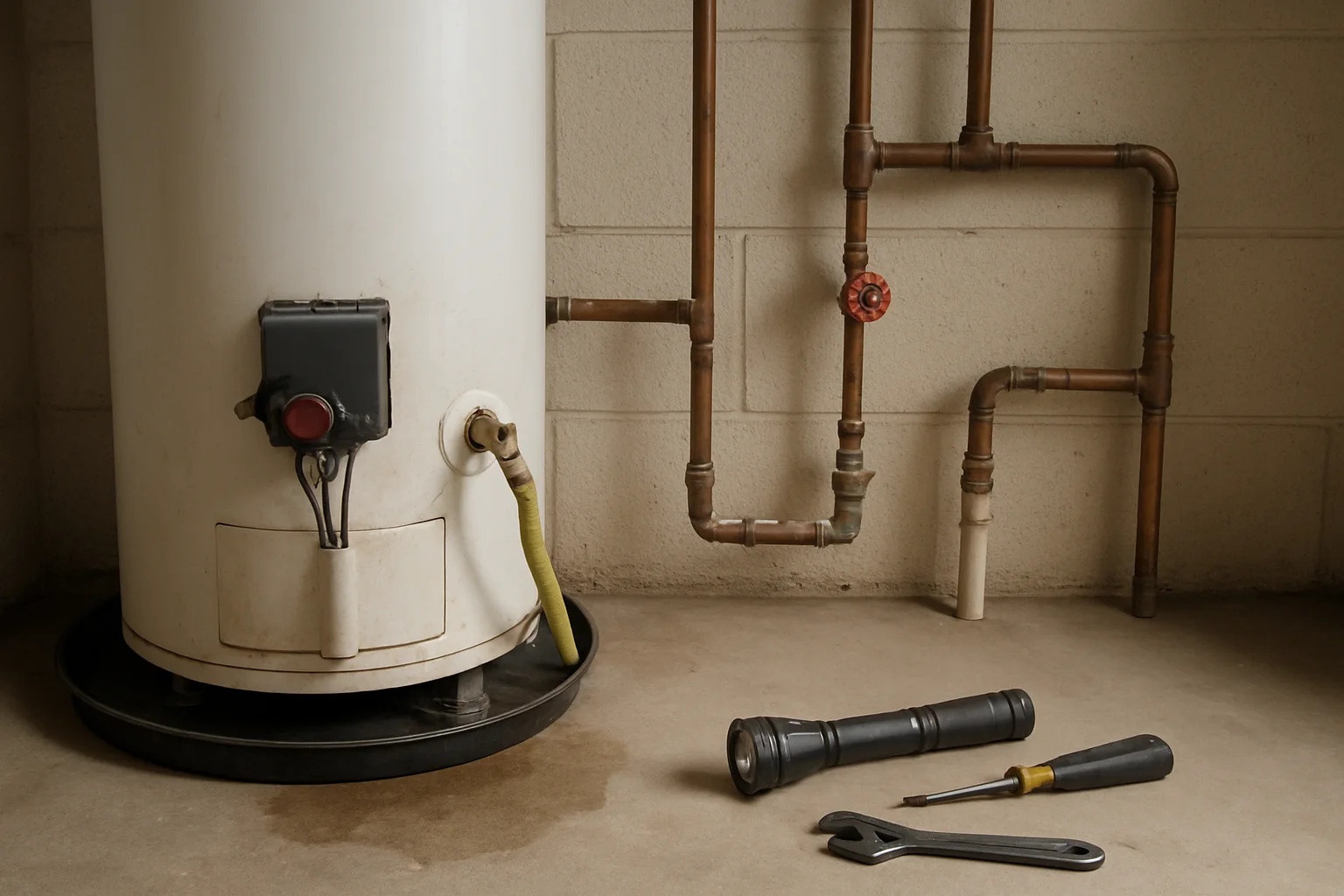
Any moisture around a water heater deserves attention. That includes puddling at the base, damp flooring, corrosion on fittings, or water marks on nearby walls or supports. A leak may come from a loose connection, a pressure relief component, the drain valve, the tank itself, or another nearby plumbing fitting. Because water heaters are often installed in garages, closets, utility rooms, or other parts of the home where leaks can go unnoticed, a small moisture problem can create significant damage over time.
Professional diagnosis is important because the location and pattern of the leak help reveal its cause. A technician will inspect the tank, valves, supply lines, discharge piping, and surrounding area to determine whether the problem is a serviceable component or a sign that the tank has reached the end of its life. Homeowners should avoid assuming that every leak can be tightened away. Some leaks are minor and repairable, but others indicate internal tank failure. A careful assessment helps prevent recurring water damage and supports the safest decision for the home.
Inconsistent temperature can point to control or sizing issues
When hot water is too hot, not hot enough, or fluctuates unexpectedly, the issue may be more complex than it first appears. On a tank heater, inconsistent temperature can be tied to thermostat settings, sediment interference, aging heating elements, burner performance, or problems with the dip tube or mixing components. On a tankless system, fluctuating temperature may point to flow rate issues, mineral buildup, ignition or sensor concerns, or installation factors affecting performance. In either case, the symptom often appears at the tap before the underlying cause is obvious.
Professional diagnosis helps sort out whether the water heater is failing, whether it is simply set or configured incorrectly, or whether another plumbing issue is creating the symptom. A trained plumber can evaluate the home’s demand, the unit’s capacity, the condition of components, and the installation environment. This is especially important for households that have changed occupancy, added bathrooms, or altered water use patterns over time. Temperature complaints are not just comfort issues; they can also relate to efficiency and safety, which makes proper assessment worthwhile.
Pilot, ignition, and power problems need professional troubleshooting
If a gas water heater will not stay lit, has trouble starting, or cycles unpredictably, the problem may involve the pilot assembly, igniter, gas supply, thermocouple or sensor, venting, or internal safety controls. Electric water heaters can have their own issues, including tripped breakers, failed elements, thermostat faults, or wiring concerns. These symptoms can look simple from the outside, but the underlying cause may require careful testing. Because fuel and electrical components are involved, this is not an area for guesswork.
A professional plumber can diagnose whether the heater is receiving the proper power or gas flow, whether safety devices are responding as designed, and whether the failure is isolated or part of a larger wear pattern. That distinction helps protect the home and avoids repeated resets or temporary fixes that do not solve the underlying issue. For homeowners, a system that keeps losing operation is a signal to schedule service rather than repeatedly waiting for it to restart on its own. A dependable diagnosis is the best route to a safe, lasting solution.
Pressure relief concerns are a safety issue, not just a maintenance issue
The temperature and pressure relief system on a water heater is an important safety feature. If homeowners notice water discharging from the relief valve, hear unusual hissing, or see signs that this component has been active, the heater should be inspected promptly. The valve is designed to release pressure under specific conditions, so visible discharge can indicate excessive temperature, pressure concerns, or a failing valve. It should never be ignored as a normal nuisance.
Professional diagnosis focuses on why the relief system is activating. Possible causes include a faulty valve, a water-logged expansion tank, overheating, excessive incoming pressure, or another condition that needs attention. Because pressure-related issues can affect more than the water heater itself, a plumber may examine the broader plumbing setup as part of the service call. Homeowners should avoid treating relief valve discharge as a problem to cover up. It is an important signal that the system may be operating outside normal conditions, and that is exactly when a trained assessment matters most.
Age and service history help guide the next step
A water heater does not have to fail completely before it becomes a candidate for replacement or major service. Age matters because tank linings, seals, elements, controls, and valves wear over time. The same is true for the surrounding plumbing connections. A unit may still produce hot water while also showing enough wear that a professional would recommend closer monitoring or planning ahead for replacement. Homeowners often benefit from understanding the likely life stage of their equipment before an emergency forces the issue.
Service history matters just as much as age. A heater that has been flushed or inspected periodically may present differently from one that has not been serviced in years. A professional diagnosis looks at visible wear, corrosion, previous repairs, mineral buildup, and current performance together. That gives homeowners a clearer picture of whether the best course is repair, continued monitoring, or planning for a new installation. This kind of evaluation can reduce surprises and helps families make decisions based on condition rather than guesswork.
Tank and tankless systems show problems in different ways
Tank-style water heaters often reveal trouble through rust-colored water, noise, leaks at the base, shorter hot water supply, or recovery problems. These systems store heated water, so sediment and corrosion play a bigger role in how they age. When a tank heater develops issues, the symptoms may build gradually and then become obvious when the unit can no longer meet demand. That is why many homeowners notice several signs at once once the tank starts to decline.
Tankless systems tend to show a different set of warning signs. These may include temperature swings, reduced flow, shutdowns, error codes, or performance problems during high demand. Because the heating process is more immediate, the system can be sensitive to flow, venting, scale buildup, and service conditions. A professional diagnosis is especially useful here because the issue may not be the heater alone. It may involve maintenance, water quality, gas supply, electrical support, or installation details. Understanding the type of system in the home helps shape the right assessment and the right solution.
Why Northwest Florida water conditions can affect heater performance
Local water conditions influence how a heater ages and how symptoms appear. Minerals in the water can settle inside a tank or leave scale on heating surfaces. Over time, that buildup can affect efficiency, create noise, and shorten the useful life of components. In coastal and humid environments, external corrosion can also become a factor, especially where moisture and salt exposure are part of daily life. Homeowners may not see these changes until the system starts behaving differently, which is why regular observation is helpful.
A professional diagnosis considers both the heater and the water feeding it. That broader view can explain why one home experiences sediment-related problems while another has more corrosion or control issues. It can also help a plumber recommend maintenance steps that fit the home’s conditions rather than using a one-size-fits-all approach. For Northwest Florida homeowners, this matters because water heater symptoms often have local causes. Understanding those causes makes service more effective and helps protect the plumbing system as a whole.
What homeowners can notice before calling for service
Homeowners do not need to diagnose the problem themselves, but noticing early changes can help a plumber evaluate the issue faster. Keep track of whether the water runs out sooner, whether the heater makes new sounds, whether the water looks different, whether the temperature changes unexpectedly, or whether there is moisture near the unit. Even small changes are useful clues. Noting when the symptoms happen, such as during busy morning use or after the heater has been idle, can also help narrow the cause.
What homeowners should not do is assume the symptom will disappear on its own. Water heater problems usually do not improve by waiting, and repeated symptoms can lead to more wear or water damage. Avoid opening panels, adjusting gas controls, or attempting internal repairs. Those tasks are better left to professionals because they involve safety concerns and because the wrong adjustment can make diagnosis harder. A careful homeowner observation, paired with a professional inspection, is usually the best combination for reaching a safe and accurate solution.
How professional water heater diagnosis protects the home
Professional diagnosis is valuable because it connects symptoms with causes. A trained plumber can inspect the heater, check for leaks, test components, evaluate venting or electrical supply, assess sediment and corrosion, and determine whether the issue is repairable or whether replacement is the smarter option. That is much more useful than guessing from a single symptom. It also helps avoid unnecessary work, since not every water heater problem means the tank itself must be replaced.
For homeowners in Bay, Walton, and Okaloosa counties, that service can be especially important because the region’s climate and water conditions can make water heater problems show up in subtle ways first. 850 Plumber, part of veteran-owned A Superior Mechanical, serves local homeowners with water heater services that focus on accurate assessment and practical solutions. If your water heater is showing warning signs, professional help can clarify what is happening and what should come next. For service in Bay, Walton, and Okaloosa counties, call 850-258-3225.
Explore related plumbing care
- Tankless Water Heater Services in Northwest Florida | 850 Plumber
- Water Heater Installation in Freeport, FL
- Water Heater Maintenance in Santa Rosa Beach, FL
- Water Heater Repair in Bay, Walton and Okaloosa Counties, FL
- Water Heater Replacement in Santa Rosa Beach, FL | 850 Plumber
- Water Heater Services in Bay, Walton & Okaloosa Counties, FL
Continue reading
- Water Heater Replacement in Santa Rosa Beach, FL: Warning Signs and Professional Diagnosis for Northwest Florida Homeowners
- Water Heater Repair Warning Signs and Professional Diagnosis for Northwest Florida Homeowners
- Water Heater Maintenance in Santa Rosa Beach, FL: Warning Signs and Professional Diagnosis for Northwest Florida Homeowners
Talk with the 850 Plumber team for help with your home or business.