
Why water heater replacement deserves timely attention in Northwest Florida
In Santa Rosa Beach and across Walton County, a water heater often works harder than homeowners realize. Humidity, mineral content in local water, heavy household demand, and year-round use can all add stress to a unit that may already be near the end of its service life. When a water heater begins to change in the way it heats, stores, or delivers water, those changes are often early clues that replacement may be approaching. A thoughtful response starts with recognizing the warning signs before the system fails at an inconvenient time.
Waiting too long can turn a manageable equipment decision into an emergency. A failing tank may leak, lose heating efficiency, or deliver water that no longer meets a family’s daily needs. For homeowners, that can mean cold showers, disrupted laundry, or water damage concerns. Professional evaluation from 850 Plumber, part of veteran-owned A Superior Mechanical, helps separate minor issues from genuine replacement needs. The goal is not to rush a decision, but to understand the condition of the system and plan responsibly for a new one when the time is right.
How a water heater works and why diagnosis matters
A residential water heater is designed to store and heat water so it is available when needed. Whether the unit is powered by electricity or gas, its internal components must work together reliably: the tank, heating elements or burner assembly, thermostat, valves, and safety features all play important roles. Over time, heat cycling, sediment buildup, corrosion, and wear can change how the system performs. Because many symptoms overlap, a homeowner may notice a problem without being able to tell whether the issue is repairable or whether replacement is the better choice.
Professional diagnosis is valuable because it focuses on the whole system, not just one symptom. A technician can inspect the age of the unit, check for corrosion, test performance, evaluate temperature consistency, and look for leaks or signs of pressure trouble. That broader view matters in Santa Rosa Beach homes, where conditions can make small issues progress faster than expected. Instead of guessing from a single cold shower or rusty water event, a professional assessment helps determine whether the water heater still has dependable life left or whether a replacement plan makes more sense.
Age and service life clues homeowners should not ignore
One of the clearest indicators of replacement need is age. Water heaters do not last forever, and their expected service life depends on water quality, maintenance, household demand, and how hard the equipment has been working. A unit that has been in place for many years may continue to function for a while, but older systems are more likely to show intermittent problems, slower recovery time, and visible wear. Even if the heater is still producing hot water, age alone can help frame the risk of future failure.
Homeowners in Santa Rosa Beach should not rely on age alone as the only factor, but it is an important part of the picture. A relatively newer unit with a minor control issue may be worth repairing, while an older tank with multiple symptoms may be a better candidate for replacement. A technician can help interpret that balance. Professional diagnosis may include checking the manufacturing label, reviewing the installation environment, and noting whether past repairs suggest a pattern of decline. The goal is to match the equipment’s actual condition with a practical plan, rather than making assumptions based on one isolated problem.
Rust-colored water and corrosion concerns
Rust-colored water can be alarming, and for good reason. In some cases, discoloration may come from plumbing components elsewhere in the home, but the water heater is often one of the first places to investigate. Corrosion can develop inside the tank or on connections and fittings, especially as a system ages. When rust begins to show up in hot water only, that can point toward deterioration inside the heater itself. If the discoloration appears more broadly, a professional can help determine whether the source is the tank, the piping, or another part of the plumbing system.
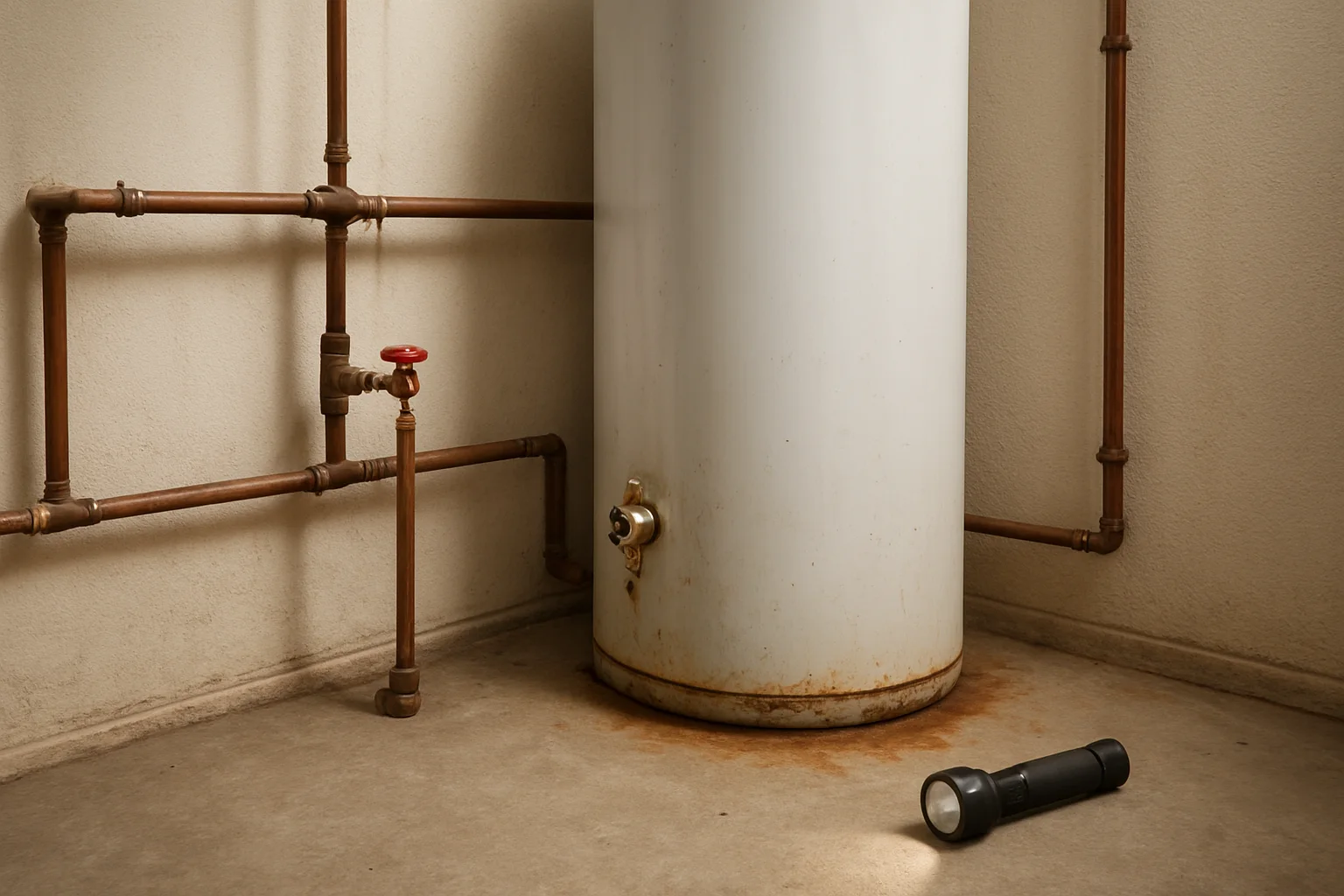
Corrosion is more than a cosmetic issue because it can signal that the tank lining or internal components are weakening. Once that process advances, repair may not provide a lasting solution. A plumber can inspect the outside of the unit for staining, check around the base for moisture, and evaluate the condition of anode-related protection and fittings where applicable. For homeowners, the key is to treat rust as an assessment trigger rather than something to monitor indefinitely. If corrosion is active, replacement planning may be the safest and most cost-effective long-term path.
Leaks, moisture, and the difference between repair and replacement
Any moisture around a water heater deserves attention. A small amount of condensation may occur in some situations, but actual pooling water, recurring dampness, or rust streaks can point to a more serious issue. Leaks may originate from supply connections, a valve, the drain area, or the tank itself. The location and pattern of the moisture matter, and that is why a detailed inspection is important. A homeowner might see water on the floor and assume the worst, but the real cause could be a fitting problem that is repairable. On the other hand, a tank leak often means the unit is nearing the end of its useful life.
Professional diagnosis helps determine whether the problem is isolated or structural. A plumber can inspect the surrounding area, evaluate the source of the leak, and look for evidence of repeated moisture exposure that could damage flooring or nearby materials. If the tank shell is compromised, replacement is typically the practical answer. If a valve or connection is at fault, a different solution may be possible. The benefit of a professional assessment is clarity: homeowners get a grounded explanation of what is failing and why, instead of having to guess based on a wet utility closet or garage floor.
Inconsistent temperatures and weak hot water performance
Hot water that runs out too quickly or fluctuates during normal use is often a sign that something has changed inside the heater. Homeowners may notice that showers become lukewarm earlier than they used to, dishwashing takes longer, or the water temperature seems to shift without warning. These symptoms can come from sediment buildup, failing components, thermostat problems, or a tank that no longer stores and reheats water efficiently. While the issue may feel like a minor annoyance at first, it can become increasingly disruptive for a household.
A professional can test whether the heater is actually producing the correct water temperature, whether recovery time is normal, and whether the system is keeping up with household demand. In some cases, a repair may restore performance. In others, the unit may be undersized for current usage or too worn to function reliably. That is especially important for families whose water habits have changed over time. A replacement conversation should not be based only on discomfort, but on how well the current heater fits the home’s needs. If performance has become inconsistent and the unit is aging, a new water heater may be the more dependable solution.
Noises, sediment, and what they can reveal about the tank
Popping, rumbling, cracking, or banging sounds from a water heater are often linked to sediment accumulation inside the tank. Over time, minerals and debris can settle and harden, creating a barrier between the burner or heating elements and the water. That can make the heater work harder than necessary and may reduce efficiency. In a coastal Florida environment, this issue can be especially frustrating because a system may seem to be functioning until the noises become hard to ignore. By that point, the tank may already be under significant stress.
Professional inspection can help determine whether the noise is mostly a maintenance issue or a symptom of more advanced wear. A plumber may evaluate the age of the heater, inspect for signs of overheating, and assess whether the sediment has contributed to broader decline. While some units can still be serviced, repeated noise can indicate that the tank is no longer operating efficiently and may be approaching the end of its life. For homeowners, the important takeaway is that unusual sound is not simply an inconvenience. It is a clue that the water heater deserves a closer look before an unexpected failure creates a larger problem.
Higher utility use and reduced efficiency
A water heater that has to work harder to produce the same amount of hot water can contribute to higher utility use. Homeowners may not see an obvious spike tied to one event, but they may notice that the system seems to run longer, recover slower, or struggle to keep up during normal routines. Efficiency loss can happen gradually as internal parts wear, sediment builds up, or insulation and components lose effectiveness. Because the change is gradual, it is easy to overlook until the household begins noticing less comfort and more frustration.
A professional diagnosis can help determine whether the water heater is simply due for maintenance or whether replacement is the better path. Technicians can evaluate how the unit is operating under real conditions and whether its current performance is reasonable for its age. If the heater is wasting energy just to maintain basic service, replacement may improve consistency and reduce strain on the household system. That is not about making promises of savings, but about recognizing that an aging, underperforming water heater can become a recurring source of inefficiency. A professional can help homeowners understand where the equipment stands and what decision is likely to serve the home best over time.
Safety valves, pressure concerns, and why professional checks matter
Water heaters include safety features designed to manage pressure and temperature. When these components show signs of trouble, they should not be ignored. Homeowners may not always recognize the significance of a valve that drips, a discharge line that shows staining, or a heater that seems to operate irregularly. These can be indicators that the system is not maintaining normal conditions. Because pressure-related issues can affect both equipment and surrounding materials, they are best handled through professional inspection rather than assumption.
A plumber can assess whether the safety devices are functioning properly and whether the overall system shows signs of stress. This is especially important when a heater is older, because aging equipment may be more prone to irregular behavior. Professional diagnosis does not mean every warning sign requires immediate replacement, but it does mean the issue is being evaluated in context. If the tank and its safety components are no longer working together reliably, replacement may be the responsible course. For homeowners, this is one of the clearest reasons not to delay an inspection when the heater starts behaving differently. Safety-related questions deserve a careful, qualified look.
Why local conditions in Santa Rosa Beach can affect water heaters
Northwest Florida homes face environmental conditions that can influence how plumbing equipment ages. Humidity, coastal air, and the demands of local water quality can all affect exposed components and accelerate wear on external parts. Even inside the home, a garage, closet, or utility area may place the heater in a setting that is less forgiving than a dry interior space. Over time, these conditions can contribute to corrosion, hardware deterioration, or performance changes that a homeowner may not notice right away.
That is why a local perspective matters. A water heater in Santa Rosa Beach may experience different wear patterns than the same model in another region. A professional familiar with the area can look for environmental clues during inspection and factor them into the replacement recommendation. This does not mean every unit will fail early, only that local conditions should be part of the diagnosis. For homeowners, it is helpful to understand that the environment around the heater is part of its story. The equipment does not age in isolation, and the surrounding conditions can influence whether repair remains practical or replacement becomes the smarter decision.
What a professional assessment from 850 Plumber typically focuses on
A professional water heater assessment is designed to answer a simple question: does this unit still deserve repair, or is replacement the better long-term option? To answer that, a plumber will typically review the heater’s age, visible condition, performance, signs of leakage or corrosion, and the condition of related plumbing connections. The inspection may also include checking whether the system is meeting the household’s hot water needs and whether the symptoms point to isolated failure or broader decline. This kind of evaluation helps homeowners avoid both unnecessary replacement and delayed action.
850 Plumber, part of veteran-owned A Superior Mechanical, serves homeowners in Santa Rosa Beach and throughout Bay, Walton, and Okaloosa counties. The company can help homeowners understand the condition of an existing heater and talk through what replacement would involve if the equipment is near the end of its life. The purpose of the visit is not just to identify a problem, but to explain it clearly so a homeowner can make an informed decision. A careful diagnosis is often the difference between a short-term fix and a durable plan for the home’s hot water needs.
Planning replacement before an emergency happens
The best time to consider water heater replacement is often before the unit fails completely. Once a tank starts leaking or stops producing dependable hot water, the situation can become urgent and stressful. Planning ahead gives homeowners time to consider the condition of the old unit, understand the home’s current hot water demands, and decide how to move forward with less pressure. It also gives a plumber the opportunity to recommend replacement based on evidence rather than emergency conditions. That leads to better decisions and fewer surprises.
For Santa Rosa Beach homeowners, planning ahead is especially useful because household schedules, seasonal occupancy, and climate-related wear can all influence when a heater begins showing trouble. If several warning signs are present at once, such as age, rust, inconsistent temperatures, or a leak, replacement may be the most practical choice. Even when the decision is not immediate, professional diagnosis helps homeowners prepare. Instead of waiting until a failure interrupts daily life, they can use the inspection to anticipate next steps and maintain more control over the process. That is the real benefit of early evaluation: more clarity, less damage risk, and a smoother path to reliable hot water.
How to think about next steps as a homeowner
If your water heater is showing warning signs, the safest next step is a professional inspection rather than trial-and-error troubleshooting. Homeowners should pay attention to changes in water temperature, unusual noise, discoloration, moisture, and any shift in how long hot water lasts. These symptoms do not all mean the same thing, but together they can point toward a system that needs closer attention. A qualified plumber can determine whether the problem is repairable or whether replacement is the more sensible investment in your home’s comfort and stability.
For homeowners in Santa Rosa Beach, 850 Plumber can provide that kind of assessment with a local understanding of the conditions that affect plumbing systems in Northwest Florida. If you are noticing signs that your water heater may be failing, it is better to get a diagnosis sooner rather than later. A professional review can help you avoid unnecessary disruption, understand the condition of the equipment, and make a confident decision. To discuss a water heater concern, homeowners can contact 850 Plumber at 850-258-3225. The goal is straightforward: help you understand what your system needs and take the right next step for your home.
Explore related plumbing care
- Water Heater Replacement in Santa Rosa Beach, FL | 850 Plumber
- Water Heater Maintenance in Santa Rosa Beach, FL
- Pipe Replacement in Santa Rosa Beach, FL
- Water Softening Services in Santa Rosa Beach, FL
- Tankless Water Heater Services in Northwest Florida | 850 Plumber
- Water Heater Installation in Freeport, FL
Continue reading
- Water Heater Maintenance in Santa Rosa Beach, FL: Warning Signs and Professional Diagnosis for Northwest Florida Homeowners
- Water Softening Services in Santa Rosa Beach, FL: Warning Signs and Professional Diagnosis for Northwest Florida Homeowners
- Pipe Replacement in Santa Rosa Beach, FL: Warning Signs and Professional Diagnosis for Northwest Florida Homeowners
Talk with the 850 Plumber team for help with your home or business.