
Why hidden leaks matter in Northwest Florida homes
Hidden leaks can do more than waste water. In Bay, Walton, and Okaloosa counties, moisture can move quietly through a home’s structure, under flooring, behind walls, or below a concrete slab before the problem becomes obvious. By the time homeowners notice a stain, musty smell, warm floor area, or unexplained utility bill increase, the leak may already have been active long enough to affect drywall, baseboards, subflooring, or foundation materials. Because much of Northwest Florida experiences humid weather for much of the year, small plumbing leaks can also blend into normal moisture conditions and go unnoticed longer than they would in a drier climate. That is one reason leak detection deserves prompt attention rather than a wait-and-see approach.
A leak is not always dramatic. It may begin as a pinhole in a pipe, a fitting that has loosened over time, or a line that has developed stress from age, ground movement, or corrosion. Even a slow leak can gradually soak insulation, encourage microbial growth, and increase the risk of concealed damage. Homeowners often first notice secondary clues such as a soft spot in flooring, peeling paint, or the sound of water when no fixture is in use. Professional leak detection helps identify not just where water is appearing, but where it is actually entering the home’s structure. That distinction matters because the visible symptom may be several feet away from the source, especially in slab construction.
How slab leaks differ from other plumbing leaks
A slab leak is a leak in a water line that runs beneath or within the concrete foundation of a home. Unlike a leak under a sink or behind a toilet, a slab leak may remain hidden because the pipe is enclosed by concrete and flooring materials. In many homes, the first signs appear far from the actual leak location. Homeowners may notice one room feels unexpectedly warm, a persistent damp area appears on flooring, or there is the faint sound of running water even when all fixtures are off. Because the pipe is embedded below the home, the leak can affect multiple surfaces before its exact source is confirmed.
Other plumbing leaks can be easier to spot because they are accessible, but they can still be deceptive. A leak in a wall cavity or attic may travel along framing or drywall before becoming visible at a seam, ceiling edge, or baseboard. Slab leaks are often more complex because they may also affect foundation moisture levels and the integrity of floor coverings. In Northwest Florida, where slab foundations are common, professional diagnosis is important before making assumptions about the type of leak. The right repair approach depends on whether the problem is in a supply line, drain line, or fixture connection, and whether the plumbing system itself or the surrounding structure has been affected.
Warning signs homeowners should not ignore
One of the most practical ways to protect a home is to recognize early warning signs. An unusually high water bill is a common clue, especially if household water use has not changed. Constant sound of water movement, pressure changes at fixtures, and damp or discolored baseboards can also point to hidden leakage. In some cases, homeowners notice a musty odor, mildew growth in a localized area, or a floor that feels warped, softened, or uneven. Warm spots on a floor may suggest a hot water line leak below the slab, while a cold or persistently damp area may indicate a different type of plumbing issue. These clues are useful because they help narrow the area that needs a professional inspection.
It is important not to assume a small clue means a small problem. Many hidden leaks start gradually and worsen over time. A tiny leak can saturate insulation, stain a ceiling below, or create repeated moisture cycles that are difficult to reverse. In homes with tile or laminate flooring, a leak may first appear as a grout discoloration, subtle swelling, or a change in the way the floor feels underfoot. In carpeted areas, homeowners may notice a cool or slightly damp feel in one zone. These signs do not confirm the exact source, but they do suggest a professional assessment is warranted. Early identification often reduces the chance of extensive repair work later.
What causes hidden leaks in local homes
There is no single cause for hidden plumbing leaks. Pipes can develop wear from age, material fatigue, soil movement, installation issues, or pressure fluctuations. In a coastal and inland mix like Bay, Walton, and Okaloosa counties, homes may also experience conditions that affect plumbing over time, including changing soil moisture, settling, and the long-term effects of corrosion on older piping materials. Even if a home is well maintained, any plumbing system can eventually develop a weak point. A fitting, valve, supply line, or section of pipe may fail without warning, especially if it has already been under stress for years.
Some leaks are linked to previous repairs, renovations, or added fixtures that place new demands on an older system. Others occur because a pipe inside the slab is difficult to inspect and may not show any outward sign until damage spreads. Drain lines can also leak, though those symptoms may look different from a pressurized water line leak. Professional plumbers look at the overall condition of the system, not just the wet area, because the cause may be systemic rather than isolated. That broader review helps determine whether the home needs a localized repair, targeted pipe replacement, or additional investigation to rule out other weak points in the plumbing system.
Why Northwest Florida humidity can make leaks harder to spot
Humidity is part of everyday life in Northwest Florida, and that matters when evaluating water issues in a home. A surface that feels damp may not immediately seem unusual in a humid climate, especially during warm months or after rainy periods. That can make it easier to overlook a slow leak. High ambient moisture can also make it harder for homeowners to judge whether a musty smell is from a plumbing problem, a ventilation issue, or both. Because of that overlap, professional leak detection relies on more than visual observation. It often includes testing, equipment, and a full review of symptom patterns to separate normal environmental moisture from actual plumbing failure.
Homes near the coast or in moisture-prone areas can also experience faster deterioration in some building materials once water intrusion begins. Drywall, trim, and flooring may show visible changes sooner if they have already been exposed to humidity. That does not mean every damp area is a plumbing leak, but it does mean that recurring moisture deserves attention. A plumber can help determine whether the source is plumbing related, condensation related, or tied to another structural issue. The goal is not to guess based on a single symptom. It is to identify the real source so the home can be protected from repeat damage and unnecessary repairs.
How professional leak detection works
Professional leak detection is a diagnostic process, not just a quick visual check. A plumber typically starts by reviewing the homeowner’s observations, then inspects exposed fixtures, supply lines, valves, and visible plumbing connections. If the leak is hidden, the plumber may use specialized methods to narrow the search area without unnecessary demolition. Depending on the situation, that can include listening for water movement, checking pressure behavior, isolating sections of the plumbing system, or using moisture readings to map where water is collecting. The purpose is to find the source efficiently while limiting disruption to the home.
For slab leaks and other concealed leaks, the diagnostic process often requires patience and precision. Because the visible damage may be away from the actual source, a systematic approach is especially important. A professional assessment helps determine whether the issue is active, intermittent, or related to another factor such as a fixture that only leaks under pressure. Once the source is confirmed, the plumber can explain the available repair approaches and what each would mean for the home. That kind of assessment is valuable because it prevents unnecessary opening of walls or flooring and gives the homeowner a clearer understanding of the problem before any repair work begins.
Tools professionals may use to locate a leak
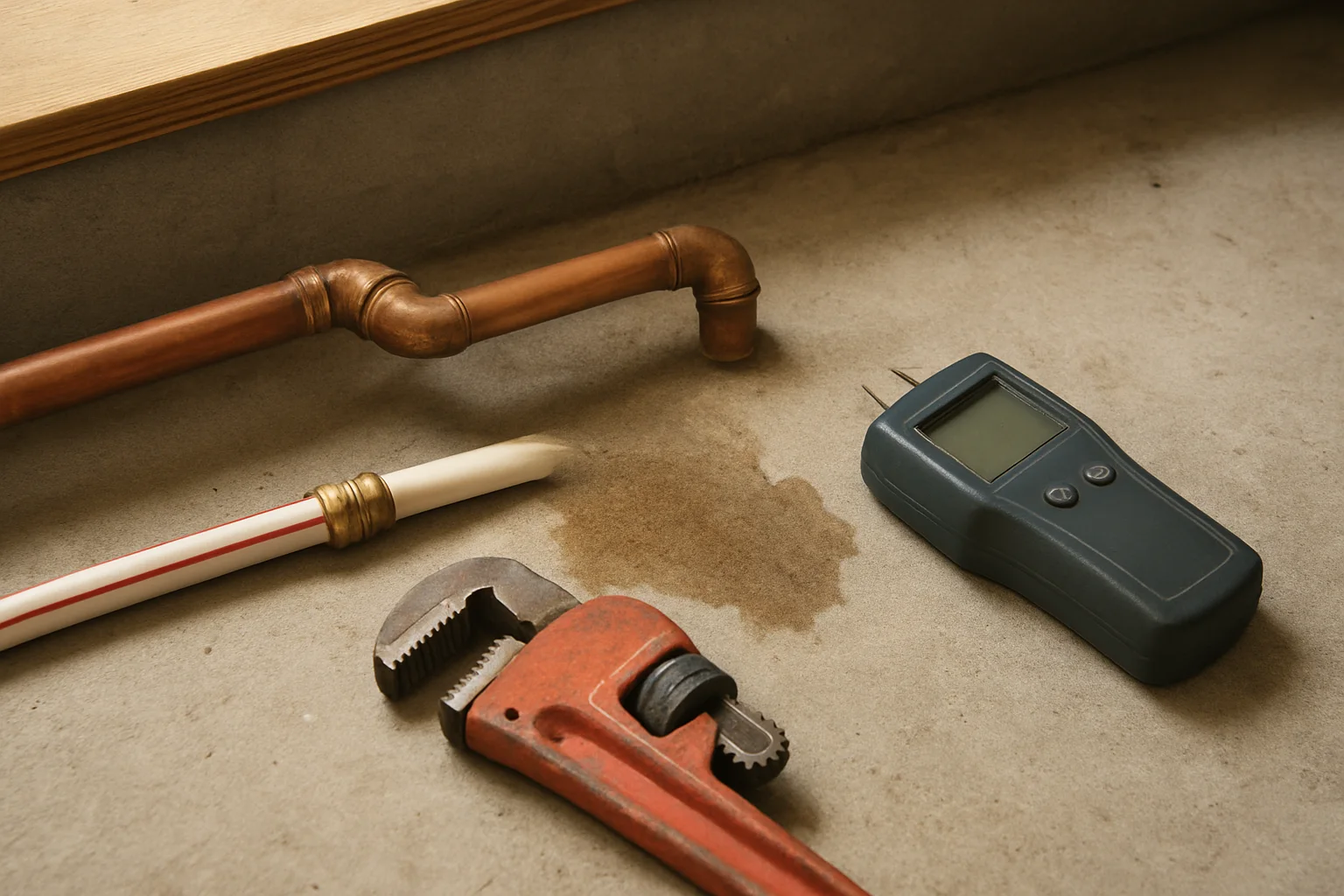
Leak detection often benefits from equipment designed to identify subtle signs that the human eye may miss. A plumber may use acoustic listening devices to detect the sound of water escaping from a pressurized line. Moisture meters can help measure the level of dampness in materials and show where moisture is concentrated. Thermal imaging may reveal temperature differences that suggest hidden water movement or a hot water line issue beneath flooring or behind walls. These tools are not magic fixes, but they can help reduce guesswork and support a more accurate diagnosis.
The best results usually come from combining technology with plumbing experience. A tool may indicate that moisture is present, but a professional still has to interpret what that means in context. For example, a cool area on the floor might point to a leak, but it could also reflect air movement or a different building condition. A skilled plumber looks at the whole pattern: water pressure, fixture behavior, the layout of the plumbing, and where evidence appears inside the home. That combination helps distinguish a true slab leak from another issue and supports a repair plan that addresses the actual source instead of only treating the symptom.
Why a proper diagnosis matters before any repair
It can be tempting to focus on the most visible wet spot and stop there, but that can lead to incomplete repairs. A professional diagnosis matters because the same symptom can come from several different causes. A stain on the ceiling might be from a drain line, a supply line, or even condensation. A damp floor may point to a slab leak, but it may also be affected by a nearby fixture, appliance line, or plumbing connection in an adjacent wall. If the wrong section is repaired first, the problem may continue and the homeowner may face repeated disruption.
An accurate diagnosis also helps protect the structure of the home. Opening flooring or walls without a clear plan can create unnecessary damage and add time to the project. By locating the source first, a plumber can recommend the most direct next step. That may involve repairing a specific line, replacing a damaged section, or in some cases adjusting the approach if the leak has affected more than one area. Homeowners benefit from knowing what is being repaired, why it is necessary, and what signs to monitor afterward. A good assessment is the foundation for a more reliable repair process.
What slab leak repair can involve
Slab leak repair is not one-size-fits-all. The right method depends on where the leak is located, how extensive it is, and the condition of the piping system. In some cases, a plumber may be able to access the damaged section through a targeted opening and complete a repair to the affected line. In other situations, the best option may involve rerouting part of the plumbing to reduce disruption to the slab. The decision depends on the home’s layout, the pipe material, and the type of failure that occurred. A professional will explain the tradeoffs of each approach rather than assuming a single solution fits every home.
Homeowners should expect the repair discussion to include both the plumbing issue and the surrounding impact on the home. If flooring, drywall, or baseboard materials have been affected, additional drying or restoration steps may be necessary. The goal is not just to stop water from escaping, but to restore the home to a stable condition. That is why slab leak repair is best handled by a professional who can evaluate the source, the damage, and the practical repair path together. A thoughtful repair plan can reduce repeat problems and help the homeowner make informed choices about the next steps.
What homeowners can do while waiting for service
While waiting for professional help, homeowners can focus on safe, practical steps that do not involve opening floors or attempting plumbing work on their own. If the water issue seems active, reduce unnecessary water use and avoid running appliances or fixtures that may worsen the leak. If the affected area is wet, keep the space accessible so the plumber can inspect it easily. It can also help to note when symptoms started, whether they are changing, and which fixtures or rooms seem involved. This information can assist with diagnosis once the plumber arrives.
Homeowners should avoid hazardous DIY actions such as cutting into flooring, drilling blindly into walls or slabs, or using tools to chase the source of a hidden leak. Those steps can create additional damage and may make the repair more difficult. It is also wise not to rely on guesswork if the issue is persistent or worsening. A leak can spread quietly, so the safest approach is to document the signs, limit water use where reasonable, and wait for a professional assessment. The more accurate the initial information, the easier it is for the plumber to narrow the diagnosis and recommend a suitable repair.
How hidden leaks can affect a home over time
When a leak goes unresolved, the damage is often cumulative rather than immediate. Water can saturate building materials, weaken adhesives, discolor finishes, and create repeated moisture exposure in the same area. Over time, that may lead to warped flooring, peeling paint, compromised drywall, or persistent odors. In slab homes, continued leakage can also affect the comfort of the space, especially if the leak is in a hot water line and the floor temperature changes noticeably. The longer the leak remains active, the more likely it is that the repair will need to address both plumbing and surrounding materials.
There is also a practical cost to delay. Even when the leak is slow, water waste can add up, and secondary damage can become more complex than the original plumbing issue. That is why homeowners should view warning signs as a reason to investigate rather than to wait for more obvious damage. Professional leak detection helps clarify whether the problem is minor and localized or active enough to require immediate attention. In many cases, early action gives the homeowner more options and can help limit the scope of repair work needed to restore the home.
Choosing a plumber for leak detection in Bay, Walton, and Okaloosa counties
When homeowners need leak detection or slab leak repair, they benefit from a plumber who understands both the plumbing system and the local home environment. A provider serving Bay, Walton, and Okaloosa counties should be prepared to assess hidden leaks carefully, explain findings clearly, and recommend repair options based on the actual conditions in the home. 850 Plumber, part of veteran-owned A Superior Mechanical, serves these Northwest Florida communities and can help homeowners evaluate the signs of a possible hidden leak or slab leak. The right service is not just about showing up quickly; it is about diagnosing the issue correctly and helping the homeowner understand what comes next.
For homeowners, a good first conversation includes the symptoms noticed, where they appear, and how long they have been present. A professional plumber can use that information to guide the inspection and determine whether the concern is likely plumbing-related. Because hidden leaks are often not visible at the surface, a careful assessment matters more than assumptions. If you suspect a slab leak or other concealed plumbing leak in your home, calling 850 Plumber at 850-258-3225 is a practical next step. A professional evaluation can help confirm the source, limit unnecessary disruption, and move the problem toward a proper repair plan.
Explore related plumbing care
- Leak Detection & Slab Leak Repair in Bay, Walton & Okaloosa Counties, FL | 850 Plumber
- Water Leak Repairs in Bay, Walton and Okaloosa Counties, FL
- Plumbing Repair in Bay, Walton and Okaloosa Counties, FL | 850 Plumber
- Sewer Repair & Maintenance in Bay, Walton and Okaloosa Counties, FL
- Toilet Repair and Replacement in Bay, Walton and Okaloosa Counties, FL | 850 Plumber
- Water Heater Repair in Bay, Walton and Okaloosa Counties, FL
Continue reading
- Leak Detection and Slab Leak Repair in Northwest Florida: How Homeowners Decide Between Repair and Replacement
- Leak Detection and Slab Leak Repair for Northwest Florida Homes: Prevention, Seasonal Planning, and Professional Assessment
- Water Leak Repairs in Northwest Florida: How Homeowners Can Decide Between Repair and Replacement
Talk with the 850 Plumber team for help with your home or business.