
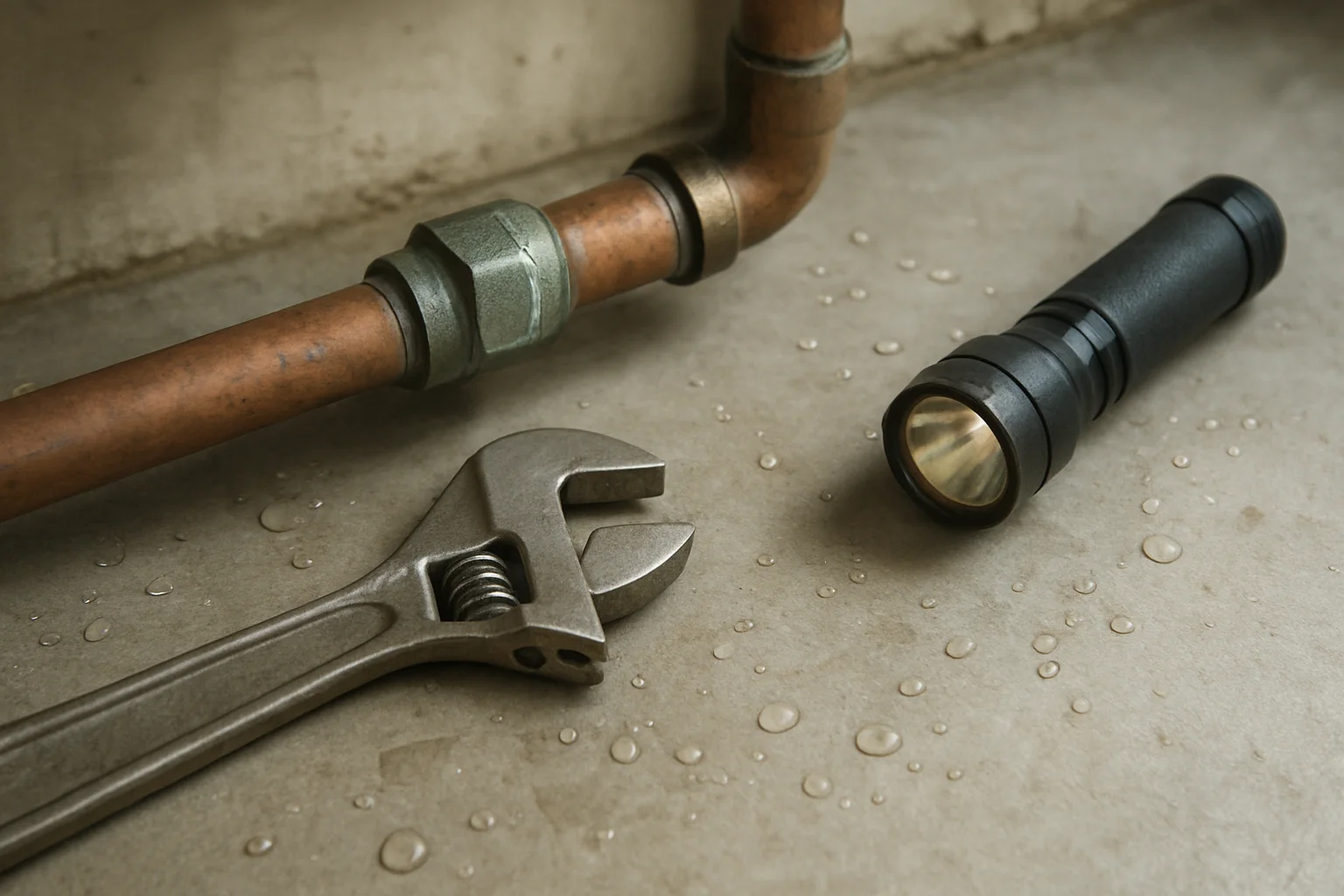
Why leak decisions matter in Northwest Florida homes
Water leaks can seem minor at first, especially when they show up as a damp cabinet floor, a faint stain on the ceiling, or a small patch of higher water usage on your bill. In Bay, Walton, and Okaloosa counties, though, even a modest leak can become more complicated because homes face humid air, heavy summer rains, storm-driven moisture, and long periods where plumbing sits under stress from heat and mineral buildup. That combination can make a leak harder to interpret and easier to ignore until it causes damage that reaches drywall, flooring, insulation, or structural framing. Homeowners often want a simple answer—repair it or replace it—but the right choice usually depends on where the leak is, how long it has been present, what materials are involved, and whether the rest of the system is also aging.
For many households, the biggest challenge is not finding water; it is understanding what the water means. A leak in a visible supply line may be straightforward, while a leak behind a wall, under a slab, or around a water heater can suggest a larger issue that needs a more complete evaluation. A professional plumber does more than stop active dripping. They assess the condition of connected components, look for hidden moisture pathways, and determine whether the plumbing system is showing isolated wear or broader deterioration. For homeowners, that assessment is important because the best long-term decision may not be the cheapest short-term fix. A thoughtful evaluation helps reduce repeat leaks, limits property damage, and supports a plan that fits both the home’s condition and the homeowner’s goals.
Common signs of a water leak that should not be ignored
Some leaks announce themselves clearly with dripping, pooling water, or an obvious spray from a damaged line. Many others are subtle and develop over time. Homeowners in Northwest Florida should pay attention to unexplained increases in water use, the sound of water moving when fixtures are off, warm or damp spots on floors, musty odors, discoloration on ceilings or walls, and a water meter that keeps moving when no water is being used. These signs do not always prove the source is a plumbing leak, but they are strong reasons to schedule a professional assessment. In coastal and humid environments, hidden moisture can also show up as swelling cabinetry, peeling paint, or mold-like odors long before visible water appears.
It is also important to recognize that leak symptoms can be misleading. A stain on a ceiling might come from a roof issue, condensation, or a plumbing line above the area. A damp patch near a water heater might come from a relief valve, a supply connection, or another appliance nearby. A professional plumber approaches these clues methodically, tracing the pathway of the moisture and checking whether the visible damage matches the actual source. That matters because treating only the symptom can leave the real problem untouched. Homeowners do not need to diagnose the issue themselves; instead, they should use warning signs as a prompt to bring in a qualified professional who can identify the source and the extent of the leak safely and accurately.
What makes leak damage different in Bay, Walton, and Okaloosa counties
Homes in Bay, Walton, and Okaloosa counties experience a mix of weather and environmental conditions that can affect plumbing systems in ways homeowners do not always expect. High humidity can slow drying and allow hidden moisture to linger. Seasonal storms can push water into areas that already have small plumbing vulnerabilities. Salt-laden coastal air may also contribute to wear on exposed metal components over time, especially in outdoor or semi-exposed installations. In addition, many homes in the region have crawl spaces, slab foundations, or outdoor plumbing runs that require careful inspection when a leak appears. These conditions do not guarantee plumbing problems, but they do shape how a plumber evaluates them.
Because of these local factors, repair-versus-replacement decisions are rarely based on the leak alone. A professional will often consider whether the leak is part of a larger pattern, such as repeated failures in the same line, corrosion at multiple connection points, or signs that pressure and water quality are stressing the plumbing. In some homes, the problem may be isolated and repairable. In others, the leak may be the most visible symptom of a system that is nearing the end of its practical life. That is why local experience matters. A plumber familiar with Northwest Florida conditions can help homeowners weigh the immediate repair against the likelihood of additional issues developing later, and can explain the tradeoffs clearly before any work begins.
How professionals find the source without guesswork
Leak detection is often more complex than it looks. Water can travel along framing, pipes, insulation, or slab edges before it becomes visible, which means the wet spot a homeowner sees may be several feet from the actual problem. A professional plumber typically begins with a visual inspection and then uses the home’s symptoms, fixture layout, and plumbing history to narrow down the source. Depending on the situation, that may include checking supply lines, shutoff valves, drain connections, appliance hoses, water heater fittings, and exposed piping in attics, crawl spaces, or utility areas. The goal is not just to find water, but to understand how and why it is escaping.
Professional assessment matters because it reduces unnecessary demolition and prevents misdiagnosis. If the issue is actually a drain leak rather than a supply leak, the repair approach is different. If corrosion is affecting more than one section of pipe, a patch may stop the current leak but not solve the underlying cause. If the plumbing is concealed behind finished surfaces, a plumber may need to use specialized tools or staged inspection methods to confirm the source before opening walls or making permanent repairs. Homeowners benefit from this process because it helps them avoid trial-and-error repairs, which can be disruptive and expensive. A careful assessment also creates a clearer picture of whether a targeted repair will restore the system effectively or whether replacement would be the more durable choice.
Repair is often the right choice when the problem is isolated
Not every leak means a major project. In many homes, a repair is the most practical solution when the damage is confined to one fitting, one valve, one section of hose, or one short pipe segment and the surrounding system is otherwise in good shape. This is especially true when the leak is caught early, before it has caused widespread corrosion or repeated moisture damage. A properly completed repair can restore function, protect the home from further water loss, and preserve the rest of the plumbing system without unnecessary replacement. For homeowners, the advantage of repair is often simplicity: less disruption, less material replacement, and a focused response to a specific problem.
That said, a repair is only as good as the condition of the rest of the system. A professional plumber will consider whether the failed component is an isolated weak point or a sign that nearby parts are also under stress. For example, if a connector failed because it was installed poorly, a targeted repair may be enough. If the connector failed because corrosion is spreading through a larger section of piping, the repair may need to be paired with a broader plan. Homeowners should expect a professional to explain not only what failed, but what remains at risk. That context helps determine whether repairing the leak is a sensible long-term decision or just a temporary solution that may invite future trouble.
When replacement may be the smarter long-term decision
Replacement becomes more likely when a leak is only one symptom of a larger plumbing problem. If pipes are old, repeatedly leaking, corroded, or damaged in several places, a homeowner may spend more fixing isolated failures than they would spend on a more comprehensive replacement strategy over time. The same is true when a leak is hidden in a location that would be difficult to access again, such as behind finished walls, beneath a slab, or in an area where repeated openings would create more damage than value. In those cases, a plumber may recommend replacement because it offers a better chance of solving the issue more completely and reducing the odds of recurring leaks.
Replacement may also be appropriate when materials are no longer performing reliably or when a component is incompatible with the rest of the system’s condition. A water heater showing active leakage, for example, may need more than a quick seal if the tank itself is failing. Likewise, a line with multiple weak spots may be a candidate for replacement rather than repeated patching. Professional judgment is essential here. Homeowners should not assume replacement is automatically necessary, but they should also understand that repeated repairs can become false economy if the system is nearing the end of its useful life. A qualified plumber can explain the practical differences and help the homeowner compare short-term disruption with long-term reliability.
How age and material condition affect the decision
The age of a plumbing component matters, but it is rarely the only factor. A relatively new leak can sometimes point to a specific installation or pressure issue, while an older system may be more vulnerable to multiple failures even if only one leak is visible. In Northwest Florida homes, exposure to humidity, seasonal temperature changes, and mineral content in water can all influence how fast parts wear. A professional plumber looks at visible pipe condition, joint stability, fixture performance, and evidence of past repairs to judge whether the system is aging normally or deteriorating faster than expected. The same leak can mean very different things in a newer home versus a home with an older plumbing layout.
Material condition also affects the replacement conversation. A pipe or fitting that shows heavy corrosion, scaling, or repeated patching may not be a strong candidate for another localized repair. On the other hand, a system that is generally sound but has one compromised connection may not require broader replacement at all. That is why homeowners should avoid making decisions based only on one visible symptom. The more useful question is whether the failed part is an exception or part of a pattern. A professional evaluation can help answer that by comparing what is visibly worn against what is still performing well. This kind of assessment gives homeowners a clearer basis for deciding how much to fix now and how much to plan for later.
Hidden leaks and why early assessment protects the home
Hidden leaks are among the most damaging plumbing problems because they often continue for long periods before they are discovered. Water behind a wall or under a floor can damage building materials slowly and silently, especially in a humid climate where drying is limited. By the time a homeowner notices stains, soft spots, or odors, the leak may have been active long enough to affect more than the plumbing itself. That is one reason a quick, professional assessment is so valuable. It can identify not only the source of the leak, but also whether the surrounding area has been exposed long enough to require additional drying, repair, or further inspection.
A professional plumber will also consider whether the hidden leak was caused by a one-time failure or by a condition that is likely to recur. If a concealed line has failed because of movement, corrosion, vibration, or pressure stress, replacing the damaged section may be more effective than repairing the visible break alone. If the leak appears isolated and the surrounding system is healthy, a targeted repair may be enough. The homeowner’s role is to act promptly once warning signs appear. Waiting usually increases damage and can narrow the repair options. Early intervention helps preserve more of the home’s structure and often keeps the final solution simpler than if the leak is left to spread.
Why a professional opinion is better than a quick assumption
It is natural for homeowners to hope a leak is small and inexpensive to fix. Still, assumptions can be costly when water is involved. A drip under the sink may look minor, but it could indicate a failing trap assembly, a stressed valve, or a broader drainage issue. A wet ceiling may seem like a roof issue, but it could also come from a supply line above the room. Because several different problems can create similar symptoms, a professional opinion is the safest way to sort out the possibilities. The goal is not to oversell the problem; it is to understand it correctly before making a repair decision.
A plumber’s assessment is especially useful because it looks beyond the immediate symptom. They can evaluate whether the leak is affecting water pressure, whether there are signs of past repairs, whether adjacent components are close to failure, and whether the home’s layout makes future service easier or harder. That broader view helps homeowners choose the option that makes the most sense for their property. In many cases, the answer is straightforward. In others, a repair may be possible now, but the plumber may recommend monitoring or planning for replacement later. Either way, the homeowner gains more than a temporary fix—they gain a clearer understanding of the system and the confidence to make informed decisions.
Questions homeowners should ask before approving work
When a plumber explains a repair or replacement recommendation, homeowners should feel comfortable asking questions. A few good ones include: What is the exact source of the leak? Is the problem isolated or part of a larger pattern? What signs suggest repair is enough, and what signs suggest replacement? Will any surrounding components be checked for wear or hidden damage? How likely is it that the same issue could recur if only the failed part is fixed? These questions help homeowners understand the reasoning behind the recommendation and can reveal whether the proposed work matches the condition of the plumbing system. A reputable professional should be able to explain the answer in plain language.
It can also help to ask about access and disruption. Homeowners may want to know whether walls, floors, or cabinets will need to be opened and what kind of restoration may follow. For a leak in a difficult-to-reach area, the access itself can influence the repair-versus-replacement decision. If repeated access would cause more disruption than a broader solution, replacement may be the better choice. If the issue is easy to reach and clearly isolated, repair may be the smarter option. The purpose of these questions is not to second-guess the plumber, but to make sure the homeowner understands how the decision was reached. Clear communication supports better results and reduces surprises during the work.
What to expect during a leak repair assessment
A proper assessment starts with observation and listening. The plumber will usually want to know when the symptoms began, where water has been seen, whether noises or odors have changed, and whether the home has had prior plumbing issues. They may then inspect visible fixtures, shutoffs, exposed lines, appliances, and any accessible areas where moisture could be present. If needed, they may test water pressure, isolate sections of the plumbing, or examine whether the leak is active under specific conditions. This process helps narrow the cause before any repair begins, which is especially important in homes where the source is not immediately obvious.
Homeowners should also expect the plumber to explain the condition of nearby components, not just the failed part. That is often where the repair-versus-replacement decision becomes clearer. A pipe or fitting may be repairable, but if the surrounding area shows heavy wear, the recommendation may change. In some cases, the assessment may reveal that the leak has affected materials beyond the plumbing itself, such as insulation or drywall, which may need attention after the plumbing work is complete. A thorough assessment helps homeowners understand the full scope of the issue and plan accordingly. It also supports a more durable repair because it accounts for the conditions that caused the leak in the first place.
How 850 Plumber supports Northwest Florida homeowners
Homeowners in Bay, Walton, and Okaloosa counties need plumbing help that reflects the realities of local homes and local weather. 850 Plumber, part of veteran-owned A Superior Mechanical, serves this region with plumbing support that can help homeowners evaluate water leaks carefully and choose the most practical solution. The value of calling a professional is not just getting the leak stopped; it is getting a clear explanation of what failed, whether the rest of the plumbing appears sound, and whether repair or replacement is the more sensible path forward. When the issue is confusing or hidden, a trained assessment can save time, reduce guesswork, and limit the chance of repeat problems.
If you are seeing signs of a leak or want help deciding whether a repair is enough, professional evaluation is the right first step. A plumber can look at the system as a whole and recommend a solution based on the condition of the plumbing, the location of the leak, and the likely long-term outcome of each option. For homeowners in this part of Florida, that kind of guidance is especially useful because moisture, age, access, and weather can all affect plumbing performance. To discuss a leak concern or schedule service, contact 850 Plumber at 850-258-3225. A careful assessment today can help protect your home from more damage tomorrow.
Explore related plumbing care
- Water Leak Repairs in Bay, Walton and Okaloosa Counties, FL
- Leak Detection & Slab Leak Repair in Bay, Walton & Okaloosa Counties, FL | 850 Plumber
- Toilet Repair and Replacement in Bay, Walton and Okaloosa Counties, FL | 850 Plumber
- Water Heater Repair in Bay, Walton and Okaloosa Counties, FL
- Water Heater Replacement in Santa Rosa Beach, FL | 850 Plumber
- Water Line Repair in Walton County, FL
Continue reading
- Water Heater Installation in Freeport, FL: How Northwest Florida Homeowners Decide Between Repair and Replacement
- Leak Detection and Slab Leak Repair in Northwest Florida: How Homeowners Decide Between Repair and Replacement
- Sewer Camera Inspection in Northwest Florida: How Homeowners Decide Between Repair and Replacement
Talk with the 850 Plumber team for help with your home or business.