
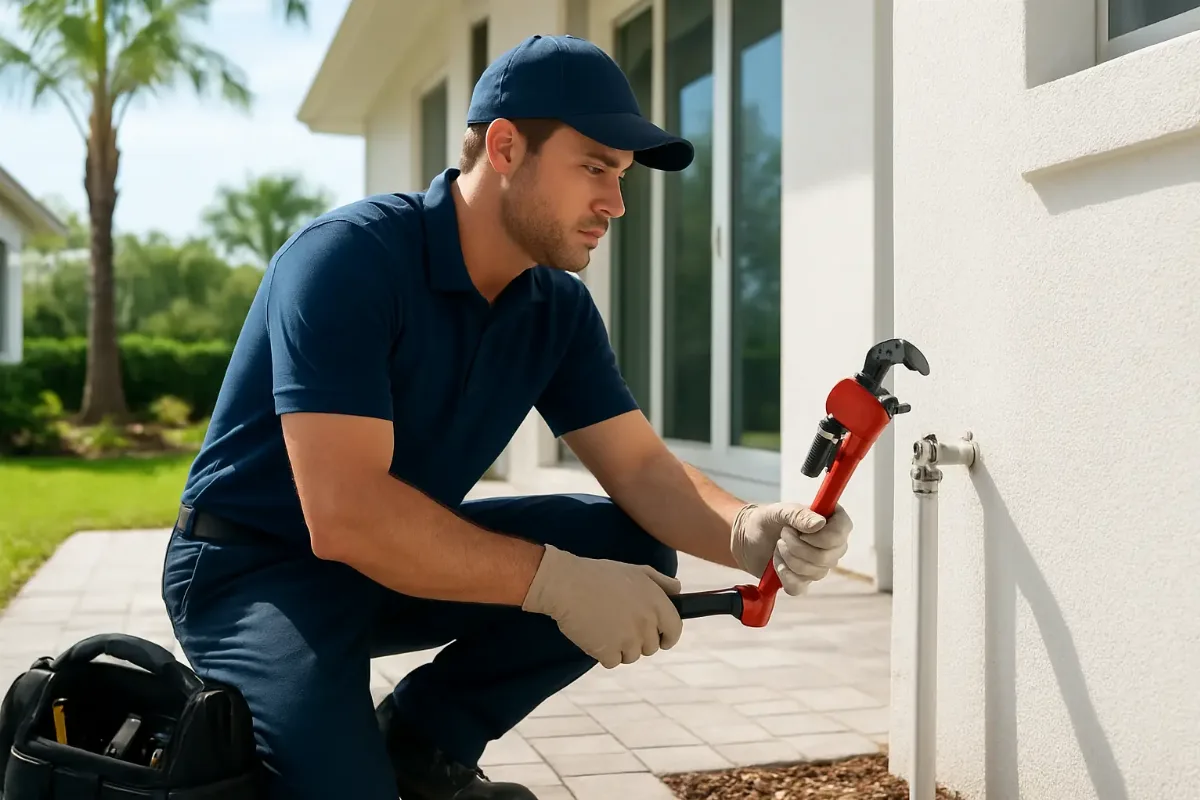
Water Line Repair for Homes and Businesses
A failing water line can interrupt daily life fast. It can reduce water pressure, create soggy areas outside, affect fixtures inside, and drive up utility bills before the source of the problem is clear. Because the main water line is buried, the signs often show up gradually and can be mistaken for routine plumbing wear or a temporary pressure change. Professional repair matters because the issue is usually not just about stopping a leak. It is about restoring dependable water service and preventing the hidden damage that can happen when a pipe under pressure keeps losing water underground.
850 Plumber, the plumbing-focused member of A Superior Mechanical, serves Bay, Walton, and Okaloosa counties from a veteran-owned perspective built around practical service and clear communication. When you call 850-258-3225, you are reaching a team that understands the conditions common along Florida’s Gulf Coast, including sandy soil, moisture intrusion, aging infrastructure, and the pressure that underground failures place on homes, rental properties, and commercial buildings. Water line repair requires more than patching a wet spot. It requires diagnosis, options, and a plan that fits the property.
Why Water Line Problems Cannot Be Ignored
A small underground leak can create a much larger problem than many property owners expect. Water escaping below the surface may travel away from the actual break, which means the most visible sign is not always near the source. In some cases, the first thing people notice is a drop in pressure at faucets or showers. In others, it is a patch of grass that stays unusually green, a muddy area that never dries, or a water bill that rises without explanation. Because the line is under constant use, even a narrow crack can waste a large amount of water over time.
The longer a damaged line remains in service, the more likely it is to affect soil stability, landscaping, hardscapes, and nearby structures. Water can erode the ground supporting driveways, sidewalks, and foundations, and repeated moisture can make slab-related issues worse. For businesses, water line failure can also interrupt operations, create sanitation concerns, and lead to tenant or customer complaints. The sooner a professional evaluates the line, the more options there may be for a focused repair instead of a wider restoration project.
Warning Signs That Point to a Water Line Issue
Water line problems often reveal themselves through changes that seem small at first. A noticeable loss of pressure across multiple fixtures is one of the most common clues, especially when the issue appears suddenly and does not improve. Other warning signs include unexplained increases in the water bill, the sound of running water when no fixtures are in use, wet or sinking spots in the yard, and damp areas near the foundation or driveway. In some cases, the water itself may become discolored because the line is pulling in sediment or because of pipe corrosion.
These signs deserve prompt attention because underground leaks do not usually stay stable. They can worsen with soil movement, traffic over the affected area, corrosion, or continued pressure in the pipe. If a problem is affecting more than one fixture, showing up outside, or appearing along a slab or foundation line, a water line inspection is the right next step. Waiting to see if the issue resolves on its own can allow the damage to spread.
Professional Diagnosis Before Any Repair Begins
The right repair starts with accurate diagnosis. Because water lines are buried, the visible symptom often does not tell the whole story. A professional inspection looks at pressure behavior, water usage patterns, surface conditions, and likely leak locations to narrow down the problem area. The goal is to determine whether the issue is a single break, a failing section of pipe, a fitting problem, or a more widespread line condition that may require a different solution.
Accurate diagnosis matters because unnecessary digging can add cost and disruption without solving the real issue. It also helps determine whether the leak is isolated enough for a targeted repair or whether the pipe has reached a point where replacement will be the more practical option. By identifying the cause and the location first, the repair plan can be matched to the property instead of relying on guesswork. That approach is especially important in coastal Florida, where soil conditions and pipe age can affect how long a repair will last.
Water Leak Detection for Underground Lines
Underground leak detection is often the most important part of the service because the leak itself may not be visible from the surface. A professional process helps locate the source with less disruption than digging at random points across the yard or around the foundation. Depending on the situation, detection may involve isolation of sections of the line, pressure evaluation, and careful tracing of where water is escaping and where it is showing up above ground.
When the leak is located accurately, the repair can be planned more efficiently and with less impact on landscaping and hardscapes. Leak detection also helps reveal whether the problem is localized or part of a larger pattern of wear. That difference matters. A single damaged section may be well suited to a spot repair, while repeated or widespread failures may suggest that the line is nearing the end of its serviceable life. Good detection work gives property owners clearer choices instead of vague recommendations.
Common Causes of Water Line Failure in Coastal Florida
Properties in Bay, Walton, and Okaloosa counties face conditions that can be hard on underground plumbing. Sandy soil can shift more easily than denser ground, which places movement stress on buried pipes. High groundwater can make leaks show up faster or create more saturation around the line. Salt exposure and coastal moisture can also affect certain pipe materials over time. In older neighborhoods and older buildings, aging infrastructure is another major factor, especially when original materials have already experienced decades of use.
Root intrusion, ground settling, previous repairs, storm-related movement, and pressure fluctuations can all contribute to failures as well. In some homes, the line may have deteriorated gradually without obvious warning until a break finally becomes visible through pressure loss or yard saturation. Knowing the local causes helps shape the repair strategy. A line in coastal Florida should be evaluated with these environmental factors in mind, because the surrounding conditions influence both the cause of the failure and the type of repair likely to hold up best.
Spot Repairs and Targeted Line Restoration
When the damage is isolated, a targeted repair may be the right answer. This approach focuses on the specific failed section rather than replacing more pipe than necessary. Spot repairs can be useful when the rest of the line is still in acceptable condition and the failure is clearly confined to one area. The goal is to restore service while limiting unnecessary disruption to the property.
That said, a spot repair should only be chosen after a full evaluation. A quick fix on a line with multiple weak points may only delay a bigger issue. The best repair recommendation depends on how the pipe is aging, where the failure occurred, and whether the system has a history of recurring trouble. A careful repair plan should be based on the line’s overall condition, not just the fact that one leak can be stopped today.
When Main Water Line Replacement May Be the Better Option
Sometimes the most responsible recommendation is not another repair. If a water line has multiple leak points, widespread corrosion, repeated break history, or material that is no longer providing reliable service, replacement may be the more practical long-term solution. This is especially true when a line has already required attention more than once or when the repair area suggests the rest of the pipe may soon fail too.
Replacement is not a one-size-fits-all answer, and it is not automatically the first choice. But for some properties, replacing the main line can reduce the cycle of repeated disruptions and emergency calls. A professional evaluation should explain why replacement is or is not being recommended so the property owner can make an informed decision. The right choice depends on risk, condition, and the long-term reliability of the plumbing system.
Slab Leak Concerns and Water Line Repair
A water line issue beneath or near a slab needs immediate attention because moisture can affect more than plumbing. Repeated slab-related leaks may point to pipe stress, movement under the foundation, or a line layout that has become vulnerable over time. Even when the leak is small, the location makes it more serious because water can collect where it is harder to see and may affect flooring, framing, or structural materials.
In some cases, a targeted repair is possible. In others, the better solution may involve rerouting the line or addressing a larger section of the water supply system. The right approach depends on the nature of the leak, the condition of the pipe, and whether the underlying cause is likely to create another problem later. Slab leak-related water line repair should always be handled professionally because the stakes include both water service and the integrity of the structure.
Commercial Water Line Repair for Operational Continuity
Commercial properties depend on stable water service for much more than comfort. Water supply affects restrooms, sinks, cleaning, food service, tenant satisfaction, and in some cases health and safety requirements. When a water line breaks at a business, the impact can extend quickly into operations, customer experience, and building management. That is why commercial repairs often need to be organized around both the plumbing issue and the property’s daily demands.
850 Plumber provides commercial water line repair for properties that need a practical response and a clear plan. A commercial diagnosis should consider the building type, the location of the line, occupancy demands, and how quickly the system needs to be restored. The repair method should also account for future reliability so the same issue does not interfere with operations again shortly after the work is completed.
Options to Discuss During a Water Line Repair Evaluation
A professional water line evaluation should lead to options, not confusion. Depending on the findings, the service plan may include a spot repair, partial line restoration, rerouting of a problem section, pressure testing, or full replacement of the failing line. The right option depends on the age of the plumbing, the extent of the leak, the soil conditions, and whether the line is showing signs of ongoing deterioration.
It is also important to discuss how the repair affects the rest of the property. Some lines can be restored with limited surface disruption, while others require access that may affect landscaping, concrete, or interior finishes if the leak is related to a slab or concealed route. Clear explanation helps owners understand what is happening, why a particular repair is being recommended, and what the likely tradeoffs are between a smaller immediate fix and a more complete solution.
Maintenance and Preventative Evaluation
Underground water lines are easy to forget until they fail, but preventative evaluation can help reduce that risk. Properties with older plumbing, a history of leaks, or known pressure irregularities can benefit from routine review before a break becomes an emergency. Maintenance may include pressure evaluation, leak detection checks, and condition assessment for pipes that are showing age or vulnerability.
This kind of attention is especially useful for commercial properties and for homes where the plumbing system has already experienced slab issues or underground repairs in the past. While no underground line lasts forever, catching a problem early can make the repair simpler and help prevent secondary damage. Preventative evaluation is not about replacing a line unnecessarily. It is about understanding what condition the system is in before failure forces a rushed decision.
Why Local Conditions Matter in Walton County
Water line repair in Santa Rosa Beach and surrounding areas is shaped by local environment as much as by the pipe itself. Coastal soil movement, seasonal moisture, high groundwater, and storm-related ground changes can affect how a buried line behaves over time. Some properties also experience more wear because of constant occupancy changes, irrigation use, or older infrastructure that was not designed for current demands.
A repair approach that accounts for local conditions is more likely to provide reliable results. Materials, access strategy, and the decision between repair and replacement should all reflect the realities of the site. That local perspective matters because a water line that functions elsewhere may face more stress here. 850 Plumber’s service area focus on Bay, Walton, and Okaloosa counties helps keep the repair plan grounded in the conditions property owners actually face.
Frequently Asked Questions About Water Line Repair
What are the most common signs of a water line leak? Common signs include low pressure, unexplained water bill increases, wet or muddy patches in the yard, discolored water, and moisture near the foundation or slab. If the change appears suddenly, it is worth having the line checked promptly.
Can sandy soil affect underground water lines? Yes. Sandy soil can shift and settle more easily than denser ground, which may place extra stress on buried pipe and fittings over time. That movement can make leaks more likely or cause a repaired line to need careful evaluation.
Can a slab leak be connected to the main water line? Yes. Some slab leaks involve supply lines beneath or near the foundation. Those situations often require professional diagnosis to determine whether repair, rerouting, or another solution is the best fit.
Do commercial buildings need a different approach? Often, yes. Commercial water line repair usually involves greater water demand, more occupants, and more pressure to restore service quickly without disrupting operations. The repair plan should reflect those operational needs.
Should I wait if the leak seems small? It is usually better not to wait. Small underground leaks can grow, waste water, and cause hidden damage over time. A professional inspection can determine how serious the issue is and what options are available.
Call 850 Plumber for Water Line Repair
If you are seeing signs of a water line problem, the next step is professional diagnosis. Whether the issue is a sudden pressure drop, a wet yard, a slab-related concern, or a commercial water service interruption, 850 Plumber can assess the problem and explain the available repair options. As the plumbing-focused member of A Superior Mechanical, the team serves Bay, Walton, and Okaloosa counties with water line repair services designed for coastal Florida conditions.
Call 850-258-3225 to schedule water line repair for your home or business. A prompt response can help limit water loss, reduce property damage, and restore dependable service before a hidden leak becomes a larger problem.
Explore related plumbing care
- Water Heater Repair in Bay, Walton and Okaloosa Counties, FL
- Water Line Replacement in Bay, Walton & Okaloosa Counties, FL
- Water Line Services in Bay, Walton and Okaloosa Counties, FL
- Clean Water Services in Bay, Walton and Okaloosa Counties, FL
- Leak Detection & Slab Leak Repair in Bay, Walton & Okaloosa Counties, FL | 850 Plumber
- Plumbing Repair in Bay, Walton and Okaloosa Counties, FL | 850 Plumber
Continue reading
- Water Line Repair in Walton County, FL: Preventive Care and Seasonal Planning for Northwest Florida Homeowners
- Water Line Repair in Walton County, FL: Warning Signs and Professional Diagnosis for Northwest Florida Homeowners
- Water Heater Repair in Bay, Walton and Okaloosa Counties, FL: A Practical Homeowner Guide for Late-Fall Readiness
Talk with the 850 Plumber team for help with your home or business.