
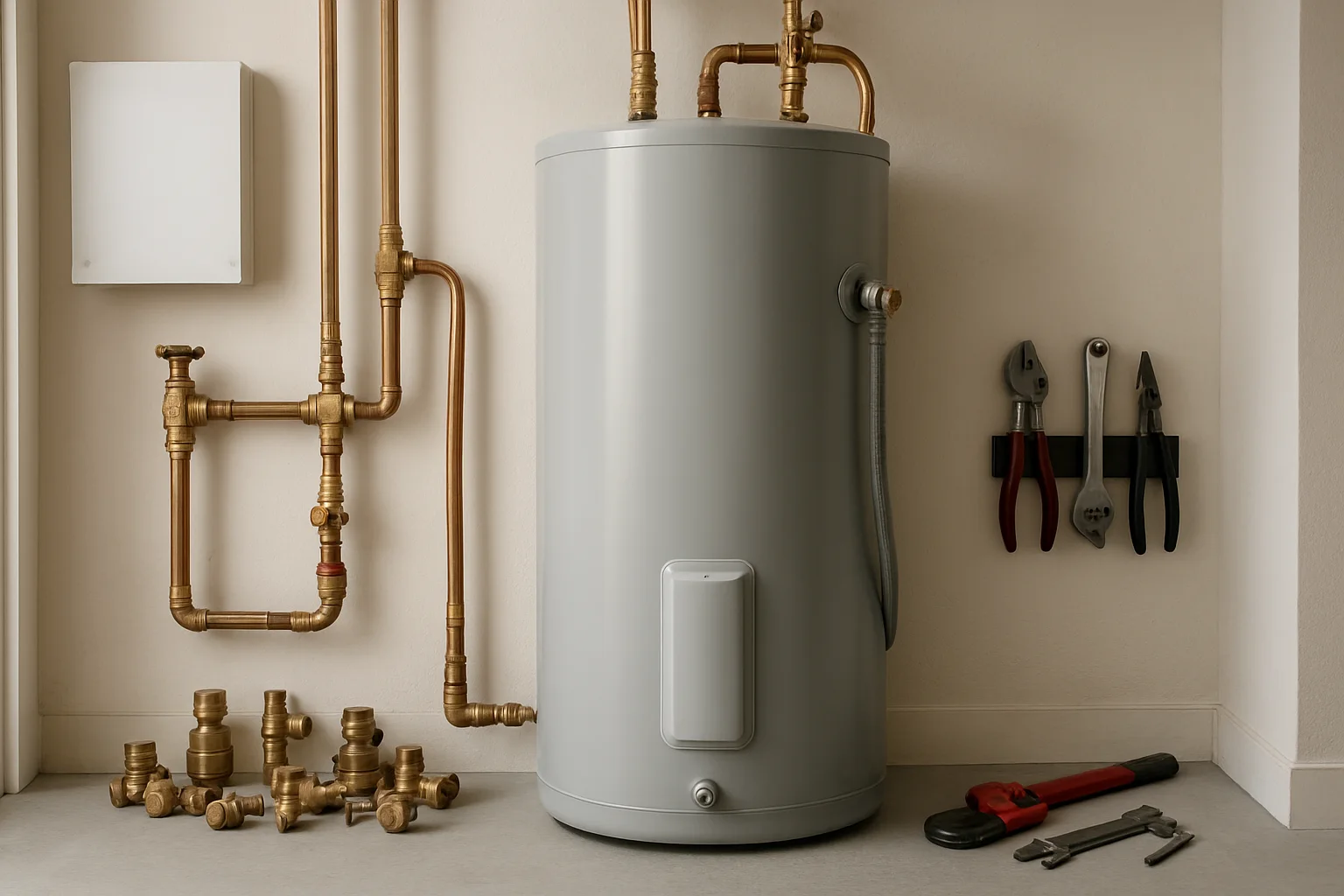
Why water heater decisions matter in Northwest Florida
For homeowners in Freeport and across Bay, Walton, and Okaloosa counties, a water heater is one of the most relied-on appliances in the home. It supplies showers, laundry, dishwashing, and many of the daily tasks that quietly depend on steady hot water. When the system starts acting up, it can be hard to tell whether the right move is a repair, a full replacement, or simply a professional tune-up. Making that decision well matters because it affects comfort, household budgeting, energy use, and the risk of an unexpected breakdown at an inconvenient time.
In Northwest Florida, homeowners also have to think about local conditions that can influence plumbing equipment over time. Humidity, mineral content in water, and the demands of a busy household all affect how a water heater performs. A system that is technically still operating may nevertheless be losing efficiency, producing inconsistent temperatures, or showing signs that it is nearing the end of its useful service life. The challenge is not to guess, but to evaluate the symptoms carefully and choose the option that makes the most sense for the home.
That is where a professional assessment becomes valuable. A trained plumber can inspect the unit, check for signs of tank wear or component failure, and help determine whether repair is practical or whether replacement is the better long-term decision. For homeowners in Freeport, having that guidance can prevent repeated service calls, reduce the chance of sudden leaks, and help align the work with the home’s current and future hot water needs.
The difference between repair and replacement
Repair and replacement are not simply two different price points. They are two different approaches to solving the same problem. A repair addresses a specific component or issue, such as a malfunctioning thermostat, a worn heating element, a leaking valve, or a connection problem. When the tank itself is sound and the problem is limited, a repair may restore function without the need to remove the entire system. That can be an efficient answer when the heater is otherwise in decent condition.
Replacement means installing a new water heater because the old one is no longer the best candidate for continued service. That may be due to age, repeated failures, tank corrosion, persistent leaks, or performance that no longer meets the household’s needs. Replacement is also often considered when a homeowner wants to improve efficiency, update capacity, or move away from a unit that has become unreliable. Even when a repair is technically possible, replacement can be the more practical choice if the same issue is likely to return.
Homeowners sometimes hope there is a simple rule that tells them which option is right. In reality, the answer depends on several factors working together: age, condition, repair history, tank integrity, energy performance, and household demand. A professional plumber can help compare those factors rather than focusing on one symptom alone. That is especially important because water heater problems can overlap; what looks like one isolated issue may actually reflect a broader decline in the system.
Common warning signs that should not be ignored
Some water heater problems are obvious, while others start small and gradually become harder to overlook. Inconsistent hot water, water that runs lukewarm too quickly, odd noises from the tank, rusty-colored hot water, visible corrosion on fittings, or moisture around the base can all indicate that the system needs attention. A unit that cycles on and off more often than usual or struggles to recover after normal use may also be signaling a problem. These symptoms do not automatically mean replacement is necessary, but they do mean the heater should be evaluated promptly.
Leaks deserve special attention because even a small amount of water near the tank can point to a failing component or a tank that is beginning to deteriorate. Some leaks come from replaceable parts, such as valves or connections, while others indicate a more serious problem with the tank itself. Rust in the water can be caused by supply lines or by internal corrosion inside the heater, and the distinction matters. A professional plumber can help determine whether the issue is localized and repairable or whether it reflects the overall condition of the unit.
It is important not to assume that the most visible symptom tells the whole story. For example, sediment buildup can cause rumbling or popping noises and reduce efficiency, but the same symptoms can sometimes be accompanied by damage that is not visible from the outside. Similarly, a thermostat issue may explain temperature swings, but repeated failures may suggest that the appliance is aging out. Careful assessment helps homeowners avoid unnecessary replacement while also avoiding the mistake of spending money on a repair that only delays the inevitable.
How age affects the repair-versus-replacement choice
Age is one of the most useful starting points in a water heater decision, though it should never be the only factor. As a water heater gets older, its internal components, tank lining, seals, and controls all face more wear. Even if the heater still produces hot water, older equipment may become less dependable and more costly to maintain. Homeowners often notice that repairs become more frequent or that the unit’s performance declines slowly before a major failure occurs.
The type of water heater matters as well. Traditional tank-style heaters and tankless systems age differently and have different maintenance needs. A tank unit may show signs of wear through corrosion, sediment, or leakage, while a tankless system may have performance issues related to scaling, flow, or component wear. Because each system has its own design and service profile, a professional evaluation should consider the exact model, installation conditions, and maintenance history rather than applying a one-size-fits-all timeline.
For a homeowner, the key question is not simply, “How old is it?” but “How well is it still doing its job, and what is the likelihood that another issue will appear soon?” If an older heater has needed several repairs in a short period, replacement often becomes more sensible even if the current problem can technically be fixed. A newer system with a single isolated issue may be a strong candidate for repair. This practical, condition-based approach helps homeowners make decisions that fit both the present and the next few years of homeownership.
When a repair may be the better choice
Repair is often the preferred option when the problem is limited, the tank is still structurally sound, and the unit has not been failing repeatedly. A faulty thermostat, a broken heating element, a pressure relief valve issue, or a loose connection may be repairable without replacing the whole appliance. In these situations, a plumber can replace or restore the affected part and then verify that the system is operating safely and correctly. For many homeowners, that is the most economical and least disruptive outcome.
Repair may also make sense when the heater is relatively new or when it was recently serviced and the issue appears unrelated to age or chronic wear. If the rest of the system is in good condition and the household hot water demand is still being met, replacing the entire unit may not add meaningful value. Homeowners often appreciate repair when they want to extend the service life of equipment that has otherwise been dependable and well maintained.
Still, a good repair decision depends on honest diagnosis, not optimism. A professional plumber should inspect the tank, fittings, valves, and related plumbing to confirm that the issue is truly isolated. If the repair solves only the symptom and not the underlying cause, the homeowner may face another call soon after. The goal is to make a repair only when it is likely to restore reliable service for a reasonable period, not merely to postpone a broader problem that is already developing inside the system.
When replacement becomes the smarter long-term move
Replacement often becomes the better choice when the water heater has reached the point where continued repairs do not make financial or practical sense. If the tank shows signs of internal corrosion, if leaks are coming from the tank itself, or if the system has become unreliable despite recent service, replacement is usually the more durable solution. Once the tank is compromised, repairs cannot reverse the structural decline. In those cases, replacing the unit helps prevent unexpected water damage and restores confidence in the plumbing system.
Homeowners should also consider replacement when the current heater no longer fits household needs. Families grow, usage patterns change, and a system that once felt adequate may now run out of hot water too quickly. Replacing the unit gives homeowners an opportunity to reassess capacity, configuration, and efficiency. It can also be a good time to look at whether the existing setup is still the best fit for the home’s plumbing layout and usage habits. A new installation can be selected with those realities in mind rather than simply matching the old unit by default.
Another reason replacement makes sense is repeat service history. When the same unit has required multiple repairs over a short period, the overall cost and inconvenience can outweigh the benefit of keeping it in service. Even if each repair is manageable on its own, the pattern suggests the equipment is aging out. A professional plumber can help homeowners compare the likely near-term benefits of repair against the longer-term value of installing a new water heater that should provide more consistent performance.
What a professional assessment should include
A thorough professional assessment is the foundation of a sound repair-versus-replacement decision. The plumber should inspect the tank or unit for signs of corrosion, leaks, sediment buildup, damage to fittings, and issues with the temperature and pressure controls. They should also evaluate how the water heater is performing in the context of the home’s actual demand. That means looking not just at the appliance itself, but at whether it is producing enough hot water at the right temperature and recovering at a reasonable rate after use.
The assessment may also include checking related plumbing components and installation conditions. Venting, connections, shutoff valves, electrical or gas-related connections depending on the model, and visible signs of wear around the installation area can all affect the decision. A problem that appears to be inside the heater may instead involve surrounding equipment or the way the unit was installed. Identifying the true source of the issue helps avoid unnecessary replacement and ensures that any new equipment is installed correctly if replacement is needed.
Just as important, a professional should explain the findings in plain language. Homeowners deserve to understand what failed, what is still functioning properly, and what the likely next steps are. A good assessment should make the choice clearer, not more confusing. If repair is recommended, the reason should be tied to the unit’s condition and expected outcome. If replacement is recommended, the explanation should address why the current heater is no longer the right investment for the home.
Efficiency, comfort, and monthly utility use
A water heater decision is not only about fixing a problem; it also affects ongoing efficiency and comfort. An older unit may continue to work while using more energy or delivering less consistent performance than a newer one. In practical terms, that can show up as longer wait times for hot water, less predictable temperature control, or higher utility use over time. Homeowners in Freeport who notice changes in performance may find that the unit is still technically functional but no longer operating in a way that feels satisfactory or efficient.
Replacement can improve these day-to-day conditions, especially when the new system is selected to better match the home’s needs. However, efficiency gains should be considered in context. If the existing unit is still in good shape and only needs a focused repair, replacing it solely for the idea of “better efficiency” may not be necessary. The balance between current condition, expected remaining service life, and the practical benefit of new equipment should guide the decision. A professional plumber can help homeowners understand whether the improvement would be meaningful in their specific situation.
Comfort matters too. Homeowners often notice the need for hot water in the morning rush, during laundry, or when several fixtures are used close together. A heater that struggles under normal demand can become a daily annoyance even before it fully fails. In those cases, replacement may improve household comfort beyond the basic fix. The right decision should consider both the immediate problem and the quality of daily use after the work is complete.
Leak concerns and why timing matters
Water heater leaks should always be taken seriously because they can quickly become a property concern, not just a plumbing issue. A leak may start as a small drip or a damp patch and then progress into standing water, damage to nearby flooring, or harm to surrounding materials. In some cases, the source is a part that can be repaired, such as a valve or connection. In others, the leak indicates that the tank itself is failing and replacement is the appropriate response. The sooner the source is identified, the more options the homeowner usually has.
Timing matters because a homeowner who waits may lose the chance to choose between repair and replacement on favorable terms. Once a tank begins leaking from the body itself, it is no longer a matter of maintenance; it is a matter of preventing further damage and restoring reliable service. Even if the leak appears minor, it may signal internal deterioration that is not visible from the outside. Professional inspection helps distinguish a manageable issue from a structural failure in progress.
Homeowners should also consider the area around the unit. A leak can affect nearby cabinetry, flooring, drywall, or stored items, and the extent of the damage may increase if the problem is left unresolved. While it is tempting to treat a small leak as something that can wait, the safer approach is to have it assessed promptly. A plumber can identify whether the issue is a fitting, a valve, or the tank itself and then advise on the most sensible next step.
Choosing the right replacement for the home
If replacement is the right path, the next decision is choosing the proper water heater for the house. This is not simply a matter of selecting a similar-looking unit. Capacity, fuel type, usage habits, installation constraints, and household expectations all play a role. A system that is too small can leave a family short on hot water, while one that is poorly matched to the home may not provide the efficiency or convenience the homeowner wants. A professional installer can help compare options in a way that fits the property rather than forcing the home to fit the equipment.
The home’s current plumbing and utility setup also matters. Some homes are better suited to a standard tank replacement, while others may benefit from a different configuration depending on space, demand, or energy considerations. The point of a professional evaluation is to account for these practical details before the old unit is removed. That planning step can prevent installation surprises and help ensure that the new system integrates smoothly with the rest of the home’s plumbing.
Homeowners should also think about future needs, not just today’s routine. A growing household, a renovated bathroom, or a change in laundry habits can all alter hot water demand. A replacement is an opportunity to correct a mismatch that has been tolerated for years. By considering both the current issue and the home’s likely future use, homeowners can make a more durable and satisfying choice.
Why installation quality matters as much as the unit itself
Even the right water heater can underperform if it is not installed correctly. Proper installation affects safety, efficiency, longevity, and day-to-day reliability. Connections must be secure, the unit must be positioned appropriately, and the installation must follow the requirements that apply to the specific type of heater. A poorly executed installation can create nuisance problems or reduce the lifespan of the new equipment, which is why replacement should be handled by a qualified professional rather than treated as a simple swap.
Professional installation also helps ensure that the surrounding plumbing is reviewed at the same time. If there are issues with valves, supply lines, venting, or the space where the heater sits, those concerns can be addressed during the replacement process. That is one advantage of replacement over a piecemeal approach: it allows the homeowner to refresh the system as a whole rather than addressing one visible problem at a time. The result is often a cleaner, more dependable setup.
For homeowners in Freeport and nearby communities, using a local plumbing professional adds another layer of practicality. A plumber familiar with the region’s homes and conditions can help anticipate common installation needs and service considerations. The goal is not just to install a new appliance, but to set up a system that is suited to the home and installed with care. That attention is what helps a replacement deliver its full value over time.
How 850 Plumber can help homeowners decide
850 Plumber, part of veteran-owned A Superior Mechanical, serves homeowners in Bay, Walton, and Okaloosa counties, including Freeport, FL. When a water heater starts showing signs of trouble, the most useful next step is a professional evaluation that focuses on condition, function, and the home’s actual needs. That kind of assessment helps separate repairable issues from problems that point toward replacement, so homeowners can make a decision based on facts rather than uncertainty. The company can be reached at 850-258-3225 for service in the area.
A thoughtful plumber should look beyond the immediate symptom and help the homeowner understand what is happening inside the system. Whether the concern is inconsistent hot water, corrosion, a leak, or a heater that no longer keeps up, the aim is to identify the root cause and discuss practical next steps. That may lead to a repair, or it may show that installing a new water heater is the better long-term answer. Either way, clear communication matters because homeowners need to know what the issue means now and what it is likely to mean later.
For an evergreen resource like this one, the most important takeaway is simple: water heater decisions are best made with a full picture of the equipment’s condition and the home’s needs. There is no substitute for a professional assessment, especially when the choice involves comfort, efficiency, and protection against water damage. If your water heater is acting up, a local plumber can help you weigh the options and move forward with confidence.
A simple homeowner checklist before calling for service
Before scheduling a professional assessment, homeowners can gather a few useful observations without trying to diagnose or repair the unit themselves. Note whether the problem is lack of hot water, temperature swings, unusual noise, visible rust, moisture near the tank, or a complete loss of service. It also helps to think about how long the issue has been happening, whether it is getting worse, and whether the heater has needed repeated service in the past. These details give the plumber a clearer starting point and can make the inspection more efficient.
It is also helpful to identify whether the home’s hot water demand has changed recently. A new occupant, additional bathroom use, more laundry, or schedule changes can make a previously adequate heater seem insufficient. That does not mean the heater is broken, but it may mean the home’s needs have shifted. Sharing those details helps the plumber determine whether the issue is mechanical, capacity-related, or both. The more complete the picture, the better the recommendation will be.
The final step is to treat the decision as one that should be informed, not rushed. A water heater that is barely hanging on may still need prompt attention, but homeowners do best when they understand the reasons behind repair or replacement. Professional assessment helps ensure that the chosen solution fits the home, the budget priorities, and the expectation for reliable hot water. For homeowners in Freeport and surrounding Northwest Florida communities, that is the most practical way to approach a water heater installation decision.
Explore related plumbing care
- Water Heater Installation in Freeport, FL
- Water Heater Repair in Bay, Walton and Okaloosa Counties, FL
- Water Heater Replacement in Santa Rosa Beach, FL | 850 Plumber
- Plumbing Fixture Replacement in Freeport, FL
- Tankless Water Heater Services in Northwest Florida | 850 Plumber
- Toilet Repair and Replacement in Bay, Walton and Okaloosa Counties, FL | 850 Plumber
Continue reading
- Water Leak Repairs in Northwest Florida: How Homeowners Can Decide Between Repair and Replacement
- Plumbing Fixture Replacement in Freeport, FL: How Northwest Florida Homeowners Can Decide Between Repair and Replacement
- Water Heater Repair vs. Replacement for Northwest Florida Homeowners
Talk with the 850 Plumber team for help with your home or business.