
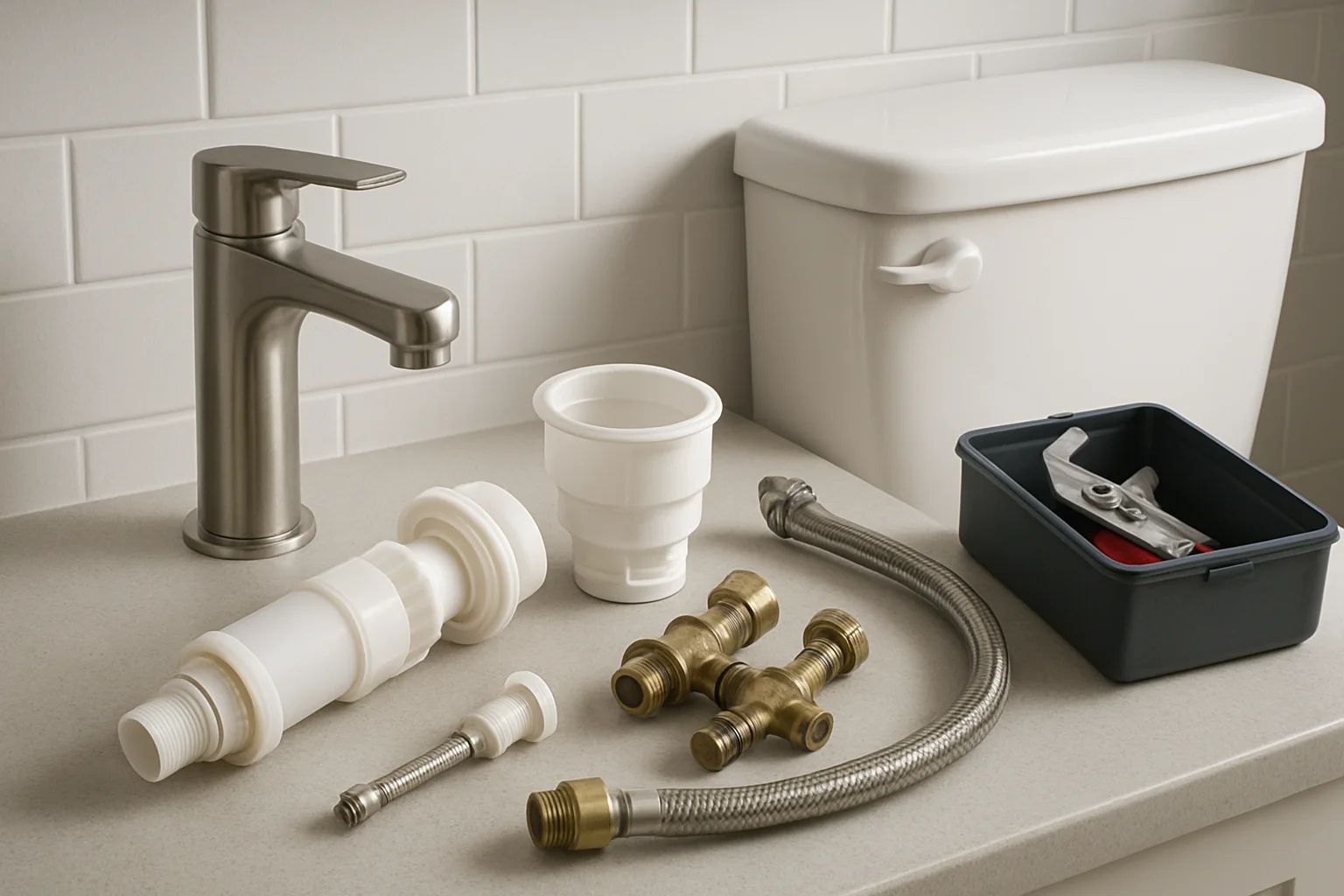
Why fixture decisions matter in Freeport homes
Plumbing fixtures do more than move water in and out of a house. Faucets, toilets, shower valves, hose bibs, and sink assemblies affect comfort, water use, cleanup, and the condition of cabinets, floors, and walls around them. In a place like Freeport, FL, homeowners also have to think about humidity, mineral buildup, changing water pressure, and the general wear that comes from long use in a Gulf Coast climate. A fixture that seems like a small inconvenience can become a larger problem if it begins leaking into a vanity, staining a ceiling below, or leaving a toilet base damp after every flush.
For many Northwest Florida homeowners, the hard part is not noticing a problem. The hard part is deciding whether the fixture can be repaired or whether replacement makes more sense. That decision is not always obvious from the outside. A dripping faucet may only need a cartridge, but it may also be a sign of internal corrosion or repeated failures. A toilet that rocks may simply need a reset, or it may have an aging bowl, worn internal parts, or damage to the flange area. A careful evaluation from a licensed plumbing professional helps sort out what is cosmetic, what is mechanical, and what is actively causing water damage risk.
Common signs a fixture is nearing the end of its useful life
Fixtures usually give clues before they fail completely. Visible corrosion, mineral deposits that keep returning, loose handles, sputtering spouts, hard-to-turn valves, and recurrent drips are all signs that a fixture is no longer functioning as designed. In homes near the coast or in humid environments, metal parts can deteriorate faster than many homeowners expect. Plastic trim, seals, and internal cartridges also age with heat, moisture, and everyday use. What begins as a simple nuisance can become a recurring service issue if the fixture has multiple worn components instead of a single replaceable part.
Other signs are less obvious. A toilet that requires repeated plunging, a shower valve that no longer mixes temperature evenly, or a sink faucet that loses pressure only at certain times can indicate deeper wear or system issues. Staining around the base of a toilet, swelling in cabinet bottoms, and intermittent moisture under sinks may point to slow leaks that never fully dry out. When a fixture has several symptoms at once, a technician will often look beyond the visible part and evaluate supply lines, shutoff valves, trap connections, seals, mounting hardware, and the surrounding structure before recommending repair or replacement.
When repair is often the smarter choice
Repair is often the right answer when the fixture itself is fundamentally sound and the problem is isolated. A faucet with a worn cartridge, a showerhead with mineral buildup, a toilet with a damaged flapper, or a sink drain with a degraded gasket may return to reliable service after targeted work. If the fixture is relatively new, matches current household needs, and has not developed repeated leaks or structural issues, repair can preserve function without changing the look or layout of the room. In many homes, a professional repair is the most practical first step because it addresses the symptom and allows the plumber to inspect for related concerns at the same time.
Repair also makes sense when the issue is tied to an external component rather than the fixture body. A loose supply connection, a worn wax ring, a failed shutoff valve, or a drain assembly problem does not automatically mean the entire sink or toilet must be replaced. Professional assessment matters here because a homeowner can easily see water, but not always the source of the water. A plumber can determine whether the problem is in the fixture, the connection points, or the plumbing system serving it. That distinction helps avoid unnecessary replacement and keeps the focus on the actual cause.
When replacement becomes the better investment
Replacement becomes more attractive when a fixture has reached the point where repairs are frequent, incomplete, or no longer economical in terms of time and disruption. If a faucet has been rebuilt several times and still leaks, if a toilet continues to run or wobble after multiple service calls, or if a shower valve is so worn that it no longer offers stable control, replacement may be the more durable solution. A fixture that has internal corrosion, cracked components, or outdated parts can continue generating problems even after the most careful repair. In those cases, replacing the unit can reduce repeat service calls and restore confidence in daily use.
Replacement may also be the right choice when the fixture no longer suits the space or household needs. A family bathroom may benefit from a more efficient toilet, easier-to-operate handles, or a fixture with a better fit for the sink or tub configuration. In kitchens and laundry rooms, homeowners sometimes choose replacement when the old fixture no longer matches current cabinetry, sink depth, or usage demands. A professional plumber can help a homeowner compare the condition of the existing fixture with the likely lifespan of a new one, while also checking whether surrounding shutoffs, drain components, or mounting surfaces should be updated at the same time.
How Northwest Florida climate affects fixture wear
Freeport and the surrounding Northwest Florida region present conditions that can influence how long plumbing fixtures last. High humidity can encourage corrosion on exposed metal parts and create an environment where small leaks linger unnoticed. Mineral content in water can also contribute to buildup inside aerators, cartridges, toilet fill valves, and shower components. Over time, that buildup can make handles stiff, reduce flow, or cause surfaces to look cloudy and worn even when the fixture is still mechanically functional. Coastal weather patterns can add to the challenge because homeowners may use indoor plumbing more heavily during seasonal temperature swings and after storm-related events.
The climate does not mean fixtures will fail early in every home, but it does mean maintenance and inspection matter. A fixture that might survive longer in a drier environment may require more attention in Freeport because of moisture, salt air exposure in some areas, and the ordinary stress of household use. Professional plumbers understand how environmental factors show up in the field: corrosion around mounting points, brittle supply tubing, mineral scaling on spray heads, and seal failure at connections. That knowledge helps them judge whether a fixture is simply dirty, partially worn, or truly at the end of its service life.
What a professional plumber looks at during assessment
A professional assessment is more than a quick look at a leaky faucet. The plumber typically evaluates the fixture body, internal parts, supply lines, shutoff valves, drain connections, and the surrounding material such as cabinetry, drywall, tile, and subflooring if accessible. They listen for symptoms too: running water after a toilet finishes filling, pressure changes when multiple fixtures are used, or noise that suggests a valve is not closing properly. The goal is to identify the source of the problem and determine whether the fixture can be returned to dependable service without replacing more than necessary.
A careful assessment also considers the age and availability of parts. Some fixtures can be repaired easily if the manufacturer still supports them and the components are in good shape. Others are harder to service because parts are discontinued, specialized, or worn in multiple areas. A plumber can explain whether a repair would be a short-term fix or a lasting solution. They may also notice related issues that influence the recommendation, such as a deteriorated escutcheon, loose mounting hardware, or hidden leakage that has affected the wall or cabinet. That broader view helps homeowners make informed decisions rather than reacting only to the most visible symptom.
Repair versus replacement for kitchen and bathroom faucets
Faucets are among the most common fixtures homeowners ask about because their problems are easy to notice. A constant drip, a loose handle, a sprayer that no longer switches properly, or a spout with weak flow may indicate a simple internal issue. In many cases, faucet repairs can restore normal operation if the fixture is otherwise in good shape. A plumber may inspect the cartridge, seals, aerator, handle hardware, and supply connections to determine whether the issue is isolated. For a newer fixture with solid construction, repair often makes good sense because it preserves the existing installation and avoids unnecessary change to the sink area.
Replacement becomes more appealing when the faucet body is corroded, the finish has degraded badly, the handles feel loose despite service, or leaks have returned after previous repairs. Kitchen faucets in particular can experience repeated stress because they are used frequently and often have pull-down sprayers or moving parts. If the sink setup has changed or the faucet no longer fits the homeowner’s needs, replacement can be a practical upgrade. A plumber can help confirm the sink configuration, hole spacing, and supply line compatibility before any replacement is selected, which reduces the chance of fit problems or extra work after removal of the old fixture.
Repair versus replacement for toilets
Toilets are another fixture where the answer is not always obvious. Running water, phantom flushing, weak flushes, a loose tank handle, or water around the base may all have different causes. Some problems are limited to internal parts such as the flapper, fill valve, or flush mechanism, which can often be repaired without changing the toilet itself. If the bowl and tank are in sound condition and the issue is clearly limited to worn components, repair can be a sensible way to restore reliable function. A plumber can also inspect whether the toilet is properly anchored and whether the floor connection is stable.
Replacement becomes more likely when a toilet has repeated internal failures, persistent rocking, visible cracks, or an older design that no longer performs well for the household. Water around the base can sometimes be traced to seal failure, but if the toilet has shifted, suffered structural stress, or developed chronic leaks over time, replacement may offer a more secure and longer-lasting answer. Homeowners may also consider replacement when the existing toilet is difficult to clean, inefficient compared with newer options, or poorly suited to the bathroom layout. A professional can assess the flange area, supply line, shutoff valve, and floor condition to determine whether the issue involves only the toilet or a broader repair scope.
Showers, tubs, and the hidden side of fixture problems
Shower and tub fixtures can look simple from the outside while concealing more complex problems behind the wall. A dripping tub spout, fluctuating water temperature, or hard-to-turn handle may indicate worn internal components, but the condition of the valve body and surrounding plumbing also matters. Because these fixtures are tied to wall finishes and waterproofing, a small leak can have a larger impact than it first appears. Moisture behind tile or around a tub surround may not be obvious until staining, soft spots, or recurring odors appear. That is why a professional evaluation is especially important before deciding whether to repair or replace.
A plumber will usually consider both the fixture and the access available for service. Some shower valves can be repaired effectively if the trim and internal parts are accessible and the valve body remains sound. Other times, the fixture is so worn or outdated that replacement is the better long-term choice, especially if the homeowner has been dealing with recurring leaks, inconsistent temperature control, or damage to surrounding materials. Since shower work can affect hidden plumbing and wall finishes, the decision should be based on a complete assessment rather than on the appearance of the trim plate alone. The safest outcome is a solution that addresses the leak without inviting new problems in the wall cavity.
Outdoor fixtures, hose bibs, and laundry connections
Outdoor hose bibs and utility fixtures often get overlooked until they fail. In Northwest Florida, these fixtures can face sun exposure, weather changes, and seasonal use patterns that stress washers, vacuum breakers, and connection points. A hose bib that drips only when attached to a hose may have a worn internal washer or damaged threads, while one that leaks behind the wall can be a more serious concern. Laundry room faucets and utility sinks also see repeated use, especially in busy households, and the surrounding connections can loosen or corrode over time. Because these fixtures are sometimes tucked into garages, side yards, or utility closets, small leaks may go unnoticed for longer than they should.
Repair is often possible when the issue is localized and the fixture body is intact. However, replacement may be the wiser choice if the outdoor spigot has visible corrosion, if the valve no longer shuts off properly, or if there is evidence of hidden leakage. A plumber can inspect the shutoff arrangement, wall penetration, and the condition of any exposed supply piping. For laundry and utility areas, they can also evaluate whether old faucets or valves would benefit from modernization to improve shutoff reliability and reduce the risk of future leaks. These decisions are best made with a clear view of both current function and potential water damage exposure.
The role of water efficiency in replacement decisions
Water efficiency is one reason homeowners consider replacing rather than repairing a fixture. An older toilet, faucet, or shower fixture may still work, but it may use more water than necessary or perform less effectively than a newer design. In a home where the fixture is already being serviced, it can make sense to ask whether replacement would bring better daily performance along with better water use. This is not about changing fixtures for its own sake. It is about choosing a solution that aligns with the homeowner’s comfort, budget, and conservation goals while still meeting the needs of the household.
A plumber can help explain whether a fixture’s current design is part of the problem. For example, some older fixtures are harder to maintain because internal parts are less available or because the valve and trim design are outdated. Replacement may offer easier servicing later, improved shutoff action, or better compatibility with the bathroom or kitchen setup. Still, efficiency alone should not be the only factor. The fixture’s condition, the quality of nearby plumbing, and the likelihood of future repair needs all matter. A well-chosen replacement can be a sensible long-term investment, but the decision should always begin with a complete assessment of what is failing and why.
What homeowners can do before calling for service
Homeowners do not need to diagnose a plumbing fixture problem themselves, and they should avoid invasive DIY work that could worsen the issue. Still, a few simple observations can help a plumber arrive with a clearer picture. Note which fixture is involved, how long the issue has been present, whether the problem is constant or intermittent, and whether nearby cabinets, flooring, or walls show moisture. If possible, notice whether the issue changes when other fixtures are running, such as a sink that loses pressure when the shower is on or a toilet that runs only after flushing. These details can help the professional focus the inspection more quickly.
It is also useful to think about the fixture’s age and service history, if known. A homeowner does not need exact installation records to be helpful. Knowing whether the fixture has had prior repairs, whether the problem returned after a recent visit, or whether a part has become difficult to operate can all support a better recommendation. The key is to provide observations, not conclusions. A professional plumber can then confirm the source of the issue, explain the condition of the fixture, and outline whether repair or replacement offers the more dependable path forward.
Why professional replacement protects the rest of the home
Replacing a fixture is not only about installing a new visible component. It is also about protecting the surrounding structure from leaks, strain, and future maintenance problems. Improperly installed fixtures can leave gaps at the sink, stress the supply connections, or create slow leaks that spread into cabinets or flooring. In bathrooms and kitchens, even a small error at the connection points can have broader effects because water follows paths that are not always visible until damage is done. A professional plumber helps reduce that risk by inspecting all related parts, confirming fit, and securing the new fixture so it functions as intended.
Professional replacement also matters because fixtures interact with the plumbing system as a whole. A new faucet or toilet should match the existing supply arrangement, drainage setup, and use pattern of the home. If there are signs that shutoff valves are worn, supply lines are aging, or drain parts are compromised, it makes sense to address those items during the same visit when appropriate. That approach can improve reliability and reduce the chance of a newly installed fixture being held back by an old connection point. The best replacement projects solve the visible problem and strengthen the underlying system at the same time.
Choosing a local plumber for fixture replacement in Freeport
When homeowners in Freeport need help deciding between repair and replacement, it is useful to work with a local plumbing company that understands the conditions common in Bay, Walton, and Okaloosa counties. A local professional is more likely to recognize the signs of humidity-related wear, mineral buildup, and fixture aging that show up in Gulf Coast homes. They can also evaluate whether a problem is isolated to one fixture or related to a broader issue in the home’s plumbing system. That kind of perspective is valuable because it keeps the decision grounded in the actual condition of the fixture instead of in guesswork.
850 Plumber, part of veteran-owned A Superior Mechanical, serves homeowners across the area and can help with professional assessment for fixture replacement decisions. Whether the concern is a dripping faucet, a failing toilet, a shower valve that no longer performs well, or a utility fixture that needs attention, the goal is to provide clear guidance based on what the plumbing system is telling you. Homeowners who want an informed recommendation can call 850-258-3225 to discuss the issue and arrange an evaluation. The right choice is the one that protects the home, fits the household’s needs, and resolves the problem with confidence.
Explore related plumbing care
- Plumbing Fixture Replacement in Freeport, FL
- Toilet Repair and Replacement in Bay, Walton and Okaloosa Counties, FL | 850 Plumber
- Pipe Replacement in Santa Rosa Beach, FL
- Plumbing Replacement in Bay, Walton & Okaloosa Counties, FL
- Water Heater Replacement in Santa Rosa Beach, FL | 850 Plumber
- Water Line Replacement in Bay, Walton & Okaloosa Counties, FL
Continue reading
- Water Heater Installation in Freeport, FL: How Northwest Florida Homeowners Decide Between Repair and Replacement
- Water Leak Repairs in Northwest Florida: How Homeowners Can Decide Between Repair and Replacement
- Sewer Camera Inspection in Northwest Florida: How Homeowners Decide Between Repair and Replacement
Talk with the 850 Plumber team for help with your home or business.