
1. Why Water Heater Decisions Matter in Northwest Florida
In Bay, Walton, and Okaloosa counties, a water heater does more than supply hot showers. It supports daily routines, dishwashing, laundry, and cleaning, and it often becomes one of the most noticed appliances in the home only when it stops working well. Because Northwest Florida homes deal with humidity, salt air in some areas, hard-water mineral buildup, and seasonal demand shifts, water heaters can wear in ways that are not always obvious at first. Small changes in performance can become larger problems if they are ignored. That is why homeowners benefit from understanding when repair may be enough and when replacement may be the more practical long-term choice.
When a water heater begins acting differently, the right decision depends on more than age alone. A tank that still has years of useful service may only need a targeted repair, while a unit that has recurring failures or visible deterioration may be better replaced before it causes water damage or becomes unreliable. The challenge for homeowners is that symptoms can overlap. Lukewarm water, noisy operation, rusty water, or inconsistent supply may point to several possible issues. A professional assessment helps sort those possibilities out. 850 Plumber, part of veteran-owned A Superior Mechanical, serves Bay, Walton, and Okaloosa counties, FL, and can evaluate the system carefully so homeowners can make an informed decision based on condition, performance, and safety rather than guesswork. Call 850-258-3225 for service.
2. Common Signs Your Water Heater Needs Attention
Most water heater problems begin with subtle warning signs. Water that takes longer to heat, runs out faster than usual, or fluctuates between hot and warm may suggest a failing heating element, thermostat issue, sediment buildup, or a tank that is struggling to keep up with household demand. Some homeowners notice rumbling, popping, or crackling sounds from a tank water heater. Those noises often happen when sediment has collected at the bottom of the tank, reducing efficiency and causing the unit to work harder than it should. In a region where mineral buildup is common, these symptoms should not be dismissed as normal aging without an inspection.
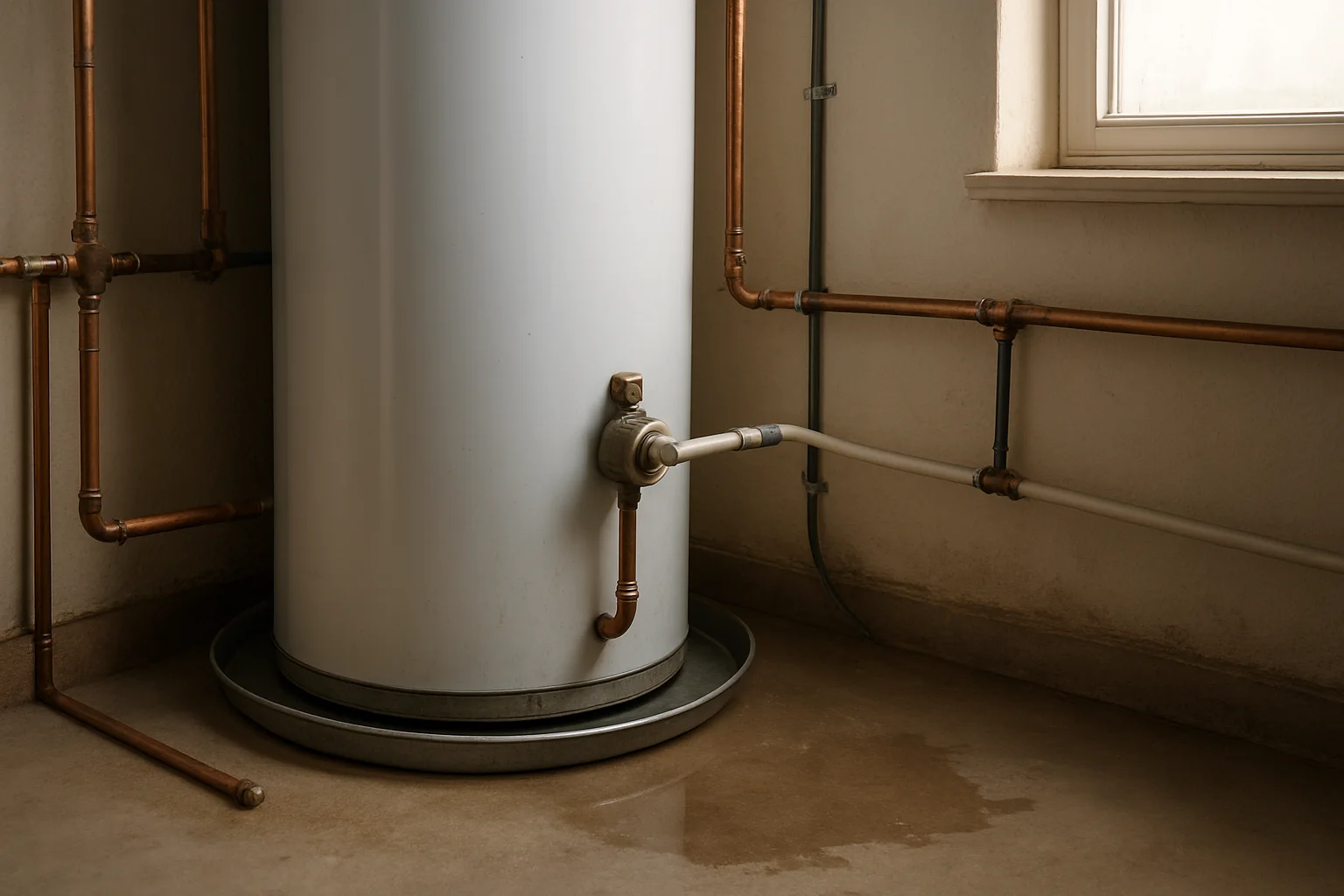
Other signs include discolored hot water, moisture around the tank, corrosion on fittings, or a metallic smell in the water. A small leak may seem manageable at first, but leaks from the tank body itself usually signal a more serious failure. For tankless systems, symptoms may look different: inconsistent temperature, reduced flow, ignition problems, or error codes. Homeowners should not assume every symptom means the unit must be replaced, but they also should not assume a quick fix is enough. A professional assessment can determine whether the issue is related to an easily replaceable part, an installation concern, or general wear that makes replacement more reasonable. The key is identifying the root cause instead of reacting only to the most visible symptom.
3. Repair or Replace: The First Questions to Ask
When a water heater acts up, homeowners often want a simple yes-or-no answer. In practice, the repair-versus-replacement decision is based on several questions. How old is the unit? Has it needed repeated service recently? Is the problem isolated to one component, or are multiple parts affected? Is the water heater meeting the home’s needs, or has household demand outgrown the original unit? These questions matter because a repair that restores function for a reasonable period can be a smart choice, but repeated repairs on an aging system can become frustrating and uneconomical over time.
A professional plumber will typically look at the unit’s overall condition, not just the immediate complaint. That means checking visible corrosion, plumbing connections, safety-related components, venting where applicable, signs of sediment, and whether the heater appears properly sized and installed for the home. If the failure is limited and the tank is otherwise sound, repair may be appropriate. If the tank shows deterioration, has a history of issues, or has a failure that affects reliability and safety, replacement may be the more practical path. Homeowners should think beyond short-term convenience and consider how long they want the water heater to remain dependable. The most useful decision is the one that fits the home’s actual condition, not a one-size-fits-all rule.
4. Age Is Important, But It Is Not the Only Factor
Water heater age is often the first benchmark homeowners hear about, and for good reason. As units get older, parts wear down, sediment accumulates, efficiency typically drops, and the risk of failure rises. Still, age alone does not tell the full story. A relatively younger unit may have suffered from poor water quality, improper installation, or repeated electrical or mechanical stress. Conversely, a well-maintained water heater may continue performing acceptably beyond the point when many people start thinking about replacement. This is why age should be treated as one factor, not the final answer.
In a professional evaluation, the plumber considers how the water heater has aged in real-world conditions. Has it been drained or flushed when appropriate? Is there evidence of corrosion or mineral buildup? Have past repairs addressed one isolated issue, or are there signs of a broader decline? The household’s hot water habits matter too. A unit that once served a small household may no longer meet the needs of a larger family or a home with more fixtures and appliances. In those cases, the issue may not be failure so much as mismatch. Professional guidance helps homeowners distinguish between a water heater that is old but still serviceable and one that is past the point where continued repairs make financial or practical sense.
5. When Repair Often Makes Sense
Repair is often the preferred option when the problem is identifiable, the tank is in generally good condition, and the unit has not developed recurring issues. For example, a faulty thermostat, worn heating element, malfunctioning gas control component, or a leaking connection may be repairable without replacing the entire appliance. In those cases, the surrounding system may still have useful life left, and a focused repair can restore performance efficiently. That is especially true when the tank itself shows no major corrosion or structural problems and the water heater still fits the home’s needs.
Another reason to consider repair is when the issue is isolated and the unit has a good maintenance history. If the failure is not part of a pattern and the plumber does not see widespread deterioration, a repair can preserve the homeowner’s investment. That said, repair only makes sense when it is likely to be durable. A temporary fix on a badly worn system may only delay the inevitable. A trustworthy assessment weighs the likelihood that the repair will solve the problem meaningfully rather than briefly. Homeowners in Northwest Florida can benefit from this approach because it avoids unnecessary replacement when a targeted solution is enough. The goal is not to replace a water heater too early, but also not to keep investing in a system that is no longer reliable.
6. When Replacement Is the Smarter Choice
Replacement becomes more compelling when the water heater has a failing tank, recurring leaks, widespread corrosion, or repeated performance issues that suggest the system is nearing the end of its useful life. If the tank itself is compromised, repair options are usually limited because the body of the heater is not designed to be rebuilt. Even if a plumber can address an immediate symptom, the underlying deterioration may continue. In that situation, replacement can reduce the risk of future leaks, water damage, and inconvenient breakdowns. For homeowners, the value of replacement is not just in a new appliance, but in restoring confidence that hot water will be available when needed.
There are also cases where replacement makes sense because the household’s needs have changed. A family may have added bathrooms, experienced higher occupancy, or simply outgrown the capacity of the existing system. Older units may also use more energy or fail to deliver the consistency modern households expect. If a plumber sees that the heater is undersized, inefficient, or repeatedly struggling, replacement may solve more than one problem at once. Professional assessment is important because the decision is not always obvious from the outside. A unit that looks serviceable may still be near failure internally, while one with a visible issue may still be worth repairing. The best choice is the one supported by a careful inspection and a realistic view of future reliability.
7. How Northwest Florida Conditions Can Affect Performance
Northwest Florida’s environment can influence how long a water heater lasts and how well it performs. Humidity can contribute to corrosion around metal components and connections. In some homes, mineral content in the water can lead to sediment accumulation inside the tank, reducing efficiency and increasing wear. These conditions do not automatically mean a water heater will fail early, but they do mean homeowners should take small changes seriously. A system that is under extra environmental stress deserves more attention than one operating in a milder setting.
Coastal and near-coastal areas can also create concerns for exposed metal parts, venting, and external corrosion. Even inland homes are not immune to mineral-related buildup or age-related deterioration. This is one reason a water heater in Bay, Walton, or Okaloosa county may need evaluation sooner than a homeowner expects if performance begins to drop. Professional plumbers understand the local conditions that can affect a heater’s service life and can look for damage patterns that reflect those conditions. They can also help determine whether a problem is isolated to the heater or influenced by surrounding plumbing. The result is a more accurate recommendation. Rather than assuming all failures are the same, a professional assessment takes into account the region’s climate, water quality, and the home’s specific installation conditions.
8. Tank vs. Tankless: Different Systems, Different Decisions
Homeowners comparing repair and replacement should remember that tank and tankless water heaters fail in different ways. A traditional tank water heater stores heated water and may show symptoms such as tank sediment, anode wear, leaking valves, or corrosion in the shell. Because the tank itself is a major component, certain failures are more likely to lead to replacement. Tankless systems heat water on demand and often present different issues, such as flow restrictions, ignition trouble, scale buildup, or sensor and control problems. Some of these issues can be repaired effectively, while others may point to a need for component replacement or a broader system update.
The decision process also differs because tankless systems are often chosen for efficiency, space savings, or endless hot water expectations, while tank systems are often judged by capacity and simplicity. A homeowner might be able to justify repair on a tankless unit if the problem is isolated and the system is otherwise in good condition. With a tank unit, visible tank corrosion or a leak from the body may make replacement more practical. A professional plumber will identify the system type, assess the specific failure, and explain whether the issue is a component-level repair or a sign that the appliance is nearing the end of its service life. This kind of evaluation helps homeowners avoid overgeneralizing and makes the repair-versus-replacement choice much clearer.
9. Why Professional Assessment Matters
Water heaters are easy to underestimate because many of their parts are hidden from view. A homeowner may notice a symptom, but not the cause. For example, lukewarm water could stem from an electrical issue, a thermostat problem, sediment accumulation, a broken heating element, or a system that is simply undersized. A puddle near the base could be a loose connection, a condensate issue, a relief valve concern, or a tank failure. The symptom is important, but the cause determines whether repair or replacement is the right move. That is why professional assessment is not just helpful; it is central to making a smart decision.
A plumber evaluating the system can inspect the condition of fittings, controls, venting where relevant, connections, visible corrosion, and signs of leakage or mineral buildup. They can also consider the age and model of the unit, household demand, and whether the existing water heater is still appropriate for the home. Professional assessment reduces guesswork, prevents unnecessary parts replacement, and helps homeowners understand the risks of postponing action. Just as importantly, it keeps the process grounded in the actual condition of the appliance. Homeowners do not need to diagnose the problem themselves. They need a clear explanation of what is happening, what can be repaired, what cannot, and what makes the most sense for the home over time.
10. Safety and Water Damage Risks Homeowners Should Not Ignore
A struggling water heater can create more than inconvenience. Leaks can damage flooring, walls, insulation, and nearby belongings. Corrosion can worsen quietly until a small issue becomes a major failure. In some cases, hot water or steam-related problems can create safety concerns, especially if components are malfunctioning. Because of these risks, homeowners should treat active leaking, unusual smells, erratic operation, or visible rust as issues worth prompt attention. Even when the water heater is still producing hot water, warning signs can indicate a problem that may intensify without notice.
It is also important not to assume that every sign can be safely handled through trial and error. Water heaters connect to plumbing, electrical, or gas systems depending on the model, and mistakes can create additional hazards. That is why this kind of work belongs with a qualified professional. A plumber can determine whether the issue is minor and repairable or severe enough that replacement is the safer choice. They can also help reduce the risk of hidden damage by identifying whether leaks have affected nearby materials or whether the system’s condition suggests future failure. For homeowners, the best preventive step is simple: take the signs seriously, avoid unnecessary improvisation, and get the unit evaluated before a manageable issue becomes an emergency.
11. How to Prepare for a Service Visit
Homeowners can make a water heater assessment more efficient by gathering basic information before the plumber arrives. If possible, note the age of the unit, the brand or model if visible, and the symptoms being observed. Pay attention to whether the issue is constant or intermittent, whether it affects all fixtures or only some, and whether there have been any recent changes in water quality, household usage, or utility performance. This information can help the plumber narrow down the likely cause and focus the inspection. None of this requires technical diagnosis; it simply gives the professional a clearer picture of what has been happening.
It also helps to keep the area around the water heater accessible. Do not attempt hazardous repairs or remove covers on your own if you are not trained to do so. Instead, allow the plumber to inspect the system safely and thoroughly. During the visit, ask whether the unit appears repairable, whether the underlying cause is isolated or part of broader wear, and what signs suggest future replacement may be wise. A good assessment should leave you with a clearer understanding of the system’s current condition and the likely path forward. If the plumber recommends repair, ask what problem is being corrected. If replacement is recommended, ask what condition led to that conclusion. Clear communication makes the final decision easier and more confident.
12. Choosing the Right Next Step for Your Home
The best water heater decision is the one that balances condition, reliability, and long-term value. If the unit has a limited issue and the tank or core system remains in good shape, repair may be the most sensible response. If the heater is leaking from the tank, showing significant corrosion, needing frequent attention, or failing to meet the home’s hot water demands, replacement may be the more practical choice. There is no universal rule that works for every house. What matters is the specific condition of the appliance and how well it serves the household now and in the near future.
For homeowners in Bay, Walton, and Okaloosa counties, a trusted local evaluation can make the process less stressful and more accurate. 850 Plumber, part of veteran-owned A Superior Mechanical, serves the area with water heater repair and replacement guidance tailored to the home’s actual condition. That means homeowners can get help understanding whether a repair is worthwhile or whether a new system is the smarter investment. If your water heater is showing warning signs, or if you simply want a professional opinion before the problem becomes urgent, call 850-258-3225. An informed decision today can help protect comfort, reduce the chance of damage, and keep your home’s hot water system dependable.
Explore related plumbing care
- Water Heater Repair in Bay, Walton and Okaloosa Counties, FL
- Water Heater Replacement in Santa Rosa Beach, FL | 850 Plumber
- Tankless Water Heater Services in Northwest Florida | 850 Plumber
- Toilet Repair and Replacement in Bay, Walton and Okaloosa Counties, FL | 850 Plumber
- Water Heater Installation in Freeport, FL
- Water Heater Maintenance in Santa Rosa Beach, FL
Continue reading
- Water Heater Repair vs. Replacement for Northwest Florida Homeowners
- Water Heater Repair vs. Replacement for Santa Rosa Beach Homeowners
- Water Heater Maintenance in Santa Rosa Beach, FL: How Homeowners Can Weigh Repair Versus Replacement
Talk with the 850 Plumber team for help with your home or business.