
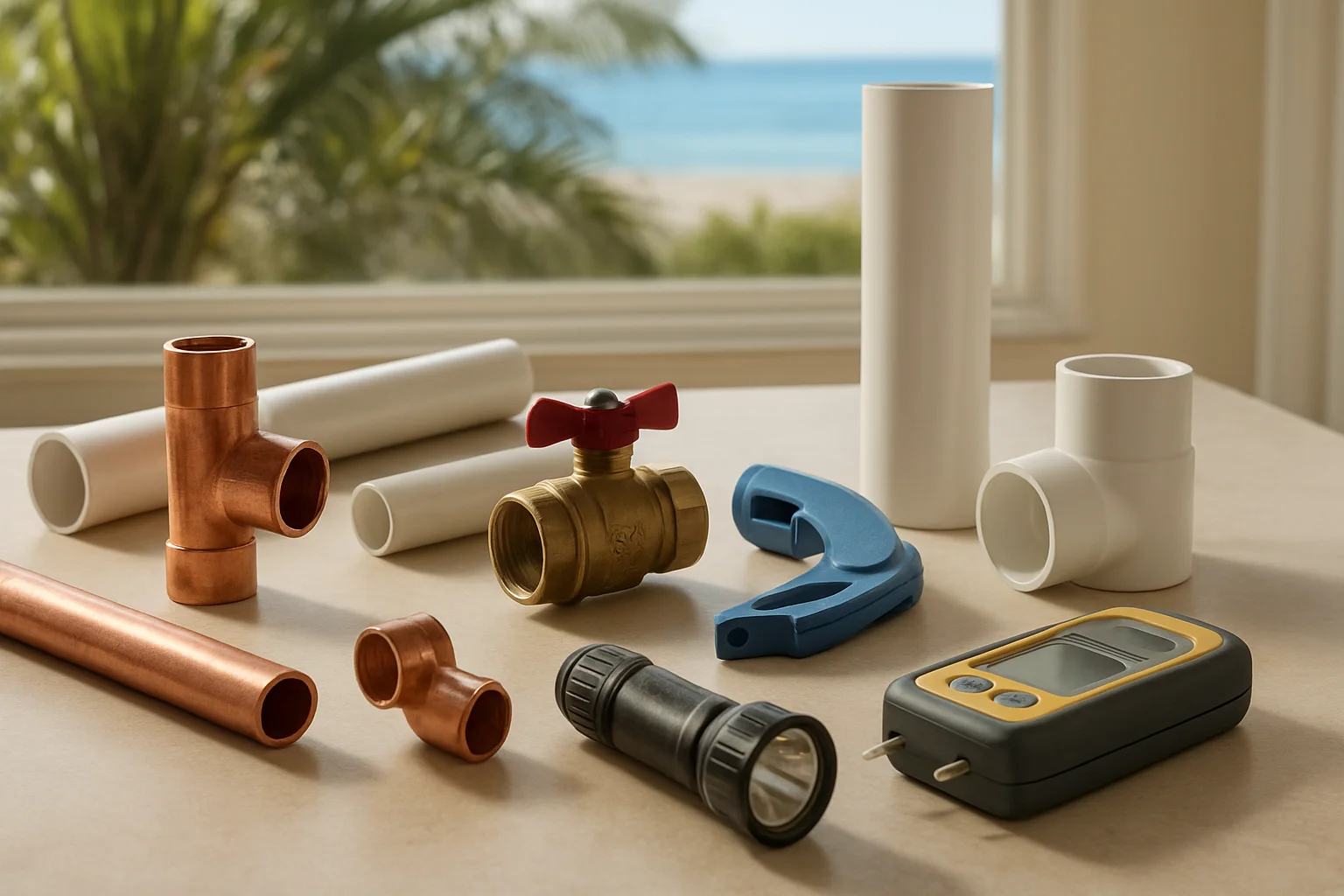
Why pipe decisions matter in Santa Rosa Beach homes
For homeowners in Santa Rosa Beach, pipe problems are rarely just about a single leak. Northwest Florida homes deal with a mix of salt air, humidity, shifting weather, and in some areas aging plumbing systems that may have already been stressed by previous repairs. When a pipe starts leaking, corroding, clogging, or losing pressure, the real question is not only how to stop the immediate problem, but whether the rest of the system is telling you something about its condition. A small issue can be isolated, but repeated issues often point to a larger pattern that deserves a professional look.
The repair-versus-replacement decision matters because plumbing is a hidden system. Pipes are inside walls, under floors, in crawl spaces, or buried outside, so homeowners often see symptoms long before they see the true cause. A professional assessment helps connect those symptoms to the condition of the piping material, the age of the system, the location of the failure, and the likelihood of future trouble. For homeowners in Santa Rosa Beach, the goal is to protect the home, reduce disruption, and avoid spending money on short-term fixes that do not solve the underlying problem.
Common signs that point to pipe trouble
Pipe problems usually announce themselves in subtle ways before they become obvious. You may notice a drop in water pressure, discolored water, musty odors, damp drywall, warm spots on the floor, or an unexplained increase in the water bill. Drain lines can also give warning signs such as slow fixtures, frequent backups, gurgling sounds, or sewage odors. None of these symptoms automatically mean a full replacement is necessary, but each one suggests the plumbing system should be evaluated carefully rather than ignored.
In coastal and humid environments, signs can appear faster or be easier to miss because moisture is common in the air and around the home. A homeowner may think a stain is just from condensation when it is actually a leaking supply line, or assume a recurring clog is a simple drain issue when the pipe has scale buildup or damage. Professional plumbing assessment looks at the pattern of symptoms, not just the visible spot. That broader view helps determine whether the issue is localized or part of a larger system-wide concern.
How pipe materials affect repair decisions
The material of the plumbing system is one of the biggest factors in deciding between repair and replacement. Different materials age in different ways, and some are more likely to develop recurring problems as they get older. A pipe that has one isolated issue may be a good candidate for repair if the rest of the system is in reasonable condition. But if the material is known for corrosion, joint failure, or chronic leaks in older installations, repeated repairs may only postpone a larger project. A professional can identify the material and explain how its condition affects long-term performance.
Homeowners do not need to know every technical detail, but it helps to understand that an older system may not be failing because of one bad spot. The piping could be reaching the end of its useful service life, especially if multiple sections show wear or if prior patching has already been done in several areas. In that situation, a repair may restore function for now, while replacement may offer better long-term reliability. The right choice depends on how widespread the concern is, how accessible the pipes are, and whether the material is likely to continue deteriorating.
When a repair is often the right answer
A targeted repair can be the right choice when the plumbing issue is isolated, the surrounding pipe is in good condition, and there is no evidence that other sections are close to failing. Examples include a single leaking joint, a damaged section caused by a specific event, or a localized issue that does not reflect a broader system problem. In these cases, repairing the affected area may restore service without disturbing the rest of the plumbing system. This is especially useful when the problem is confined to an accessible spot and the remainder of the piping still performs well.
Repair can also make sense when the homeowner needs a practical short-term solution while planning for future work. A professional plumber can assess whether the repair is likely to hold and whether monitoring is recommended afterward. The important part is making sure the repair is not treated as a cure-all. If the same line has already failed more than once, or if nearby pipes show corrosion or wear, a limited repair may not be the best long-term investment. A thoughtful assessment helps separate a good repair candidate from a system that is already on a replacement trajectory.
When replacement becomes the smarter option
Replacement becomes more compelling when plumbing problems are recurring, widespread, or tied to aging pipe material rather than one isolated issue. If multiple leaks have appeared over time, if water quality has changed, or if sections of pipe are deteriorating in several places, the system may be telling you that piecemeal repairs are no longer enough. Replacement can also be the better choice when pipes are difficult to access and each repair would require repeated disruption to walls, ceilings, or floors. In that case, replacing a larger portion of the system may be more efficient than continuing to open the same areas again and again.
A professional plumber will look at the age of the plumbing, the number of previous repairs, the severity of corrosion or buildup, and the risk of future failures. Replacement is not just about fixing what is broken today; it is about reducing the chance of tomorrow’s emergency. For some homeowners, that means replacing only one branch or one section of pipe. For others, it may mean replacing a larger run or a substantial part of the system. The deciding factor is whether the existing piping can still reasonably support the home without frequent trouble.
How professional assessment determines the best path
A professional assessment is the most reliable way to choose between repair and replacement because it combines visible inspection with diagnostic thinking. A plumber does more than look at the leak itself. They consider the location, the surrounding materials, signs of corrosion, water pressure, fixture performance, drainage behavior, and whether the issue appears to be isolated or part of a larger pattern. In some cases, access panels, pressure testing, camera inspection, or other standard diagnostic methods may be used depending on the nature of the problem. The goal is to understand the condition of the system without guessing.
For homeowners, this step is valuable because pipe failures can look similar even when the causes are very different. A wall stain might come from a small supply leak, a drain line issue, or an unrelated moisture source. A recurring pressure drop might stem from a valve problem, buildup inside the pipe, or a section of piping that is deteriorating internally. A professional assessment helps avoid unnecessary work and reduces the chance of replacing parts that are still sound. It also gives the homeowner a clearer picture of urgency, scope, and likely next steps.
The role of age, wear, and repeat repairs
Age alone does not automatically mean pipes need to be replaced, but it is a major factor in the decision. Older plumbing systems may have already endured decades of water flow, mineral buildup, temperature changes, and previous repairs. Even if a leak is currently small, the surrounding sections may be approaching the same point of failure. When a system has already needed several repairs in different places, that history often matters more than any single leak. It suggests the piping may be entering a pattern of ongoing breakdown rather than experiencing one bad incident.
Repeat repairs can also create a false sense of security. Each fix may solve the visible problem, but if the pipe material is thinning, corroding, or otherwise aging out, the next failure may happen soon after. Professional plumbers look at the larger story of the system: how often it has failed, where the failures occur, and whether the pattern points to a broader issue. That perspective helps homeowners avoid spending repeatedly on temporary solutions when a planned replacement would be more predictable and easier to manage.
What homeowners can watch for during seasonal changes
Seasonal weather in Northwest Florida can influence how plumbing problems show up. Heavy rain can make it harder to notice moisture issues, while changes in humidity can affect indoor air and sometimes make hidden leaks more noticeable through odors, stains, or warped materials. Cooler periods may reveal pressure or expansion issues that were less obvious in warmer weather. Outdoor plumbing and buried lines can also be affected by ground saturation or shifting conditions around the home. Even when the weather is not the root cause, it can expose weaknesses that were already present.
Homeowners should pay attention to changes that happen around the same time each year. If a fixture starts acting up in a predictable season, or if the same part of the house develops moisture after certain weather patterns, that consistency is worth mentioning during a professional assessment. The point is not to self-diagnose, but to provide useful context. Seasonal patterns can help a plumber distinguish between a one-time problem and an issue that has been gradually developing. That information can make the repair-versus-replacement decision much more accurate.
Why visible symptoms can be misleading
A plumbing issue may show up in one place even though the real cause is somewhere else. Water can travel along framing, under flooring, or through wall cavities before it becomes visible. That means a stain in one room may originate several feet away from the source. Likewise, a drain issue in one fixture may be tied to a deeper problem elsewhere in the line. Homeowners who only respond to the visible symptom may miss the underlying condition and end up fixing the wrong section first. This is one reason professional evaluation is so important.
Misleading symptoms also make it hard to judge whether repair is enough. A visible leak may seem small, but if the pipe has deteriorated behind the surface, the leak may be the first sign of a larger failure. On the other hand, some alarming symptoms are caused by relatively minor issues that do not require major replacement. A plumber’s job is to sort those possibilities out. That assessment protects the homeowner from both overreacting and underreacting, which is especially important in a home where hidden plumbing is not easy to inspect directly.
How replacement can protect the whole home
Pipe replacement is not just about stopping leaks. A well-planned replacement can help improve pressure consistency, reduce the likelihood of future water damage, and make the plumbing system easier to trust. For homeowners who have dealt with recurring problems, replacement can bring predictability back to daily life. Instead of waiting for the next leak or clog, the homeowner gains a clearer sense that the system has been addressed more comprehensively. That does not mean every plumbing concern disappears forever, but it can reduce the cycle of repeated emergency calls for the same failing sections.
Replacement may also make sense when the home is undergoing other work that makes access easier. If walls, floors, or other areas are already open for unrelated reasons, it may be a practical time to address tired piping before those surfaces are closed back up. A professional plumber can help determine whether a partial or broader replacement fits the home’s condition and the homeowner’s goals. The key benefit is not simply new pipe; it is a plumbing system that better matches the current needs of the home instead of continuing to rely on aging material that has already shown signs of trouble.
What to expect from a plumbing evaluation
A proper plumbing evaluation should feel organized and informative. The plumber should ask about the symptoms, when they started, how often they occur, and whether the problem has changed over time. They may inspect the visible piping, test fixtures, review water pressure, and look for signs of hidden moisture or repeated failure points. Depending on the situation, they may need to access concealed areas to understand how the system is performing. The purpose is to gather enough information to recommend the least disruptive and most reliable solution.
Homeowners should expect the plumber to explain not only what is wrong, but why repair or replacement is being recommended. Clear communication matters because the right decision is based on more than a single broken section. A good assessment should account for the age of the system, the condition of nearby pipes, and the chance of future problems. That kind of explanation helps the homeowner move forward with confidence, whether the result is a targeted repair, a larger replacement project, or a plan to monitor the system closely for a period of time.
Choosing a local plumbing partner in Bay, Walton, and Okaloosa counties
When a pipe problem affects your home, local knowledge matters. Homes across Bay, Walton, and Okaloosa counties can face different construction styles, soil conditions, exposure patterns, and maintenance histories, so a plumber familiar with the region is better positioned to interpret the signs correctly. That does not replace a careful inspection, but it does help inform the recommendation. A local plumbing company can also respond with an understanding of the kinds of issues homeowners in the area commonly encounter and the practical concerns that come with coastal living.
850 Plumber, part of veteran-owned A Superior Mechanical, serves homeowners in Bay, Walton, and Okaloosa counties, FL, and can help evaluate whether a pipe issue calls for repair or replacement. The company can be reached at 850-258-3225. For homeowners in Santa Rosa Beach, the most useful first step is often a professional assessment that looks beyond the obvious leak and considers the whole plumbing system. That approach helps protect the home, reduce unnecessary disruption, and support a decision that makes sense for both the immediate problem and the long-term condition of the plumbing.
Explore related plumbing care
- Pipe Replacement in Santa Rosa Beach, FL
- Water Heater Replacement in Santa Rosa Beach, FL | 850 Plumber
- Toilet Repair and Replacement in Bay, Walton and Okaloosa Counties, FL | 850 Plumber
- Water Heater Maintenance in Santa Rosa Beach, FL
- Water Softening Services in Santa Rosa Beach, FL
- Plumbing Fixture Replacement in Freeport, FL
Continue reading
- Water Heater Repair vs. Replacement for Santa Rosa Beach Homeowners
- Water Heater Maintenance in Santa Rosa Beach, FL: How Homeowners Can Weigh Repair Versus Replacement
- Clogged Drains and Pipe Cleaning in Northwest Florida: How Homeowners Decide Between Repair and Replacement
Talk with the 850 Plumber team for help with your home or business.