
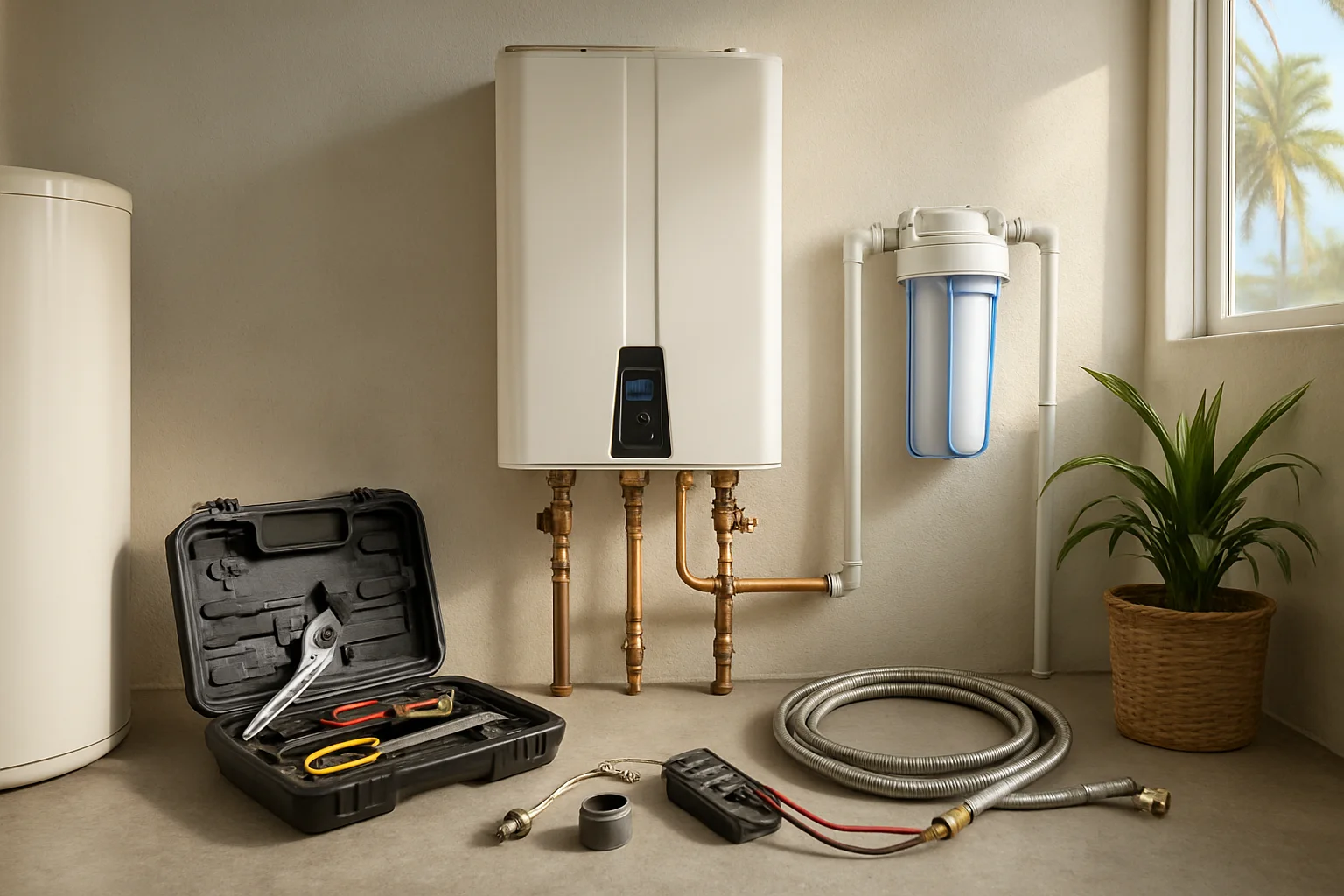
Why Tankless Water Heaters Need Localized Care in Northwest Florida
Tankless water heaters are often chosen for their compact size, on-demand hot water, and potential efficiency benefits, but Northwest Florida homes put unique demands on any water heating system. High humidity, coastal air, seasonal storm activity, and mineral content in the water can all influence how a tankless unit performs over time. A homeowner in Bay, Walton, or Okaloosa County may notice that a system behaves differently in summer than it does during a colder winter snap, or that a unit working well one year needs more attention the next. These changes are not unusual. They are part of why seasonal planning matters so much for tankless systems in this region.
Because tankless water heaters depend on flow, heat exchange, and sensors that respond quickly to demand, even small changes in water quality or usage patterns can affect performance. A homeowner may not immediately connect slower hot water delivery, temperature swings, or reduced output with routine wear, but these can be early signs that a unit needs service. Professional assessment can help distinguish normal behavior from a developing problem. A qualified plumber can evaluate installation conditions, venting, water quality concerns, and maintenance history to determine whether the issue is minor or needs corrective work. For homeowners, that means fewer surprises and a better chance of keeping hot water available when it matters most.
How Tankless Systems Work in Everyday Home Use
A tankless water heater warms water only when a fixture calls for it, instead of storing a large volume of hot water in a tank. When a hot water tap opens, water flows through the unit, the system detects the demand, and the heating elements or burner begin raising the water temperature. This design can support a smaller footprint and reduce standby heat loss, but it also means the unit has to respond correctly every time water is used. If a sensor, filter, vent, or heat exchanger is affected by buildup or wear, the homeowner may see the difference quickly at showers, sinks, laundry, or dishwashing fixtures.
In practice, a tankless unit is only as dependable as its supporting conditions. Water pressure, incoming water temperature, local mineral content, and the household’s peak usage all influence performance. In Northwest Florida, homeowners may use hot water heavily during busy mornings or when guests are visiting, and those demand spikes can expose a system that is undersized, scaled, or not maintained. Professional assessment matters because a plumber can look beyond the symptom and inspect the whole system. That may include checking the inlet and outlet connections, flow conditions, combustion or electrical components, venting requirements, and whether the unit is suitable for the home’s current water use pattern.
Seasonal Planning for Spring and Summer in Coastal Florida
Spring and summer in Northwest Florida often bring increased humidity, heavy shower use, vacation guests, and more frequent laundry and cleaning activity. Those seasonal changes can place a greater load on a tankless water heater. Homeowners may not realize that more simultaneous hot water use can reveal issues with flow rate or temperature stability. If a unit seems to lag during busier months, the problem may not be the faucet or showerhead alone. It can also reflect mineral buildup, filter restriction, or a system that needs professional tuning and inspection.
Seasonal planning during the warmer months can help prevent small concerns from becoming larger service calls later. A plumber can inspect the unit before the heaviest-use season begins, verify that the system is operating within expected parameters, and identify signs of wear that may not be visible to the homeowner. This is also a good time to discuss household usage changes, such as an extra bathroom, seasonal occupancy, or added appliances. Rather than guessing at whether the unit is keeping up, a professional assessment can provide a practical baseline. That kind of preventive approach helps homeowners prepare for the period when hot water demand is likely to rise and when the weather may make indoor discomfort more noticeable if the system is not performing properly.
Preparing for Fall and Winter Temperature Changes
Even in Northwest Florida, cooler weather can make tankless hot water performance feel different. Incoming groundwater temperatures typically drop during colder periods, which means the heater must work harder to raise the water to the set temperature. A system that seemed perfectly adequate in summer may feel slower or less generous in winter, especially if multiple fixtures are used at once. Homeowners often first notice this as lukewarm water, a need to reduce flow to maintain temperature, or longer wait times for hot water at distant fixtures.
Fall is a smart time to schedule professional evaluation because it creates a buffer before cold weather arrives. A plumber can examine the system for buildup, verify that controls are functioning properly, and assess whether the unit is responding well to seasonal demand changes. If a tankless heater needs descaling, cleaning, filter service, or a review of installation details, addressing those items before winter can reduce inconvenience later. Homeowners should avoid assuming that a colder season automatically means the system is failing. Professional assessment helps separate normal seasonal variation from an issue that should be corrected. In a climate like Northwest Florida’s, a well-timed inspection often provides reassurance and a clearer plan for the months ahead.
Water Quality and Mineral Buildup Concerns
Mineral buildup is one of the most common issues affecting tankless water heaters. As water passes through narrow pathways and heat exchange components, minerals can collect over time and reduce efficiency or interfere with performance. In some homes, the first signs are subtle: slightly less hot water, uneven temperatures, or a system that seems to run longer than it used to. Because tankless units rely on narrow internal passages, buildup can matter more quickly than many homeowners expect. Preventive care is important because it can help preserve output and reduce unnecessary strain on the equipment.
A professional plumber can evaluate whether buildup is present and determine the appropriate service approach based on the unit’s condition and the home’s water quality. This is not just about flushing a system on a calendar. It is about understanding how the household uses water, whether scale is recurring, and whether any filters or treatment measures are needed to support better long-term performance. In Northwest Florida, where water conditions vary by location and source, a homeowner may benefit from a customized plan rather than a one-size-fits-all schedule. Professional assessment can also help identify when reduced performance is due to something else, such as a sensor issue, restriction in the plumbing, or installation concerns, so the homeowner does not treat every problem as if it has the same cause.
What Homeowners Can Watch For Between Service Visits
Homeowners do not need to be technicians to notice meaningful changes in a tankless water heater’s behavior. Warning signs can include inconsistent hot water, a drop in water temperature during routine use, unusual noises from the unit, longer waits for hot water, or visible error indications on the equipment. Some changes may be intermittent, appearing only during busy mornings or when several fixtures are used at once. Others may be gradual, making them easy to overlook until the system feels noticeably different. Paying attention to patterns helps a plumber diagnose the issue more efficiently.
The key is to observe, not troubleshoot aggressively. A homeowner should note when the symptoms happen, which fixtures are involved, and whether the issue appears during high-demand periods or under normal use. That information can be useful during a professional visit. It helps a plumber decide whether the concern points to flow restrictions, maintenance needs, venting issues, or another mechanical or installation-related problem. Avoiding hazardous DIY actions is important, especially around gas, combustion, electrical components, and plumbing connections. Professional assessment protects both the equipment and the household. When a homeowner reports symptoms clearly and schedules service at the right time, the diagnosis is often faster and the repair plan more focused.
Why Annual or Periodic Professional Inspection Matters
A tankless water heater is a mechanical system with multiple components that should be checked before issues turn into failures. Professional inspection can help catch scale buildup, confirm proper venting, evaluate safety-related parts, and make sure the unit is responding correctly to demand. For homeowners in Bay, Walton, and Okaloosa counties, periodic inspection is especially valuable because local conditions can influence equipment stress. Salty air, storm seasons, and the realities of coastal living can all increase the importance of keeping an eye on equipment that is meant to work efficiently and consistently.
During an inspection, a plumber can also review whether the current system setup still fits the household’s needs. A home that has added occupants, bathrooms, or higher water use may need a different service plan than it did a few years ago. Periodic checks make it easier to identify emerging issues before they become interruptions in daily life. Homeowners often think of inspection as something that is only necessary after a visible problem. In reality, it is one of the most useful preventive steps because it gives a trained professional a chance to assess the condition of the unit in context. That can help extend useful service life, reduce avoidable inconvenience, and provide a practical roadmap for future maintenance.
The Role of Venting, Airflow, and Installation Conditions
Tankless water heaters are sensitive to the conditions around them, especially when it comes to venting and airflow. If a unit cannot move air properly or if installation details are not correct, performance and safety can be affected. Homeowners may not notice these concerns directly because the equipment is often tucked away in a utility space, garage, or exterior location. That is one reason professional assessment is so important. A qualified plumber can inspect the installation environment and determine whether the unit has adequate clearances, proper venting, and suitable connections for reliable operation.
In Northwest Florida, where humidity and storm-related conditions can affect enclosed spaces, installation quality matters. A system that was adequate at one point may need reevaluation if the home has been remodeled, the utility area has changed, or moisture exposure has increased. Homeowners should not assume that every performance issue comes from the heater itself. Sometimes the surrounding conditions are part of the cause. A professional can identify these contributing factors and recommend the right corrective action. This broader view is one of the biggest advantages of using a trained plumber rather than trying to diagnose the equipment based only on the symptom at the faucet. Proper airflow and installation support are essential to dependable hot water service.
How Storm Season Can Affect Water Heater Planning
In Northwest Florida, storm season is part of life, and homeowners often focus on roofs, windows, and power protection. Tankless water heaters deserve attention in those preparations as well. Power interruptions, moisture intrusion, and debris or water exposure can all influence a system’s ability to resume normal service after severe weather. A homeowner may not think about the water heater until hot water is suddenly unavailable, but a seasonal checklist can reduce that risk. Planning ahead allows the household to understand where the system is located, how it is protected, and whether it should be checked after a major weather event.
A professional plumber can help homeowners think through practical steps without turning storm readiness into a complicated project. That may include confirming that the installation area is in good condition, checking for signs of moisture-related damage, and reviewing whether any service concerns should be addressed before a season of possible disruptions. After a storm, it is wise to have the unit assessed if there has been flooding, power irregularity, or visible impact nearby. Because tankless systems include mechanical and electrical or gas-related components, post-storm evaluation should be handled professionally. For homeowners, the benefit is straightforward: a better chance of restoring hot water safely and avoiding hidden problems that may not show up immediately after the weather clears.
Choosing the Right Service Approach for Your Home
Not every tankless issue calls for the same type of service. Some homes may need a basic inspection and cleaning, while others require more detailed diagnosis of flow issues, water quality concerns, venting, or component wear. That is why a homeowner should think in terms of service needs rather than one fixed solution. A professional plumber can help determine whether the unit simply needs preventive care or whether there is a larger issue affecting performance. This kind of tailored assessment is especially useful in older homes, homes with changing occupancy, or homes that have experienced recent plumbing work or remodels.
The right service approach also depends on how the homeowner uses hot water. A family with overlapping morning routines may need a different evaluation than a vacation property with intermittent use. Professionals can look at usage patterns, equipment age, and local conditions to decide what matters most. This is more effective than trying to apply generic advice to every household. Homeowners benefit when the service plan is based on the actual system in the home rather than assumptions. That approach helps keep maintenance practical, targeted, and aligned with the realities of Northwest Florida living. It also supports better communication between the homeowner and the plumber, which can lead to clearer expectations and fewer repeat issues.
Signs It May Be Time to Replace Instead of Repair
Many tankless water heaters can be maintained for a long time with proper care, but no unit lasts forever. Homeowners sometimes wonder whether a recurring issue means they need another repair or whether replacement should be considered. Clues that may point toward a bigger decision can include repeated service needs, declining performance despite maintenance, inconsistent water temperatures that return after repairs, or a system that no longer meets the household’s hot water demand. The important part is not to guess. Replacement decisions should be made after a professional evaluation of the unit’s condition and the home’s needs.
A plumber can help a homeowner weigh the practical factors without overstating the problem. That might include the age and condition of the unit, the frequency of issues, whether parts are still serviceable, and whether the current system is correctly sized for the home. In some cases, a repair and maintenance plan is still reasonable. In others, replacement may be the better long-term solution. Homeowners in Northwest Florida should think about reliability, efficiency, and comfort together rather than focusing on one factor alone. A clear assessment from a qualified professional can help avoid throwing good money after bad while also preventing an unnecessary replacement when service would still be worthwhile.
What to Expect During a Professional Tankless Water Heater Visit
When a homeowner schedules tankless water heater service, the visit should begin with a conversation about the symptoms, the household’s hot water habits, and any recent changes in the home. A plumber can then inspect the unit, related plumbing connections, and installation area to identify possible causes. The process may include checking for scale buildup, testing how the system responds to demand, reviewing venting and airflow, and evaluating whether the heater is operating consistently. The goal is not just to fix one symptom but to understand why it is happening.
Homeowners often find that a professional visit provides clarity as much as repair. A trained plumber can explain whether the unit needs immediate attention, preventive maintenance, or a longer-term plan. That can be especially helpful for homeowners who are not sure whether the problem is urgent or seasonal. Good service should leave the homeowner with a clearer understanding of what was found and what to watch for next. For residents of Bay, Walton, and Okaloosa counties, that kind of practical guidance is valuable because it aligns the system with local conditions and household usage. A professional assessment takes the uncertainty out of tankless water heater care and replaces it with a plan that is easier to manage over time.
Why Local Homeowners Benefit from Planned Preventive Care
Preventive care is one of the simplest ways to protect a tankless water heater from avoidable trouble. Instead of waiting for a cold shower, error message, or reduced flow, homeowners can build routine service into their seasonal home care plan. In Northwest Florida, that means thinking ahead to periods of heavier use, seasonal temperature shifts, and weather-related stress. Preventive care does not need to be complicated to be effective. It simply needs to be consistent and informed by the actual conditions in the home.
For homeowners served by 850 Plumber, part of veteran-owned A Superior Mechanical, the value of preventive care is in the peace of mind it can provide. A professional can assess the unit, identify buildup or wear, and help determine the best timing for maintenance before small issues become inconvenient ones. Homeowners in Bay, Walton, and Okaloosa counties can benefit from a service approach that respects the realities of local living and seasonal change. If you want to plan ahead for your tankless water heater, a professional evaluation is a practical first step. For service inquiries, homeowners can contact 850 Plumber at 850-258-3225.
Explore related plumbing care
- Tankless Water Heater Services in Northwest Florida | 850 Plumber
- Water Heater Maintenance in Santa Rosa Beach, FL
- Water Heater Installation in Freeport, FL
- Water Heater Repair in Bay, Walton and Okaloosa Counties, FL
- Water Heater Replacement in Santa Rosa Beach, FL | 850 Plumber
- Water Heater Services in Bay, Walton & Okaloosa Counties, FL
Continue reading
- Whole Home Water Purification for Northwest Florida Homes: Preventive Care and Seasonal Planning
- Water Softening Services in Santa Rosa Beach, FL: Preventive Care and Seasonal Planning for Northwest Florida Homes
- Water Heater Care for Northwest Florida Homes: Preventive Planning for Bay, Walton & Okaloosa Counties
Talk with the 850 Plumber team for help with your home or business.