
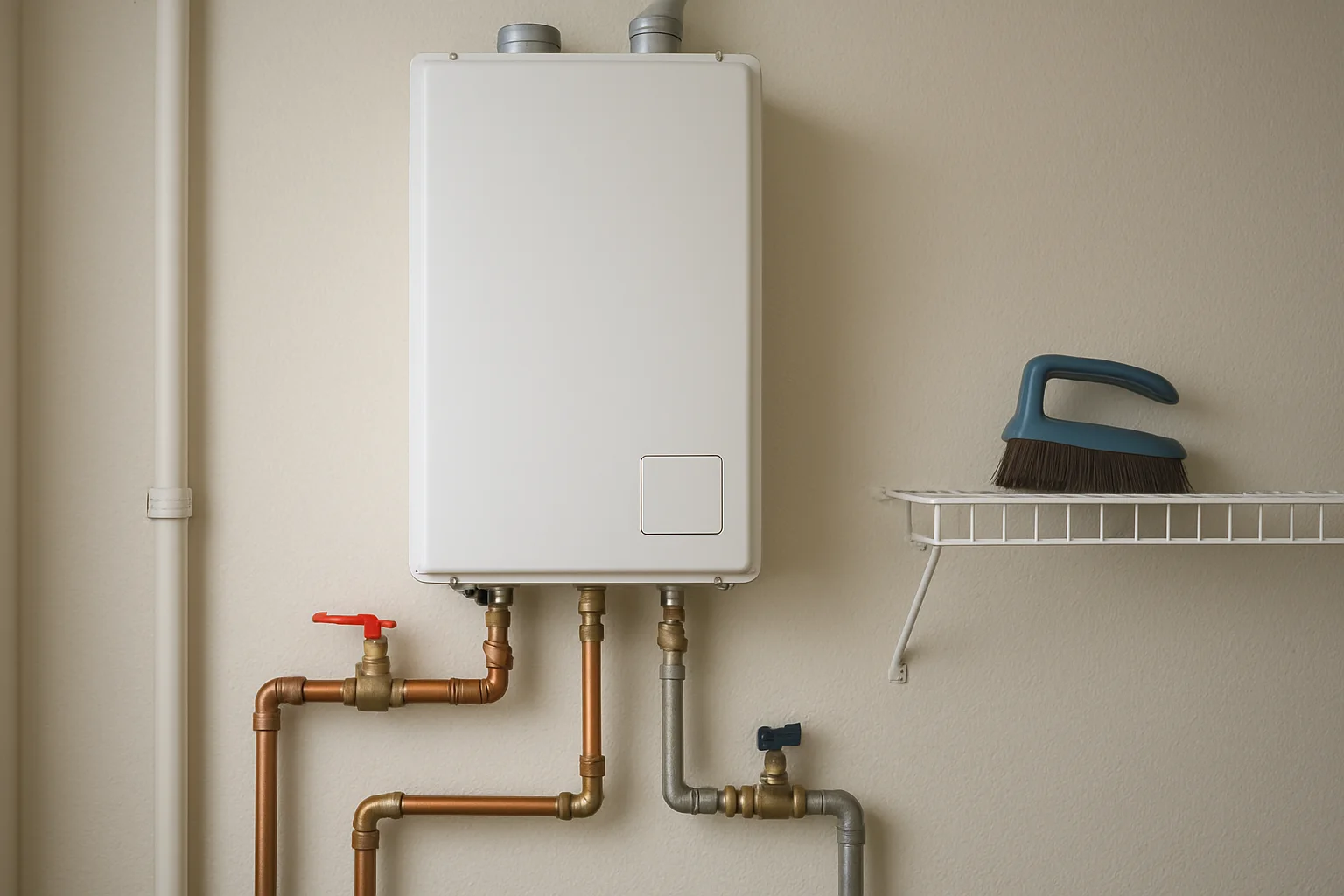
Why tankless water heater decisions matter in Northwest Florida
Tankless water heaters are popular with many Northwest Florida homeowners because they can deliver hot water on demand and free up space compared with a traditional tank. In Bay, Walton, and Okaloosa counties, that convenience can matter even more because households often deal with fluctuating water quality, high humidity, and long periods of heavy use during guest visits, vacations, and seasonal occupancy. When a tankless unit starts acting up, the question is not just whether it can be fixed. It is whether repair will realistically restore reliable performance or whether replacement will provide a better long-term result.
That decision is easier when you understand what these systems do and how they typically fail. Tankless units are built to heat water only when needed, but they still depend on clean water flow, proper gas or electrical supply, venting, controls, and periodic service. A symptom that looks small, such as inconsistent temperature or a slight delay in hot water, may point to scale buildup, a sensor issue, or a flow restriction. A professional assessment helps separate a manageable repair from a sign that the unit is nearing the end of its useful life. For homeowners in the Northwest Florida climate, that distinction can prevent repeated service calls, reduce stress, and help maintain dependable hot water for daily routines.
How a tankless water heater works in everyday use
A tankless water heater does not store hot water in a tank. Instead, when a faucet, shower, or appliance calls for hot water, the unit detects the flow and activates a burner or heating element. Water passes through a heat exchanger and exits at the desired temperature. This design can be efficient because it avoids keeping a large volume of water hot at all times. It also means the system must respond accurately to demand, water flow, and temperature settings every time someone opens a tap.
Because tankless systems operate on demand, their performance depends on more than just the heater itself. The incoming water flow has to be adequate, gas or electricity must be stable, and the venting or exhaust path must be unobstructed and correctly installed. Mineral content in the water can also affect operation over time. In coastal and panhandle communities, these factors can combine to create issues that feel random to the homeowner. One day the shower is hot and steady, and the next day the water runs lukewarm or the unit displays an error code. A trained plumber can test the system as a whole, rather than focusing on one visible symptom, which is the best way to determine whether repair is practical or replacement is more sensible.
Common warning signs that your tankless system needs attention
A tankless water heater rarely stops working without giving some warning. Homeowners may notice hot water takes longer to arrive, temperatures swing during use, or the unit cycles on and off unexpectedly. Some systems produce error codes on a display, while others may show more subtle signs such as reduced flow or unusual noises. A unit that has become less reliable is not necessarily beyond repair, but it does deserve prompt evaluation before minor wear turns into a larger breakdown.
Other warning signs include visible leaks around connections, corrosion on fittings, repeated shutdowns, or hot water that is unavailable when multiple fixtures run at once. These symptoms can point to sediment or scale buildup, a failing component, a venting problem, or a sizing mismatch between the heater and the household’s hot water demands. In Northwest Florida, where homes may experience hard-water-related buildup and seasonal surges in usage, a professional assessment is especially helpful. An experienced plumber can determine whether the problem is isolated and repairable or whether the system has reached a point where continued fixes are likely to become more frequent and more disruptive. The earlier a homeowner acts, the more options are usually available.
What professional assessment looks at before recommending repair or replacement
A reliable recommendation starts with a full diagnosis rather than a guess. A plumber evaluating a tankless water heater will typically review the unit’s age, model, service history, installation layout, error indicators, water pressure, inlet temperature, and the condition of the venting and gas or electrical supply. They may also inspect for scale buildup, examine heat exchanger performance, and verify whether the unit is sized properly for the home’s actual needs. This matters because a symptom like low hot water output can be caused by several different issues, not all of which require replacement.
Professional assessment also considers the broader plumbing system. For example, a tankless water heater that seems to fail may actually be responding to a clogged filter, restricted flow, dirty inlet screen, or a problem elsewhere in the water line. In some homes, the water heater is operating within design limits, but the household’s demand has changed because of an addition, a larger family, or new fixtures. That is why a plumber should look at both the unit and the home’s usage pattern. A clear diagnosis helps homeowners avoid unnecessary replacement when a targeted repair will do, and it also prevents repeated repairs on a unit that is no longer a practical long-term solution.
When repair is often the smarter choice
Repair often makes sense when the tankless water heater is relatively new, the issue is clearly identified, and the rest of the unit is still in good condition. Examples may include a sensor issue, a clogged inlet filter, a minor ignition problem, a valve that needs service, or a maintenance-related performance decline from scale buildup. If the unit has been installed correctly and has not suffered major damage, a focused repair can restore functionality without the cost and disruption of full replacement. For many homeowners, this is the best outcome because it extends the life of an existing system that still has plenty to offer.
Repair is also more attractive when the heater has been maintained regularly and the problem is limited to a single component. In those cases, a plumber can often resolve the issue after testing the system and confirming that no other underlying concerns are present. However, repair should not be chosen just because it is the less immediate change. The key question is whether the repair is likely to produce dependable performance for a reasonable period. A well-informed decision weighs the unit’s age, the severity of the problem, and the likelihood that other issues will appear soon. In Northwest Florida homes, where water quality and usage patterns can stress equipment, the most economical option is not always the cheapest visit today; it is the one that best balances reliability and value over time.
When replacement may be the better long-term decision
Replacement becomes more compelling when the unit has a history of repeated failures, the repair cost is becoming significant relative to the system’s remaining life, or the water heater no longer meets the household’s hot water needs. A unit that frequently shuts down or displays recurring error codes may be trying to tell you that multiple internal parts are wearing out, not just one. If the heat exchanger is compromised, corrosion is present, or essential components are no longer operating reliably, replacement can be the more practical choice. It reduces the cycle of temporary fixes and restores confidence in daily hot water use.
Another reason to consider replacement is changing household demand. A tankless system that worked well for a smaller family or a simpler plumbing setup may struggle after a bathroom remodel, new appliances, or higher occupancy. In that case, repeated troubleshooting may not solve the underlying mismatch. A plumber can evaluate whether the current unit is properly sized and whether a different model would better fit the home’s hot water pattern. Replacement is also worth considering when a system’s age makes future repairs more likely. Even if one component can be fixed now, an older unit may continue to require attention. For many homeowners, replacement offers a clearer path to dependable performance than investing in a heater that is nearing the end of its practical service life.
How Northwest Florida conditions can influence tankless performance
Northwest Florida homes face environmental and water-related factors that can affect tankless water heaters over time. Humidity can contribute to corrosion concerns in exposed areas, while mineral content in the water can lead to scale accumulation inside the heat exchanger and related components. Coastal air and local installation conditions can also influence how well venting and exterior components hold up. None of this means a tankless unit will fail quickly. It means that routine care and correct installation matter, and that a problem seen in one home may have a different cause than a similar symptom elsewhere.
Seasonal usage patterns also matter. In many households, hot water demand changes during holidays, school breaks, rental turnover, or periods when guests are staying over. A system that seems adequate during lighter use may reveal weaknesses during busier times. That is why a professional assessment should consider how the home is actually used in Bay, Walton, or Okaloosa County, not just the manufacturer’s general specifications. A plumber can determine whether the heater’s capacity still matches the property and whether local conditions have contributed to the problem. This broader view is especially valuable for homeowners deciding between repair and replacement, because it shows whether the issue is a maintenance matter, an installation concern, or a sign that the system no longer suits the home.
Maintenance issues that can look like major failure
Some tankless water heater problems look severe but are actually maintenance-related. Scale buildup is one of the most common examples. As mineral deposits collect inside the unit, they can reduce efficiency, slow water flow, and interfere with sensors or temperature control. A homeowner may experience lukewarm water or inconsistent output and assume the system is failing permanently, when the real issue is that the heater needs professional cleaning or descaling. Other maintenance-related issues can include dirty filters, minor debris in the water path, or neglected inspection of related valves and fittings.
Because these issues can mimic more serious failure, a homeowner should avoid assuming that a replacement is automatically needed. The right response is to have the unit checked by a plumber who can determine whether the system can be restored through maintenance and repair. Professional service can also reveal whether routine care has been missed for so long that the heater has sustained damage beyond a simple cleaning. That distinction matters. If the system only needs overdue maintenance, replacement would be unnecessary. If the maintenance issue has already caused damage to key components, the long-term decision may be different. Either way, the diagnosis should come before the decision, not after it.
Signs that a tankless unit may be past economical repair
There are times when a tankless water heater can technically be repaired, but doing so is not the most economical path. A common example is a unit that has multiple failing parts at once. If a plumber finds problems with the heat exchanger, control board, sensors, and related valves, the combined repair effort may approach the value of installing a new system. Another red flag is repeated service for the same issue. If the unit keeps losing performance after recent repairs, that suggests the underlying problem has not been fully resolved or that age-related wear is spreading through the system.
Age alone does not force replacement, but it does matter. A newer system with one clear problem is often a good repair candidate. An older unit with ongoing issues deserves a closer look at long-term reliability, especially if parts are harder to source or if the model no longer fits the home’s usage pattern. Homeowners should also pay attention to safety-related concerns, such as persistent leaks, venting issues, or electrical or gas problems identified by a professional. These are not symptoms to ignore. When the cost and uncertainty of repair begin to outweigh the benefits, replacement can be the more responsible choice for both comfort and peace of mind.
What homeowners can do before calling for service
Homeowners do not need to diagnose the problem themselves, but a few simple observations can help make a service visit more efficient. It helps to note when the problem began, whether it affects all hot water fixtures or only some, whether the issue is constant or intermittent, and whether any display codes or unusual sounds appeared. If the heater is located where it can be safely observed, homeowners can also look for visible leaks or obvious signs of corrosion without touching anything inside the unit. This basic information gives the plumber a head start and can help narrow the likely causes during the assessment.
It is also useful to think about how the system has been performing over time. Has hot water output gradually declined, or did the problem appear suddenly? Has the home’s hot water demand changed recently? Has the unit been serviced regularly? These details are often more helpful than guessing at the cause. Homeowners should avoid unsafe DIY work on gas, electrical, venting, or internal components. Tankless water heaters are complex appliances, and trying to open, adjust, or repair them without the proper training can create bigger problems. A professional can safely test the unit, evaluate the plumbing and utility connections, and recommend the right next step based on facts rather than assumptions.
How to think about value, comfort, and long-term reliability
The best repair-versus-replacement decision considers more than the immediate bill. It should also account for comfort, convenience, future maintenance, and the household’s expectations. A repair may be the right answer if it restores reliable hot water and gives the unit a strong chance of continued service. Replacement may be better if it reduces repeated interruptions, better matches the home’s needs, or resolves recurring issues that are likely to return. In that sense, value is not only about the lowest upfront cost. It is about how well the system serves the home over time.
Northwest Florida homeowners often benefit from thinking in terms of predictability. A water heater that works most of the time but fails during busy mornings or during guest stays can create more inconvenience than a system that is simply older. A professional can explain the likely outcome of each option in practical terms: whether a repair should buy meaningful time, whether another component is likely to fail soon, and whether replacement would deliver a better fit for current usage. The goal is not to push one outcome over the other. It is to match the solution to the condition of the system and the needs of the home. That is the most dependable way to make a smart decision.
Why professional service matters for tankless water heater work
Tankless water heaters involve plumbing, heating, venting, and in some cases gas or electrical systems, which makes them more complex than many homeowners realize. A professional plumber can test the unit safely, check the installation, and identify whether a performance issue comes from the heater itself or from the conditions around it. This matters because treating symptoms without understanding the cause can lead to wasted time and money. A proper assessment reduces the chance of replacing a unit that only needed maintenance, while also preventing repeated repairs on a system that is no longer a good candidate for recovery.
For homeowners in Bay, Walton, and Okaloosa counties, calling a trusted local plumbing company can also make it easier to get advice tailored to regional conditions. A local professional understands the kinds of water, weather, and usage patterns that affect homes in the area. 850 Plumber, part of veteran-owned A Superior Mechanical, serves Northwest Florida homeowners and can help evaluate whether a tankless water heater should be repaired or replaced. If you are seeing reduced hot water, error codes, leaks, or inconsistent performance, a professional assessment is the safest way to decide what comes next. For service, homeowners can contact 850 Plumber at 850-258-3225.
Explore related plumbing care
- Tankless Water Heater Services in Northwest Florida | 850 Plumber
- Water Heater Repair in Bay, Walton and Okaloosa Counties, FL
- Water Heater Replacement in Santa Rosa Beach, FL | 850 Plumber
- Toilet Repair and Replacement in Bay, Walton and Okaloosa Counties, FL | 850 Plumber
- Water Heater Installation in Freeport, FL
- Water Heater Maintenance in Santa Rosa Beach, FL
Continue reading
- Water Filtration Repair or Replacement: A Northwest Florida Homeowner Guide
- Water Heater Repair in Bay, Walton and Okaloosa Counties, FL: A Practical Homeowner Guide for Late-Fall Readiness
- Water Heater Repair vs. Replacement for Northwest Florida Homeowners
Talk with the 850 Plumber team for help with your home or business.