
Why Water Leaks Deserve Year-Round Attention in Northwest Florida
Water leaks can start as a small nuisance and become a costly home issue if they are missed or ignored. In Bay, Walton, and Okaloosa counties, homes face a mix of humid air, heavy rain, shifting temperatures, salt-influenced coastal conditions, and occasional storm-driven water intrusion. Those factors can strain plumbing systems, expose weak points around fixtures and supply lines, and make hidden leaks harder to notice. For homeowners, the challenge is not just fixing a leak after it appears, but understanding how local conditions can make plumbing problems more likely in the first place.
A leak does not always look dramatic. Some signs are obvious, like water pooling under a sink, but many are subtle: a faint musty smell, a stain that slowly grows, a running water sound when no fixtures are in use, or an unexplained increase in the water bill. Because so many leaks begin out of sight, a homeowner’s best defense is routine attention and a plan for seasonal maintenance. Preventive care helps reduce damage, protects indoor air quality, and can limit the disruption that comes with emergency repairs.
Professional assessment matters because not every leak has the same cause or solution. A dripping faucet, a failed toilet flapper, a corroded supply line, a slab-related issue, or a leak hidden behind a wall all require different inspection methods. A licensed plumbing professional can help identify where water is coming from, how far it has spread, and what repair approach is appropriate. For homeowners in Northwest Florida, that kind of assessment can be especially valuable when moisture from weather and humidity makes the source of damage less obvious.
How Northwest Florida Weather Influences Plumbing Wear
Northwest Florida’s climate places a unique burden on plumbing systems. High humidity can make condensation appear on pipes and fixtures, which may be mistaken for an active leak. At the same time, frequent rainfall and periods of saturated ground can increase pressure on drainage systems and reveal weak points around foundations, exterior hose bibs, and utility penetrations. Even when the weather does not create a direct plumbing failure, it can make existing vulnerabilities more noticeable and more damaging.
Seasonal weather shifts also matter indoors. Air conditioning runs for much of the warmer months, and that can create condensation in areas around condensate drains and HVAC-related plumbing components. During cooler periods, changes in temperature may affect materials, seals, and fittings that have already experienced years of wear. In coastal and near-coastal parts of the region, salt air and moisture can accelerate corrosion on exposed metal parts, which is why fittings, shutoff valves, supply lines, and hose connections deserve periodic inspection.
Storm season deserves special attention because heavy rain and wind can combine with power interruptions and interrupted water use patterns. After a storm, homeowners may not immediately notice a leak if they are dealing with debris, roof concerns, or general cleanup. That is one reason seasonal planning is so useful. By checking vulnerable fixtures and visible plumbing components before and after storm-prone periods, homeowners can catch problems earlier and avoid compounding damage when the weather becomes more demanding.
Common Household Leak Sources Homeowners Should Know
The most common leaks are not always the most dramatic. Toilet components can fail and allow water to run continuously without making much noise. Faucet cartridges, washers, and aerators can wear down over time, leading to drips that waste water slowly but steadily. Under-sink supply lines and drain connections can loosen or deteriorate, especially in cabinets where humidity lingers and cleaning products or stored items may hide early warning signs. These everyday fixtures are often the first places a homeowner should look when a leak is suspected.
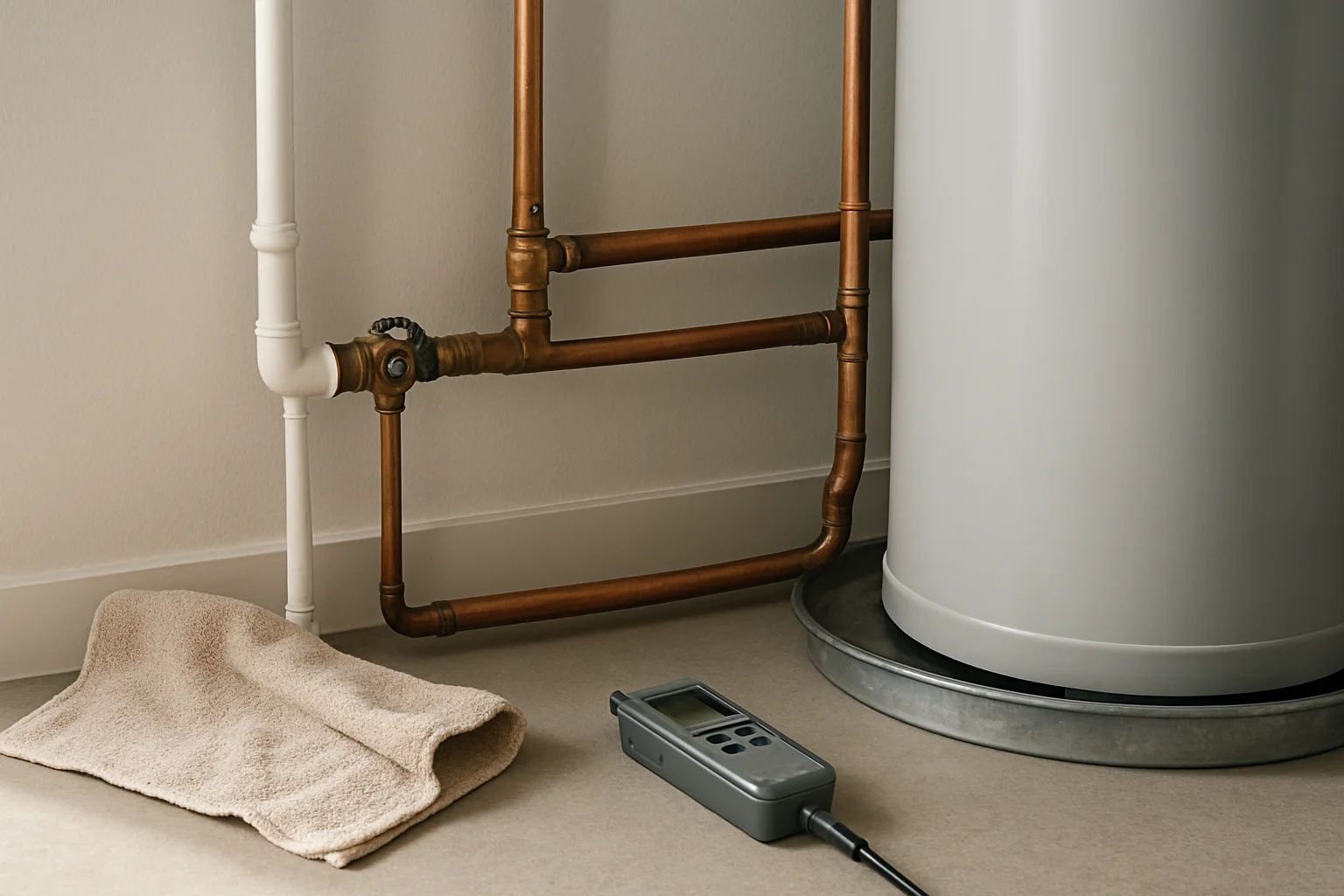
Water heaters are another important source of trouble. Tanks and connected fittings can develop corrosion, sediment-related strain, or leaks around the base, especially if maintenance has been delayed. Exterior hose bibs, irrigation connections, and laundry hookups can also fail, sometimes only when water pressure changes or the line is moved during routine use. In homes with slab foundations, leaks under the slab can be harder to detect, and they may show up indirectly through warm spots on the floor, unexplained moisture, or a water meter that continues moving when all water is off.
Hidden leaks inside walls or ceilings can come from supply lines, drain lines, or condensation issues. These are the cases where professional assessment is especially important because the visible damage may be far from the source. A homeowner might see a stain in one room while the leak is actually happening in another part of the house. Tracing that relationship without the right tools can be difficult, and unnecessary cutting or probing can create more damage than it solves.
Early Warning Signs That Should Not Be Ignored
A leak often announces itself through small changes. A sudden sound of moving water when fixtures are not being used can indicate a running toilet or a hidden supply leak. Water pressure that feels lower than usual may point to a problem, though it can also reflect other plumbing concerns, so it should be evaluated rather than guessed at. Cabinet bottoms that swell, paint that bubbles, or baseboards that discolor may all suggest moisture is present where it should not be.
Odors are another clue. A damp, earthy, or musty smell in a bathroom, laundry room, or kitchen may indicate that water has collected in a concealed space. In some cases, the first sign is not moisture itself but mold-related odor caused by prolonged dampness. Homeowners should also pay attention to recurring condensation. If a pipe sweats frequently or a fixture area seems perpetually wet, it is worth determining whether the issue is simply humidity or whether water is escaping from a component that needs repair.
Utility records can offer another warning sign. An unexpected increase in water use is worth investigating, especially if household habits have not changed. Even a small leak can add up over time, and the longer it goes unnoticed, the more likely it is to affect surrounding materials. Rather than assuming a stain or odor will stay minor, homeowners are better served by treating repeated signs as a reason to schedule a professional inspection. That approach can help locate the issue before it turns into broader structural or indoor air quality problems.
Why Preventive Plumbing Care Saves Stress Later
Preventive care works because plumbing problems rarely appear all at once. Most leaks begin as wear, vibration, corrosion, loose connections, or material fatigue that develops gradually. When homeowners inspect visible plumbing on a regular schedule, they are more likely to catch the early stages. That may mean tightening a loose connection, replacing a worn supply line, or addressing a component before it fails during a busy season. Prevention is less about perfection and more about reducing risk.
In Northwest Florida, preventive care is especially helpful because moisture can conceal trouble. A tiny leak may not dry out the way it would in a drier climate, which means the surrounding area can stay damp longer and suffer more damage. Routine checks around sinks, toilets, water heaters, laundry rooms, and exterior connections can reveal patterns before they become major repairs. Homeowners who take a few minutes each season to look, listen, and note changes often have more options when a problem is still small.
Professional maintenance visits add another layer of protection. A plumber can look beyond the obvious and evaluate pressure, connections, visible corrosion, drainage behavior, and other signs that a homeowner might overlook. In some cases, a preventive visit may uncover a component nearing the end of its service life, allowing for planned repair rather than an emergency call. For busy households, that predictability matters. It helps reduce surprise damage, limit interruptions, and keep water-related issues from competing with other home priorities.
What a Professional Leak Assessment Can Reveal
A professional leak assessment is valuable because the source of water is not always the same as the place where water appears. A technician can inspect fixtures, supply lines, drainage points, and visible piping to determine whether the issue is active leakage, condensation, or water intrusion from another source. That distinction matters. Treating condensation like a broken pipe could lead to unnecessary work, while ignoring a real leak could allow hidden damage to continue.
Assessment may include checking shutoff valves, observing fixture operation, inspecting under cabinets, examining water heater connections, and looking for moisture patterns around ceilings, walls, or floors. If the water source is not obvious, the plumber may use professional methods to narrow the problem area without creating unnecessary damage. Homeowners benefit from this process because it reduces guesswork and helps ensure the repair fits the actual issue rather than a symptom. It also gives the homeowner a clearer understanding of the condition of related plumbing components.
Another advantage of professional assessment is planning. If the plumber finds that one issue has stressed nearby parts, the homeowner can understand whether a repair should be limited to a single component or whether related parts should be addressed soon as well. That kind of guidance can be especially useful in older homes or homes with repeated moisture issues. The goal is not just to stop visible water but to reduce the chance of another leak starting in the same area later.
Seasonal Planning for Spring and Early Summer
Spring is a good time for homeowners to recheck plumbing after cooler weather and before the heavy-use months that often follow. In Northwest Florida, this is a practical season to inspect under-sink areas, test shutoff valves, look for slow drips, and confirm that hoses, spigots, and irrigation connections are in good condition. Because spring weather can bring both rain and humidity, it is also a good time to watch for areas that stay damp after cleaning or routine use. Those lingering wet spots may be an early sign that a component needs attention.
As temperatures rise, air conditioning usage tends to increase, and that can place more demand on condensate drainage systems and nearby areas. Homeowners should make sure drains are not blocked and that no moisture is collecting around mechanical spaces. Laundry rooms and utility closets can also become busier in warmer months, which makes them worth a closer look. A spring checkup can catch small issues before summer schedules get crowded with travel, visitors, and more frequent water use.
Early summer planning should also account for storms. Homes that have exterior plumbing, irrigation systems, or vulnerable foundation areas may benefit from a walkaround before the first round of stronger seasonal storms. This is not about performing complex repairs without training. It is about noticing loose covers, obvious corrosion, damp soil near foundation areas, or repeated puddling around exterior fixtures. If a concern appears, a plumber can assess it before weather and moisture combine to make the problem harder to manage.
Summer Humidity, Storms, and Heavy Water Use
Summer can be demanding on a home’s plumbing because the season brings together heat, humidity, storm risk, and heavier household water use. Families may be home more often, host guests, or run appliances more frequently. At the same time, humidity makes it harder for damp areas to dry out, so even a minor leak can leave a lasting effect. Homeowners should pay close attention to areas where moisture collects, especially in laundry rooms, bathrooms, kitchens, and around water heater closets.
Storm preparation is also part of summer plumbing planning. Heavy rain can expose drainage concerns, and wind-driven weather may lead homeowners to notice roof or exterior issues that were previously hidden. While plumbing and roofing are different systems, water damage often affects both. If a ceiling stain appears after a storm, a professional should evaluate whether the source is rain intrusion, plumbing, or both. That distinction is important because treatment and repair steps may differ significantly.
This is also a good season to keep an eye on water pressure and usage patterns. Large shifts in demand can reveal worn washers, deteriorating supply lines, or a toilet that runs longer than it should. Homeowners do not need to diagnose the cause themselves, but they should note when and where the issue appears. Clear observations help a plumber evaluate the problem more efficiently. In a humid, storm-prone summer, timely professional attention can make the difference between a small repair and a larger moisture cleanup effort.
Fall Preparation Before Cooler Weather and Holiday Activity
Fall is a strong time to prepare plumbing for the months ahead. Even though Northwest Florida does not experience the deep freezes found in some regions, cooler weather still changes how homes are used. Occupancy patterns may shift, guests may visit more often, and kitchens, bathrooms, and laundry areas may see more traffic. A seasonal inspection can help identify fixtures that are already showing wear before the household becomes busier.
This is a useful time to look at under-sink supply lines, toilet performance, exterior hose connections, and water heater surroundings. Fall is also a smart moment to assess whether any repair recommended earlier in the year should be completed before the holiday season. If a problem has been managed temporarily, homeowners should not assume it will remain stable indefinitely. Water-related issues often worsen under increased use, so addressing them before the busiest season can help avoid disruption.
For homes with exterior plumbing or irrigation systems, fall provides a chance to review exposure and condition before winter rains or cooler snaps arrive. A professional plumber can determine whether a fitting, valve, or line is showing signs of fatigue and whether anything needs replacement to reduce risk. The value of this planning is practical: it helps homeowners enter the season with fewer surprises and more confidence that visible and hidden plumbing parts are in workable condition.
Winter Considerations for Northwest Florida Homes
Winter in Northwest Florida is generally milder than in many other parts of the country, but cooler temperatures can still matter to plumbing. Materials contract slightly, seals may reveal weaknesses, and homes that are less ventilated during cooler stretches can still trap moisture. In other words, winter is not a season when leaks disappear. It is a season when different conditions may make existing problems easier to notice or, in some cases, make them more damaging if they are ignored.
Because freezing temperatures are less common than in colder climates, homeowners may not think much about winter plumbing care. Still, exposed pipes, exterior fixtures, and older connections deserve attention. A minor leak can become more noticeable when interior use patterns change and the home experiences more closed-up conditions. Condensation may also be mistaken for a new plumbing failure, which is another reason a professional evaluation can be helpful. It prevents confusion and guides the homeowner toward the correct solution.
Winter is also a good time to review emergency shutoff awareness. Homeowners should know where the main water shutoff is located and whether access is clear. That is not a repair instruction; it is a preparedness step. If a leak appears unexpectedly, knowing how to quickly reduce water flow can help limit damage while waiting for a professional. A household that combines seasonal awareness with a plan for quick response is better positioned to handle a winter leak calmly and effectively.
Signs That a Leak May Be Hidden Behind Walls or Under Floors
Some of the most costly leaks are the ones that stay hidden. A wall may appear intact while water slowly travels behind it, or a floor may stay visually normal while moisture spreads below the surface. In these cases, homeowners may first notice a stain, a soft spot, peeling paint, warped materials, or a persistent damp smell. Because the visible damage can be far from the source, it is easy to underestimate the seriousness of the problem. That is why unusual changes in a room should be taken seriously, even if the water itself is not visible.
A hidden leak may also show up through repeated repairs that do not fully solve the issue. For example, if a homeowner repeatedly cleans up moisture near one area and the problem returns, the source may be concealed. Slab-related leaks can be especially difficult to detect without professional assessment because the evidence may appear as flooring changes, warm spots, or unexplained moisture patterns rather than open dripping. In these situations, guessing is not a helpful strategy. Professional evaluation can help determine the likely source and scope without unnecessary demolition.
Homeowners should also be alert to signs that the problem is spreading. Stains that enlarge, odors that intensify, or materials that begin to swell can indicate ongoing moisture exposure. Even if the leak seems slow, persistent water can affect framing, drywall, flooring, cabinetry, and insulation over time. The sooner a professional looks at it, the more options there may be to limit the extent of the damage and repair the problem in a controlled way.
How Homeowners Can Support a Better Repair Outcome
Homeowners can make leak repair more efficient by observing and recording what they notice before calling for help. The most useful information usually includes where the moisture appears, when it is noticed, whether it happens only during certain fixture use, and whether any recent changes occurred in the home. Examples might include a new stain near a bathroom ceiling, a recurring damp cabinet base, or a toilet that seems to run after flushing. These details do not replace professional diagnosis, but they help the plumber focus on the likely source more quickly.
It also helps to avoid making assumptions based on the most visible symptom. Water can travel along framing, pipes, or flooring before it becomes visible, so the wettest spot is not always the origin of the leak. Homeowners should also avoid covering up a problem with temporary household fixes if the area is still wet or worsening. Instead, the better approach is to document the issue and have it professionally assessed. That keeps the repair conversation focused on the real cause instead of a guess.
When homeowners cooperate with the evaluation process, repairs can often proceed more smoothly. A clear description of the issue, awareness of the home’s recent conditions, and prompt scheduling all improve the chances of a practical outcome. In a region where weather and humidity can complicate moisture problems, that preparation is especially useful. It gives the plumber better information and helps the homeowner feel more informed about the steps that follow.
Why 850 Plumber Is a Practical Local Resource for Seasonal Leak Concerns
For homeowners in Bay, Walton, and Okaloosa counties, having a local plumbing resource matters because regional conditions shape how leaks develop and how they should be evaluated. 850 Plumber, part of veteran-owned A Superior Mechanical, serves the area with a focus on practical plumbing support for homeowners who want a professional assessment rather than guesswork. Seasonal leak planning is not only about reacting to visible water; it is about understanding how local weather, humidity, and home conditions influence plumbing wear throughout the year.
A homeowner who suspects a leak may need help determining whether the issue is a fixture problem, a supply line concern, a hidden moisture source, or something else entirely. Professional assessment helps narrow those possibilities and determine the right repair path. That matters because water damage can spread quietly, especially in areas where humidity slows drying. A local plumbing professional can consider the home’s layout, the region’s weather patterns, and the likely sources of trouble when advising next steps.
If a leak concern is building toward an urgent situation, contacting a plumber sooner rather than later can help reduce damage and uncertainty. 850 Plumber can be reached at 850-258-3225 for homeowners seeking help with water leak concerns in Bay, Walton, and Okaloosa counties. For many households, the best outcome comes from early attention, clear communication, and a repair plan based on actual conditions rather than assumptions. That is the practical value of seasonal preparedness: it helps homeowners stay ahead of problems, protect their homes, and respond with confidence when plumbing issues arise.
Explore related plumbing care
- Water Leak Repairs in Bay, Walton and Okaloosa Counties, FL
- Clean Water Services in Bay, Walton and Okaloosa Counties, FL
- Leak Detection & Slab Leak Repair in Bay, Walton & Okaloosa Counties, FL | 850 Plumber
- Water Filtration Services in Bay, Walton & Okaloosa Counties, FL
- Water Heater Repair in Bay, Walton and Okaloosa Counties, FL
- Water Heater Services in Bay, Walton & Okaloosa Counties, FL
Continue reading
- Water Filtration Planning for Northwest Florida Homes: Seasonal Prevention Tips for Bay, Walton, and Okaloosa Counties
- Water Leak Repairs in Northwest Florida Homes: Warning Signs and Professional Diagnosis for Bay, Walton, and Okaloosa Counties
- Water Heater Repair in Bay, Walton and Okaloosa Counties, FL: A Practical Homeowner Guide for Late-Fall Readiness
Talk with the 850 Plumber team for help with your home or business.